
Entrainment Mechanisms
Imagine you arrive in a new city after a long flight and feel completely out of sync with the local time. Your body wants to sleep while the sun is bright, yet you feel wide awake when the world is dark. This internal struggle occurs because your biological clock is temporarily disconnected from the external environment. Your body requires a specific process to reset its internal rhythm to match the new local time zone. This process is known as entrainment, which ensures your physiology aligns with the world around you.
The Function of Environmental Time Cues
Biological systems rely on external signals to stay synchronized with the rotation of our planet. These essential signals are called zeitgebers, a term originating from German that translates to time givers. Without these cues, our internal clocks would drift away from the twenty-four-hour cycle of day and night. Think of these cues like the periodic maintenance checks on a complex factory assembly line. If you do not calibrate the machines regularly, they eventually start to operate at slightly different speeds. Your body uses light, temperature, and social routines to perform this vital calibration every single day.
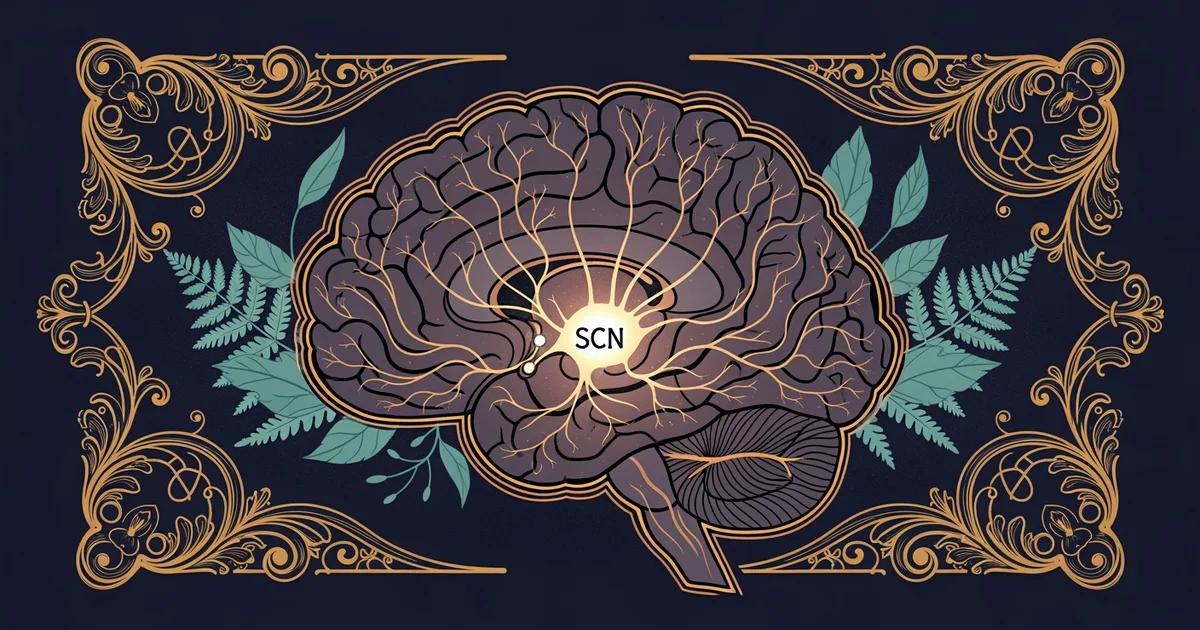
Light acts as the most powerful zeitgeber for humans because it directly influences the brain. When sunlight enters your eyes, it sends a signal to the master clock in your brain. This signal tells your body that the day has officially begun and shifts your internal timing. If you consistently avoid bright light in the morning, your internal clock struggles to start at the right time. This makes it harder to feel alert during the day or to fall asleep at night. Maintaining exposure to these cues is the primary way we keep our biological performance consistent.
Mechanisms of Internal Synchronization
To understand how these cues reset our systems, we must look at how the brain processes information. The master clock acts like a conductor leading a large orchestra of smaller clocks located in every organ. When the master clock receives a strong signal from the environment, it sends out a new set of instructions. These instructions update the timing for your heart, your liver, and your muscles to match the current day. If the environment remains stable, the orchestra plays in perfect harmony, leading to optimal energy levels and health.
| Signal Type | Primary Effect | Typical Timing |
|---|---|---|
| Sunlight | Resets the master clock | Early morning |
| Food Intake | Coordinates metabolic clocks | During active hours |
| Social Cues | Reinforces daily routines | Throughout the day |
Key term: Entrainment — the process by which an internal biological rhythm is adjusted to match the period of an external environmental cycle.
When we ignore these signals, our internal systems fall out of phase with each other. For example, if you eat late at night, you send conflicting signals to your metabolic organs. Your liver might prepare for digestion while your brain prepares for sleep, leading to internal confusion. This misalignment is similar to a business where the accounting department works a night shift while the sales team works a day shift. Because they never communicate, the company fails to function efficiently, and productivity drops significantly across the entire organization. Proper entrainment requires that all your internal systems receive the same time message simultaneously.
Consistency in your daily schedule provides the best environment for these mechanisms to function correctly. By waking up, eating, and seeking light at the same times, you reinforce your biological timing. This reinforcement makes your body more resilient to occasional disruptions like travel or late-night work projects. You essentially build a stronger foundation for your internal clocks, allowing them to recover from stress much faster. Understanding these mechanisms empowers you to manage your daily energy and long-term health more effectively.
Reliable synchronization of internal biological rhythms depends on consistent exposure to environmental cues that reset our internal master clock.
The next Station introduces Hormonal Regulation, which determines how these synchronized signals influence your physical performance.