
Leaves and Gas Exchange
Imagine a busy city skyline where every building must carefully manage the constant flow of people through its front doors. Plants face a similar challenge every single day as they balance the need for carbon dioxide with the risk of losing precious water. This delicate dance happens on the surface of every leaf through tiny openings that control the internal environment of the plant. Without these specialized structures, the plant would either starve from a lack of fuel or wither away from excessive moisture loss.
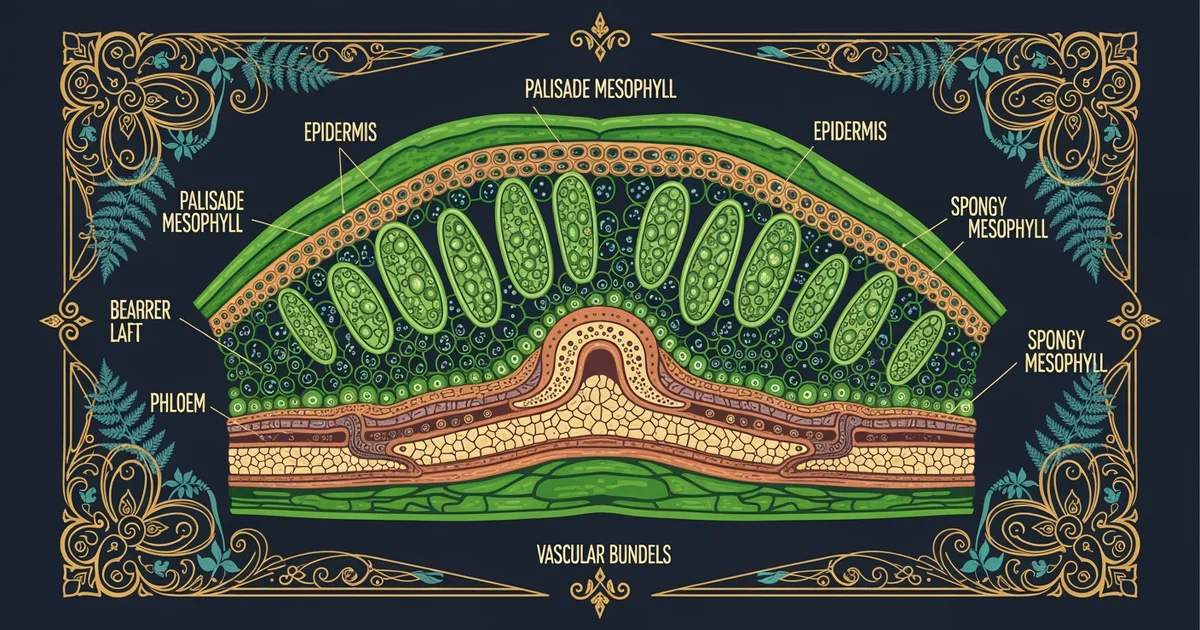
The Structure of Gas Exchange
The primary mechanism for this exchange involves small pores known as stomata that sit on the outer layer of the leaf. These microscopic openings act like automated gates that open and close based on the internal needs of the plant. Each pore is surrounded by two specialized cells called guard cells that change shape to regulate the size of the opening. When the plant has plenty of water, these guard cells swell with pressure and pull the pore wide open for gas to enter. If the plant senses a drought, the guard cells lose their internal pressure and collapse inward to seal the opening tightly. This process ensures that the plant only risks water loss when it truly needs to take in carbon dioxide for photosynthesis.
Key term: Stomata — the microscopic pores on the surface of a leaf that regulate the exchange of gases between the plant and the atmosphere.
Think of these structures like the climate control system in a large office building during a heatwave. If the building opens all its windows, fresh air enters, but the expensive air conditioning escapes rapidly into the outside heat. The plant must decide exactly when the benefit of fresh air outweighs the cost of losing its internal moisture. By keeping these tiny gates closed during the hottest parts of the day, the plant saves its water for survival. It then opens them during cooler hours when the risk of drying out is much lower, effectively managing its resources like a smart energy grid.
Efficiency and Environmental Factors
Beyond just opening and closing, the plant must coordinate these movements with the changing conditions of the surrounding environment. Sunlight triggers the process of photosynthesis, which creates a high demand for carbon dioxide inside the leaf tissues. As the plant consumes this gas, the concentration levels drop, creating a natural vacuum that draws more gas in from the outside. However, the plant must also account for humidity and wind, which can strip away water vapor much faster than a calm, humid day would allow. The plant tracks these variables constantly to ensure that the internal chemistry of the leaf remains stable even when the external weather shifts.
To manage these complex needs, the plant utilizes a specific distribution pattern across its surface:
- Distribution density varies by species because plants living in arid deserts often have fewer pores to prevent drying out.
- Positioning usually favors the underside of the leaf to protect the openings from the direct, drying heat of the sun.
- Active regulation allows the plant to respond to internal signals like sugar levels, which indicate that the plant has enough energy.
This system allows for a remarkable level of precision in survival. By adjusting the gate size in real time, the plant maintains the perfect balance of hydration and fuel production. This efficiency is the reason plants can thrive in environments ranging from tropical rainforests to dry, rocky slopes. Every leaf serves as a miniature factory that constantly monitors its own intake and output to stay alive.
Leaves manage gas exchange efficiency by using specialized guard cells to open and close pores, balancing the vital need for carbon dioxide against the constant threat of water loss.
The next Station introduces water transport mechanics, which determines how water moves from the roots up to the leaves to support these processes.