
The History of Botany
Imagine walking through a dense forest where every single leaf holds a secret history of human discovery. You might see a simple fern, but early observers saw a complex puzzle waiting for a logical solution.
The Roots of Early Plant Observation
Ancient people relied on plants for survival, which forced them to become the first true observers of nature. They needed to know which roots provided food and which leaves caused illness or brought relief from pain. This practical necessity turned every village elder into a budding scientist who tracked seasonal changes with great care. These early records were not written in books but were passed down through stories and oral traditions across many generations. By categorizing plants based on their utility, humans created the foundation for what we now recognize as the formal study of botany. This process was much like organizing a massive library by subject, where every shelf serves a specific need for the reader. Without this initial phase of sorting plants into groups like edible or medicinal, later scientific progress would have lacked a starting point.
Key term: Taxonomy — the scientific system of naming and classifying living organisms based on shared physical characteristics.
As civilizations grew, the need for a more structured way to describe the natural world became essential for trade and health. Scholars began to document their findings in detailed scrolls, capturing the shapes and life cycles of local flora with impressive accuracy. This transition from oral memory to written records allowed knowledge to travel far beyond the borders of a single village. It created a shared language for people to discuss the properties of plants, ensuring that valuable information was not lost to time. This shift represents the birth of scientific documentation, where observations are recorded for future learners to study and verify independently.
Evolution of Botanical Research
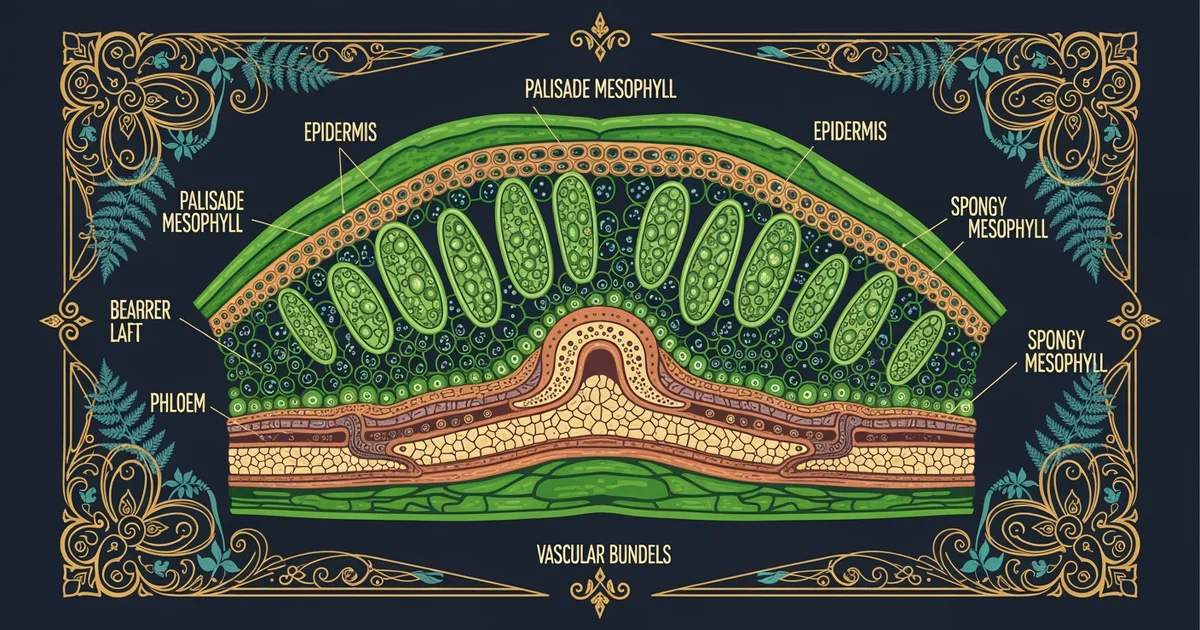
Moving forward in time, the focus of botanical research shifted from simple utility toward a deeper understanding of plant structure. Scientists began to look closer at the hidden parts of plants, such as the veins in a leaf or the complex design of a flower. This era marked a change where curiosity about how things worked began to match the need for practical application. Researchers started to compare different plant species to see how they related to one another in the grand scheme of life. This comparative approach acted like an economic investment, where researchers spent time studying small details to gain a larger return of knowledge about the natural world.
To track the progress of botanical research over time, we can look at the major shifts in how humans approached the study of vegetation:
- Primitive identification focused on immediate survival by distinguishing between safe food sources and toxic plants that could harm the community.
- Systematic documentation introduced written records that standardized names and descriptions so that knowledge could be shared across different regions and languages.
- Structural analysis dived into the internal mechanics of plant life to understand how specific parts contribute to the overall health of the organism.
This progression shows how our relationship with plants changed from being purely reactive to becoming deeply analytical and highly organized. We moved from fearing the unknown forest to mapping every species within it.
| Research Era | Main Goal | Primary Method |
|---|---|---|
| Prehistoric | Survival | Oral tradition |
| Classical | Utility | Written scrolls |
| Modern | Mechanism | Controlled testing |
This table illustrates how the objectives of botanical science have evolved alongside our growing ability to measure and record the world around us. By using these methods, we gained the power to predict plant behavior and improve our agricultural success. We no longer just collect plants; we now decode the biological processes that allow them to thrive in various environments. This deep understanding provides the essential context for everything we learn about the plant kingdom today.
Scientific study of plants evolved from a survival-based necessity into a structured system of classification and analysis that allows us to understand life at a deeper level.
The next step in our journey involves examining the microscopic structures that power these complex biological machines.