
Stem Functions
Imagine a busy city where every single building needs fresh water and constant waste removal. Plants function just like this city, using their stems as the essential highway system for life. While roots gather the resources from the soil, the stems act as the critical infrastructure that connects the entire organism. Without this internal transport network, the plant would starve and wither within a matter of hours. Understanding how these stems work reveals the hidden mechanics that allow plants to grow toward the sun.
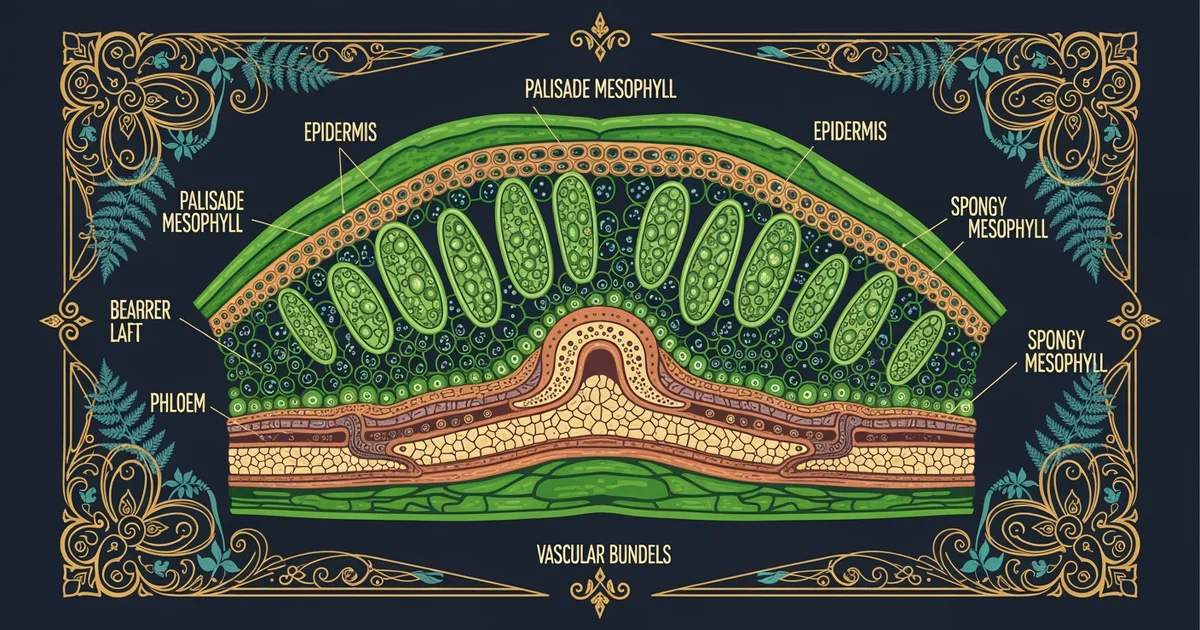
The Vascular Highway System
Stems contain specialized tissues that act like a complex plumbing system running through the plant. These tissues are organized into bundles that distribute water and nutrients to every leaf and growing tip. Think of these stems like the electrical and water grids in a modern skyscraper. Just as a building requires pipes for water and wires for power, the plant requires distinct pathways for different materials. This internal system ensures that every cell receives the energy it needs to survive and thrive throughout the day.
Key term: Vascular tissue — the specialized conducting system in plants that moves water, minerals, and sugars between different parts of the organism.
The primary components of this system are two distinct types of tubes that move materials in opposite directions. These tubes allow the plant to maintain a steady balance of resources across its entire structure. The efficiency of this transport system is what allows large plants like trees to survive. Without such a dedicated network, plants would remain very small because they could not move vital supplies over long distances. The following list explains the primary roles of these two vital transport tissues within the stem:
- Xylem moves water and dissolved minerals upward from the roots to the leaves by using a process called transpiration, which acts like a straw pulling liquid from the ground.
- Phloem carries the sugars created during photosynthesis from the leaves down to the roots and other growing parts of the plant to provide fuel for cellular growth.
Differentiating Transport Tissues
Distinguishing between these two tissues is essential for understanding how a plant manages its internal energy budget. While xylem is responsible for the upward movement of raw materials, phloem is dedicated to the downward or lateral movement of food. This division of labor prevents the plant from wasting energy on inefficient transport methods. By separating the flow of water from the flow of sugar, the plant maintains pressure and speed throughout its complex internal network. This separation is much like a highway system where different lanes are designated for cargo moving in specific directions.
| Tissue Type | Primary Cargo | Direction of Flow | Main Function |
|---|---|---|---|
| Xylem | Water/Minerals | Upwards | Nutrient delivery |
| Phloem | Sugars/Energy | Multi-directional | Fuel distribution |
Plants must carefully regulate the activity of these tissues to survive changing environmental conditions. During a drought, the plant might reduce the flow of water to conserve its limited resources. During the peak of summer, it must increase the flow of sugar to support rapid growth and fruit production. This constant adjustment shows that the stem is not just a static pipe but a dynamic regulator of plant health. By managing these flows, the plant ensures that its most vital organs, like the leaves and roots, stay connected and well-supplied at all times.
The stem serves as a vital vascular bridge that facilitates the essential exchange of water and nutrients between a plant's roots and its canopy.
The next Station introduces leaves and gas exchange, which determines how the plant captures the carbon dioxide needed for energy production.