
Photosynthesis Fundamentals
Imagine a solar panel that grows on a tree and turns light into food for the entire world. This incredible process happens every day inside the leaves of plants through a series of complex chemical reactions. Plants act like tiny biological factories that harvest energy from the sun to build the sugar molecules they need to survive. While humans must hunt or gather their energy sources, plants create their own fuel using only light, water, and air. This process is the primary bridge between the raw energy of the sun and the living things that inhabit our planet.
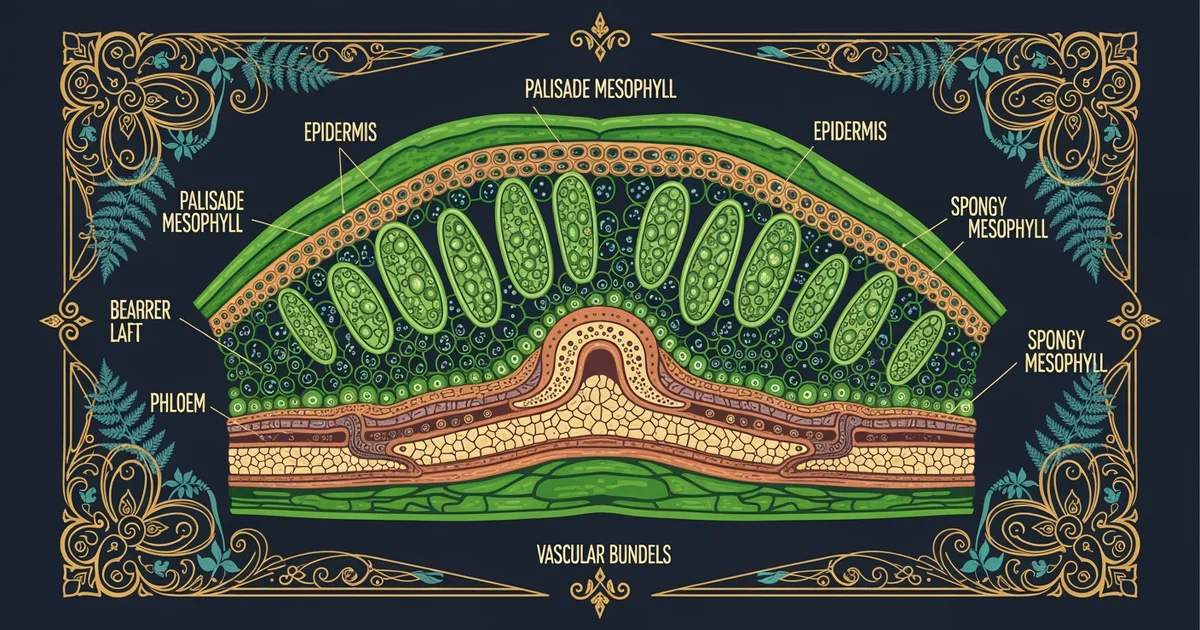
The Mechanism of Energy Conversion
To understand how plants capture sunlight, we must look at the specific structures inside the plant cells. Within the leaves, specialized organelles called chloroplasts contain a pigment known as chlorophyll that absorbs light energy. Think of these chloroplasts like a solar power plant that converts rays of light into usable electricity for a city. The plant captures photon energy and uses it to split water molecules into oxygen and hydrogen atoms. The oxygen is released into the atmosphere as a byproduct, while the plant keeps the hydrogen to help build energy-rich sugars. This conversion process is the fundamental way that life on Earth stores solar energy for later use.
Key term: Photosynthesis — the biological process where green plants transform light energy into chemical energy stored as glucose.
Once the plant has captured the light energy, it must store that energy in a stable form. Plants take carbon dioxide from the air and combine it with the hydrogen ions they gathered from the water. This chemical reaction creates glucose, which is a simple sugar that serves as the primary fuel for the plant. You can compare this to a bank where the plant deposits solar energy into a savings account for future withdrawal. When the plant needs to grow, repair tissues, or produce seeds, it withdraws this stored energy by breaking the glucose bonds. This system ensures the plant has a constant supply of power even when the sun is not shining.
The Chemical Equation of Life
To summarize this entire process, scientists often use a balanced chemical equation that represents the inputs and outputs. The conversion of light into chemical energy follows a strict set of rules that governs all living organisms on Earth. The following table highlights the essential components that must be present for this reaction to occur successfully within the plant cell.
| Component | Role in Process | State of Matter |
|---|---|---|
| Sunlight | Energy Source | Radiant Energy |
| Water | Hydrogen Source | Liquid |
| Carbon Dioxide | Carbon Source | Gas |
| Glucose | Stored Energy | Solid Sugar |
| Oxygen | Waste Product | Gas |
This equation shows that the plant essentially breathes in carbon dioxide and breathes out oxygen while creating food. The total mass of the inputs must equal the total mass of the outputs, demonstrating the law of conservation of matter. This balance is critical because it maintains the atmosphere that humans and other animals need to breathe. Without the constant activity of these microscopic chemical factories, the planet would not have enough oxygen to support complex animal life. The process is a masterpiece of natural engineering that sustains almost every food chain on our planet.
Plants convert light energy into chemical bonds by synthesizing glucose from water and carbon dioxide.
The next Station introduces the role of roots, which provide the essential water required for this reaction to occur.