
Global Biodiversity Synthesis
Imagine a vast, unfinished puzzle where every piece represents a unique species living across our changing planet. Scientists work to connect these pieces, trying to see the full picture of life on Earth. This process of global synthesis helps us understand how climate shifts and human actions reshape the natural world. By looking at these patterns, we move closer to answering how the deep history of our planet reveals the current distribution of life. We are essentially mapping the complex legacy of Earth through the living creatures that inhabit it today.
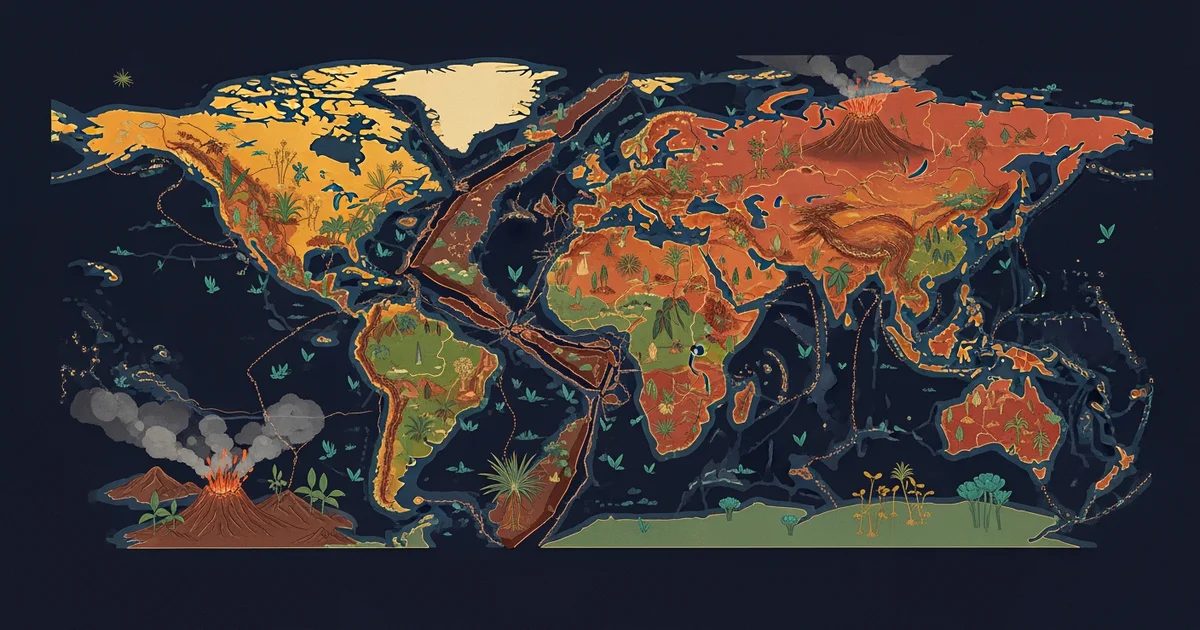
Integrating Ecological Data Streams
To build a complete map of biodiversity, researchers must combine many different types of information into one framework. They look at historical data from fossils and combine it with modern satellite imagery of current habitats. This synthesis acts much like a bank audit where you must reconcile past transactions with your current account balance. If you only look at the current balance, you miss the history of spending that led you there. Similarly, understanding why a species lives in a specific region requires both its evolutionary past and its current environmental needs. By merging these streams, we can identify which areas are most critical for survival.
Key term: Biodiversity — the total variety of all living organisms found within a specific ecosystem or across the entire planet.
When we analyze these data sets, we often find that some regions hold more secrets than others. Tropical forests, for example, act as massive storehouses for genetic information that spans millions of years. Scientists use statistical models to predict how these regions might change under future climate scenarios. This requires a high degree of precision, as small errors in data collection can lead to large gaps in our understanding. We must ensure that every piece of information, from soil quality to rainfall patterns, fits correctly into the larger model.
Synthesizing Patterns Across Landscapes
Once we have gathered the data, we must synthesize it to reveal the underlying rules that govern life. These rules explain why certain areas support high levels of life while others remain relatively sparse. We often see that geography dictates the limits of survival for many different types of organisms. A mountain range might block the migration of a species, effectively splitting its population into two distinct groups. Over time, these groups adapt to their new surroundings, showing us how physical barriers create biological diversity. This is the core of biogeography, where the physical structure of the Earth directly influences the evolution of life.
| Data Stream | Purpose in Synthesis | Impact on Model |
|---|---|---|
| Fossil Records | Establish historical baselines | Provides evolutionary context |
| Climate Data | Predict future habitat shifts | Determines potential range |
| Genetic Mapping | Identify population connectivity | Shows historical migration |
Looking at this table, we see that no single data point tells the whole story of a landscape. We need the combination of past history, current climate, and genetic links to build an accurate report. This synthesis allows us to see how species move and adapt over vast periods of time. It reveals that the patterns of life are not random occurrences but the result of long-term interactions between biology and geology. This realization changes how we view our role in protecting these fragile systems for the future.
As we synthesize these complex streams, we must ask ourselves if we are truly seeing the full picture of Earth's history. Does our current reliance on digital models mask the unpredictable nature of biological evolution in the wild? We continue to refine our methods to capture the hidden connections that define life on this planet. Every new discovery adds depth to our understanding, proving that the Earth is a dynamic and ever-changing home. The synthesis of this information remains our best tool for navigating the challenges that lie ahead.
Synthesizing global biodiversity data allows us to connect the evolutionary history of life with the physical changes of our planet to predict future ecological stability.
The future of biogeography depends on our ability to apply these synthesized insights to address the rapid environmental changes currently facing our global ecosystems.