
Island Biogeography Model
Imagine a lonely island rising from the deep ocean floor, waiting for life to arrive. How does this tiny piece of land eventually host a rich variety of living creatures? The Island Biogeography Model provides a logical way to understand how species arrive, settle, and persist over long periods. This framework treats islands like isolated economic markets where the number of resident species depends on local supply and demand. By balancing the rate of new arrivals against the rate of local extinctions, scientists can predict the total number of species an island will support.
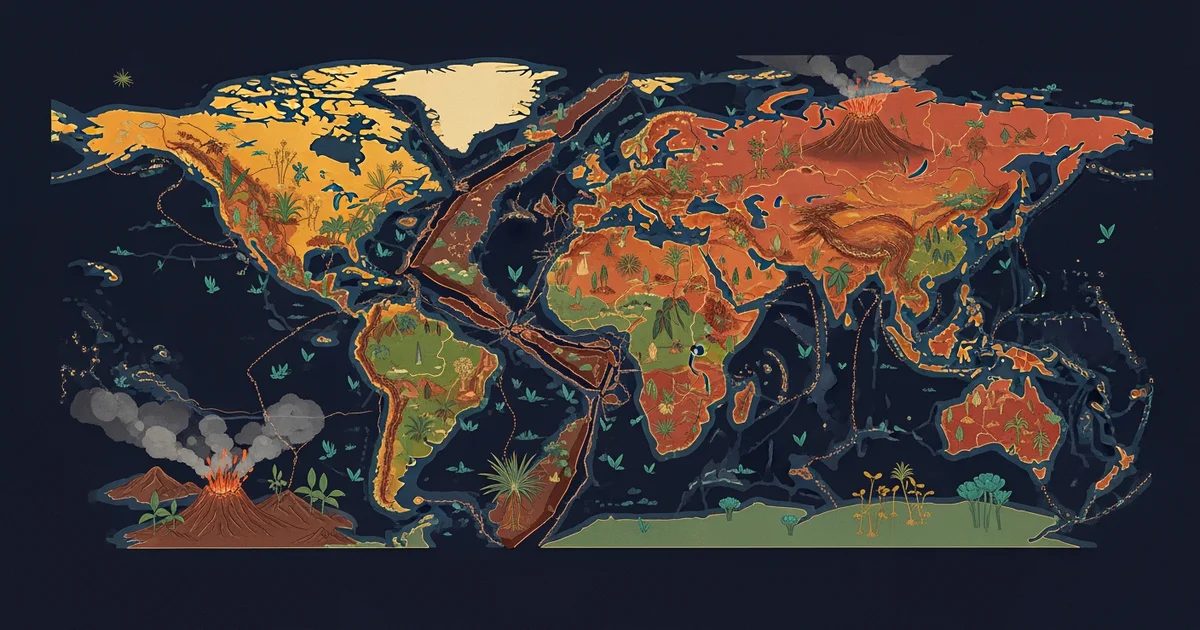
The Mechanics of Colonization and Extinction
When a new island forms, it begins as a blank slate with no resident species. Nearby islands act as a source of potential immigrants, sending individuals across the water to colonize the new territory. As the number of species on the island increases, the rate of new arrivals slows down because most new arrivals are already present. Meanwhile, the extinction rate rises as the island becomes more crowded and competition for limited resources intensifies. Eventually, the island reaches a dynamic state where the arrival rate equals the extinction rate. This equilibrium point dictates the total number of species present on the island at any given time.
Key term: Equilibrium — the balanced state where the number of species arriving matches the number of species dying out.
Think of this process like managing a small shop with limited shelf space for unique items. If your shop is empty, you add new items quickly to attract customers who want variety. As your shelves fill up, you stop adding new items because you lack the physical space to display them. If an item does not sell, you remove it to make room for something else. The number of items in your shop stays stable because you only add a new product when an old one leaves. Just like a shop, an island has a fixed capacity for species based on its size and location.
Influences of Size and Distance
Two main factors determine the exact level of this species equilibrium for any given island. First, the distance from the mainland controls how easily new species can reach the island shore. A remote island receives fewer visitors than one located near a large landmass, leading to a lower overall species count. Second, the total land area of the island determines how many resources are available for the resident population. Larger islands provide more diverse habitats, which supports larger populations and lowers the risk of accidental extinction for any single species.
| Feature | Influence on Arrival | Influence on Extinction |
|---|---|---|
| Near Distance | High arrival rate | No direct effect |
| Far Distance | Low arrival rate | No direct effect |
| Small Area | No direct effect | High extinction rate |
| Large Area | No direct effect | Low extinction rate |
We can summarize the impact of these two physical traits using a simple comparison table. A large island near the mainland will always host the highest number of species because it receives many immigrants and suffers few extinctions. Conversely, a small island far from the mainland will host the fewest species because it is hard to reach and prone to local loss. By measuring these two variables, researchers can create a clear map of expected biodiversity for islands across the entire globe.
Understanding these patterns helps us protect fragile ecosystems from human interference and rapid climate change. When we know how many species an island should support, we can identify when a specific environment has lost too much of its natural variety. This model serves as a vital tool for conservationists who work to preserve island life in our changing world. By applying these rules, we turn the study of nature into a predictable science of balance and survival.
The number of species on an island represents a balance between the arrival of new immigrants and the loss of existing residents due to competition.
But what does this equilibrium look like when we trace the genetic history of these isolated populations?
Want this with sources you can check?
Premium Learning Paths for Biological Sciences are researched against open-access libraries — PubMed, arXiv, government databases, and more — with their distinctive claims cited to real sources and independently checked.
See what Premium includes