
Unifying Universal Forces
Imagine you are trying to balance your monthly budget while also managing a complex investment portfolio. You have fixed costs like rent and variable costs like groceries, but the money comes from different income streams that do not seem to connect. The universe faces a similar struggle when scientists try to align the laws of gravity with the rules of quantum mechanics. While gravity governs the massive motions of planets and stars, quantum mechanics describes the tiny, jittery behavior of individual atoms. These two frameworks currently operate like separate bank accounts that refuse to share data, leaving us with an incomplete picture of how the cosmos functions at every scale.
Reconciling The Fundamental Forces
Gravity serves as the dominant force shaping the large-scale structure of our entire universe. It dictates how galaxies swirl, how stars ignite, and how light bends around massive objects in space. However, gravity remains a stubborn outlier when compared to the other three fundamental forces of nature. Electromagnetism, the strong nuclear force, and the weak nuclear force all fit neatly into a single, cohesive framework known as the Standard Model. This model explains how subatomic particles interact through the exchange of energy packets, yet gravity refuses to behave like these other forces. Scientists hope to find a Theory of Everything that merges these disparate systems into one singular, elegant mathematical description of reality.
Key term: Theory of Everything — a hypothetical framework that would unite gravity with the other three fundamental forces into one consistent physical law.
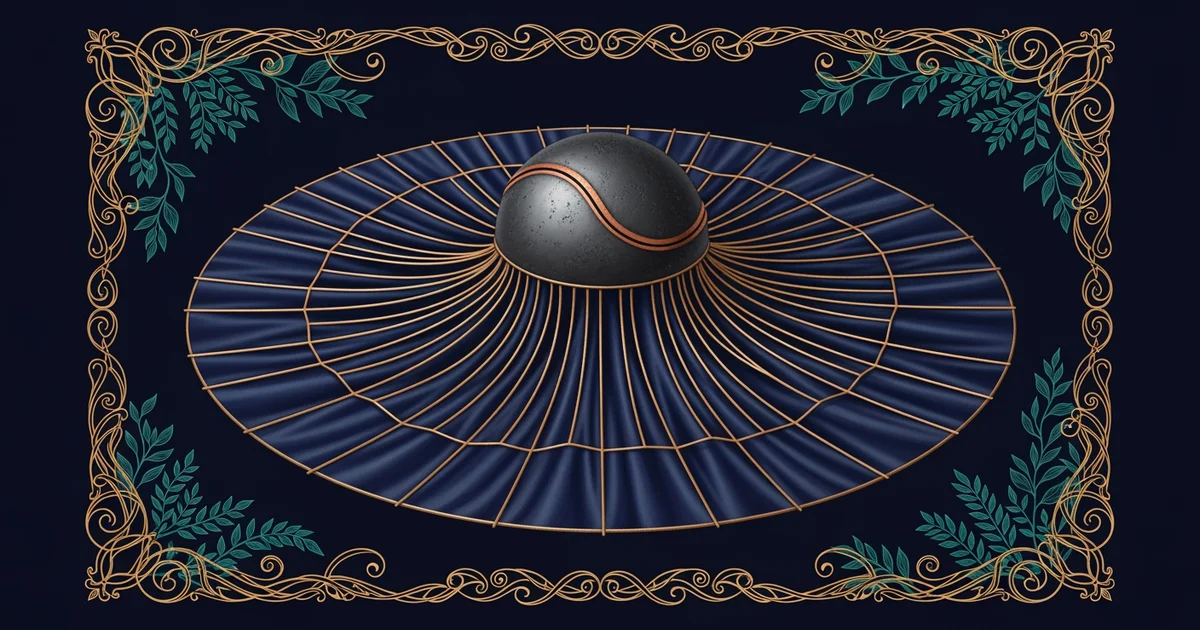
We can compare this search to the difficulty of creating a single currency for a global economy. Every country uses its own system, and trying to force a universal exchange rate creates tension between local and global rules. In physics, the tension arises because gravity requires a smooth, curved geometry of space-time, while quantum mechanics demands a choppy, probabilistic environment. When we try to combine these two visions, the mathematics often produces nonsensical results like infinite energy values. This conflict suggests that our current understanding of space and time might be missing a deeper, underlying layer of reality that connects everything together.
The Quest For Unified Physics
To bridge this gap, researchers investigate how gravity might emerge from quantum interactions at extremely small scales. Some theories suggest that space-time itself is not a smooth fabric but is composed of tiny, discrete building blocks. If space-time is granular rather than continuous, then gravity might just be a collective effect of these microscopic parts. This idea echoes the way individual pixels on a digital screen create a smooth image when viewed from a distance. The following table outlines the four forces that govern all interactions within our vast universe:
| Force | Primary Role | Range | Strength |
|---|---|---|---|
| Gravity | Large scale structure | Infinite | Weakest |
| Electromagnetism | Atomic bonding | Infinite | Strong |
| Strong Nuclear | Holding nuclei | Very short | Strongest |
| Weak Nuclear | Radioactive decay | Very short | Weak |
These forces define the limits of what we can observe in the natural world. While gravity is the weakest force, its infinite range allows it to dominate the movement of galaxies across billions of light years. In contrast, the nuclear forces are incredibly powerful but only function within the tiny confines of an atom's core. Our previous study of Space Flight Trajectories showed how we use gravity to navigate the solar system, but that navigation relies on a classical view that ignores quantum effects. If we ever unlock the secret to unifying these forces, we could potentially manipulate space-time itself to travel across the cosmos.
As we look toward the future, we must ask if the universe is truly governed by one simple rule or if it is a collection of separate, unrelated systems. This inquiry forces us to rethink the very nature of existence and the limitations of human perception. If we find that gravity is just a shadow of a more complex quantum process, our entire understanding of the cosmos will shift forever. The search for this unity represents the ultimate challenge for modern science as we attempt to decode the language of the stars.
The quest to unify gravity with quantum mechanics reflects our need to find a single, consistent logic that explains both the immense scale of galaxies and the tiny behavior of atoms.
Future gravity research will investigate whether space-time is fundamentally granular or continuous to resolve these conflicting physical theories.