
Clocks in Gravity
Imagine you are standing on the ground floor of a skyscraper while your friend waits on the roof. If you both carry identical atomic clocks, you might expect them to tick at the exact same rate. In reality, the clock on the ground floor ticks slightly slower than the clock on the roof. This strange phenomenon happens because gravity acts like a thick fluid, slowing down the passage of time itself. The closer you are to a massive object, the more intense the gravitational pull becomes, which forces time to move at a different pace.
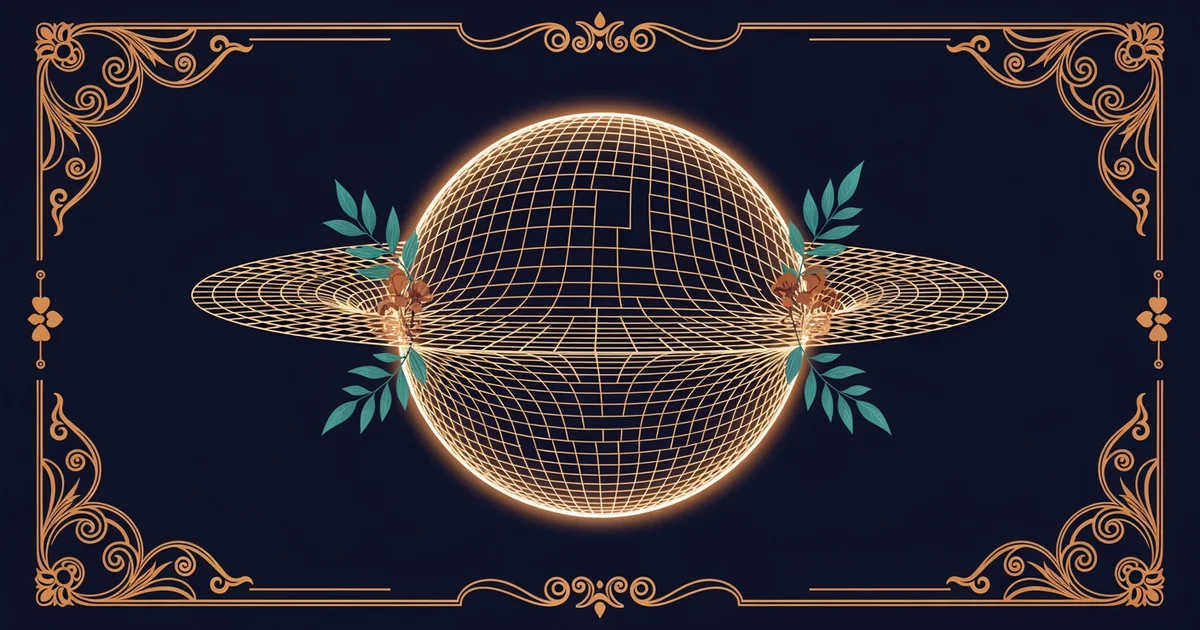
The Influence of Gravitational Fields
Gravity creates a field that extends throughout space, and this field exerts a measurable influence on the flow of time. When you move deeper into a gravitational well, the space-time fabric stretches, causing events to occur at a slower rate compared to higher altitudes. Think of this like a person walking through deep water compared to someone walking on dry land. The person in the water faces more resistance and moves with greater effort, just as time faces more resistance in stronger gravity. Because the Earth has mass, it creates a gravity gradient that changes the speed of clocks based on their distance from the center. This effect is not due to a mechanical error in the clock, but rather a fundamental property of the universe where time is not universal.
Key term: Gravitational time dilation — the phenomenon where time passes at different rates depending on the strength of the gravitational field at a specific location.
To understand how this functions, consider the way gravity affects the energy of light waves as they climb away from a planet. As light escapes a heavy object, it loses energy and shifts toward the red end of the spectrum, which is a process called gravitational redshift. This energy loss is directly linked to the way time stretches out in a stronger gravitational field. If you were to watch a clock falling into a massive object from a safe distance, the ticking would appear to slow down until it eventually stops. This observation proves that time is flexible and changes based on where you are positioned in relation to a massive body like a planet or star.
Comparing Clock Rates at Different Altitudes
Because the intensity of gravity decreases as you move away from the Earth, the rate of time changes predictably depending on your elevation. We can categorize these differences to better understand how altitude impacts the measurement of time in our daily environment. The following table illustrates how relative gravity influences the speed of a clock at three distinct locations:
| Location | Gravity Strength | Time Passage Rate | Relative Speed |
|---|---|---|---|
| Sea Level | Highest | Slowest | Base Rate |
| Mountain | Moderate | Faster | Slightly Ahead |
| Orbit | Lowest | Fastest | Most Advanced |
These differences are minuscule in our daily lives, but they remain constant and measurable with modern technology. If we did not account for these variations, our global navigation systems would fail within minutes because the satellites orbit in much weaker gravity than we experience on the surface. The satellites move faster through time because they are further from the Earth's mass, meaning their internal clocks gain microseconds every single day. Engineers must program these devices to compensate for the time dilation effect, or else the calculated position on your phone would drift by miles. This practical application shows that the bending of time is a physical reality that impacts how we navigate the modern world.
- Clocks closer to the ground tick slower because the gravitational field is much stronger at that specific point.
- Clocks positioned at higher altitudes experience less gravitational pull, which allows them to tick at a faster rate.
- Precise synchronization requires constant adjustments to ensure that ground-based and space-based clocks remain aligned for accurate data transmission.
These three points highlight the mechanical nature of time as it interacts with the physical mass of our planet. By recognizing that gravity is not just a force pulling on objects but a factor that dictates the rhythm of existence, we gain a deeper insight into the structure of the cosmos. Every second is relative to the gravitational environment, proving that time is a dynamic dimension rather than a fixed standard.
Time flows at different speeds depending on your proximity to a massive object because gravity physically stretches the fabric of space-time.
But what does it look like when we apply these principles to the complex networks of satellites orbiting above our heads?