
Future of Black Hole Research
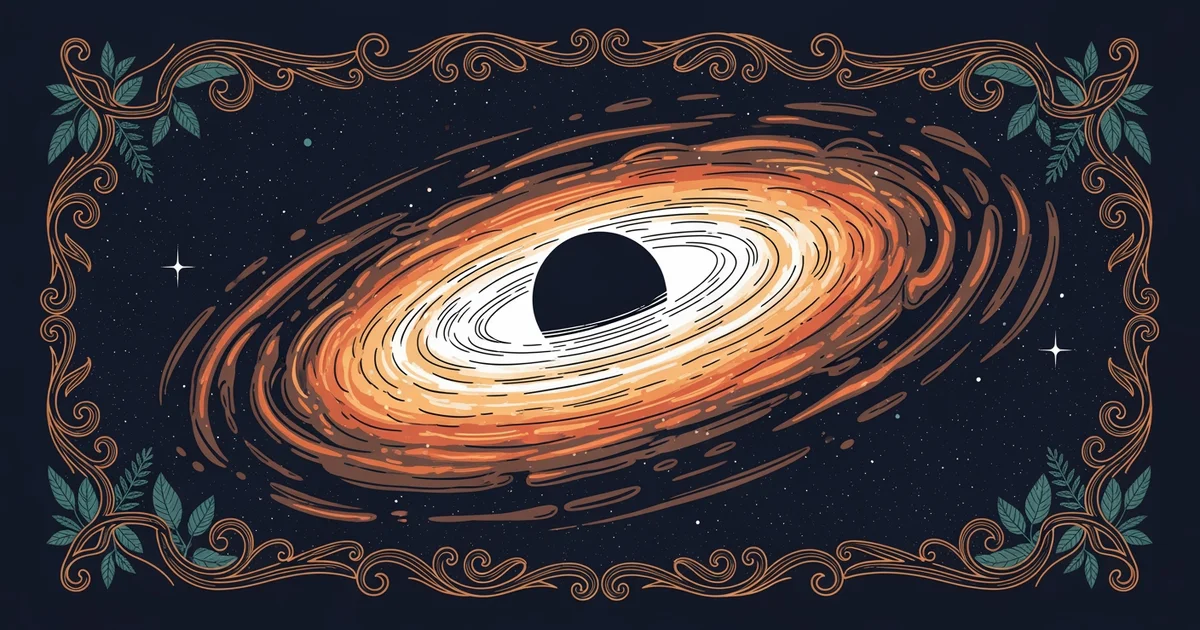
Modern science currently faces a wall where our best theories of gravity and tiny particles fail to agree. We possess the mathematical tools to describe the massive pull of a black hole, but we still struggle to see what happens at the very center. Scientists now look toward the next generation of space probes to solve these lingering mysteries of the cosmos. By studying how gravity warps space near these giants, we might finally unlock the secrets of our universe.
Advancing Detection Methods
Researchers currently rely on ground-based sensors to detect ripples in the fabric of space-time caused by merging black holes. These sensors measure tiny shifts in distance that are smaller than the width of a single atom. While these tools have confirmed many predictions, they only catch the loudest events in the sky. Future space missions will use lasers spanning millions of kilometers to detect much quieter signals. This change is like moving from a noisy city street to a quiet library where you can hear a pin drop. By expanding our reach, we expect to see thousands of new black hole collisions every single year.
Key term: Gravitational waves — ripples in space-time caused by massive objects moving at high speeds or colliding in space.
These upcoming missions will provide data on the mass and rotation of black holes with much higher accuracy. We currently struggle to distinguish between different types of black holes because our current sensors lack the needed range. Better data will allow us to map the distribution of these objects across the entire observable universe. This mapping process helps us understand how galaxies grow and change over billions of years. We are essentially building a census of the dark, invisible giants that shape our galactic homes.
Probing the Singularity
Beyond just finding new objects, physicists want to understand the nature of the singularity located at the core of every black hole. This point represents a region where density becomes infinite and our current laws of physics stop working entirely. We suspect that gravity behaves differently at these extreme scales, perhaps requiring a new theory that blends gravity with quantum mechanics. If we can observe how light bends near the event horizon, we might see hints of this new physics in action. Such a discovery would fundamentally change our view of how the universe is put together.
| Research Area | Current Status | Future Goal |
|---|---|---|
| Wave Detection | Ground sensors | Space arrays |
| Horizon Imaging | Blurred images | High resolution |
| Gravity Theory | Incomplete | Unified model |
We must also consider the role of Hawking radiation in the future of our research. This theoretical process suggests that black holes slowly lose mass over time through quantum effects. While we have never observed this radiation directly, our future sensors might be sensitive enough to detect the faint glow of a dying black hole. Confirming this would bridge the gap between the information paradox and our understanding of thermodynamic systems. The following list summarizes the main goals for the next decade of space exploration:
- Building larger sensor arrays to capture fainter gravitational wave signals from distant parts of the universe.
- Developing advanced computational models to simulate how gravity interacts with quantum fields near the event horizon.
- Testing the limits of general relativity by observing how stars orbit the supermassive black hole at our galactic center.
We are moving from an era of discovery into an era of precision measurement. Each new observation brings us closer to answering why gravity is so strong yet so difficult to map. The future of this field depends on our ability to build tools that can withstand the harsh environment of deep space. We are no longer just looking at the dark; we are learning to read the language of gravity itself. Understanding black holes is our best path to learning the true nature of space and time.
The future of black hole research relies on high-precision space sensors to bridge the gap between classical gravity and quantum mechanics.
Understanding how black holes function is the key to unlocking the deepest secrets of our universe's origin and final fate.