
Understanding Gravity and Mass
Imagine placing a heavy bowling ball onto a soft, stretched rubber sheet in your living room. The fabric curves downward around the ball, creating a deep dip in the center of the sheet. If you roll a marble nearby, it will naturally spiral toward that heavy ball. This simple scene explains how massive objects shape the universe around them every single day. Gravity acts like that rubber sheet, bending the very fabric of space to guide objects along curved paths.
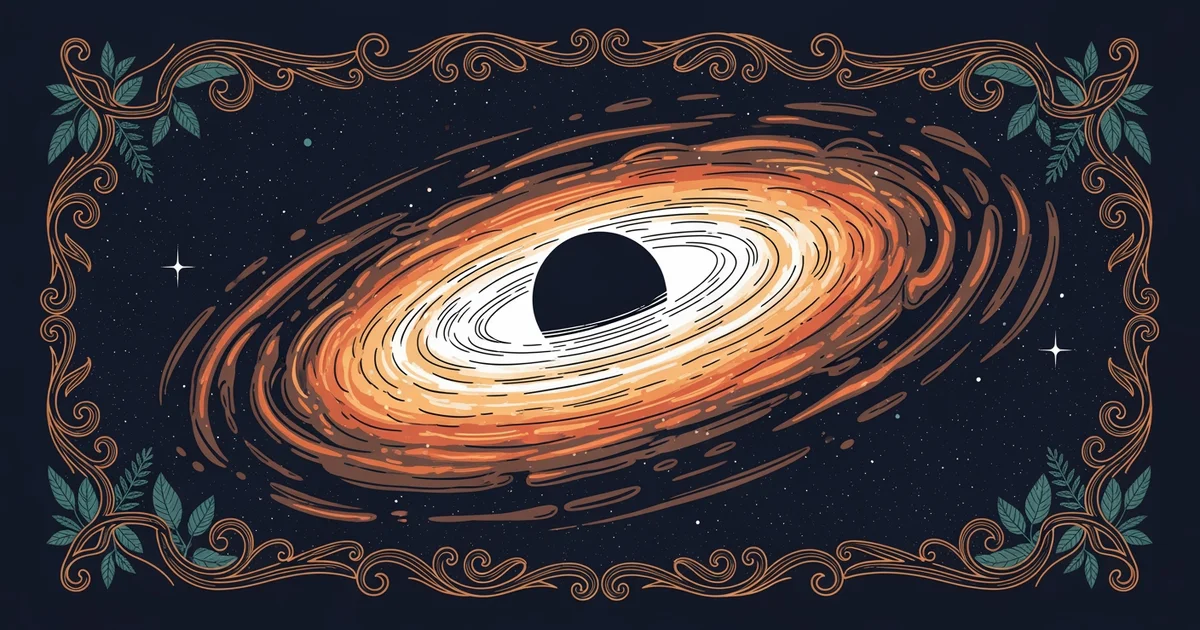
The Nature of Massive Objects
Every object with mass exerts a gravitational pull on everything else in the surrounding area. Larger objects with more mass create a much stronger pull than smaller, lighter items do. Think of your own body as a tiny source of gravity pulling on the earth. While you exert a force, your mass is too small to notice compared to the planet. The Earth holds you down because it contains a massive amount of matter packed inside. This constant pull keeps us anchored to the ground while we walk, run, or jump.
Key term: Gravity — the fundamental force that attracts two bodies with mass toward each other.
When we look at stars or planets, we see objects with immense amounts of matter. These bodies warp the geometry of space, making the path for light and matter curve. The more mass an object packs into a small space, the deeper that curve becomes. This geometry defines how planets orbit the sun or how light bends near stars. Without this curvature, the universe would be a flat, static place without any orbital motion.
Geometry and the Path of Light
Objects do not just pull on each other through empty space like invisible magnets. Instead, they change the shape of the space they occupy by creating a gravitational well. Light always follows the straightest path available through space, even when that path is actually curved. If space itself is bent by a massive object, light must follow that bend to travel. This process explains why light appears to curve when passing near a very heavy star.
| Object Type | Mass Density | Space Curvature Effect |
|---|---|---|
| Small Planet | Low | Very slight curve |
| Large Star | High | Noticeable bending |
| Black Hole | Extreme | Infinite distortion |
We can observe these effects by watching how light from distant galaxies changes when passing stars. The light bends around the star, acting like a lens that magnifies the distant image. This bending confirms that mass dictates the geometry of space in a predictable, measurable way. If you increase the mass of an object, you increase the depth of the gravitational well. This relationship is the primary reason why some objects pull with such incredible intensity.
- Mass determines how much an object bends the fabric of space around its position.
- Space curvature dictates the path that light must take when traveling past massive bodies.
- Extreme density creates a deep well where even light cannot climb back out again.
Understanding this relationship helps us see why gravity is not just a simple pulling force. It is a structural change in the fabric of the universe caused by mass. As we explore the lifecycle of stars, we will see how they eventually reach this limit. This path will provide you with a full understanding of how gravity shapes the final stages of stellar evolution.
Massive objects exert force by curving the fabric of space, which forces light and matter to follow distorted paths.
The next station explores the lifecycle of massive stars and how they eventually collapse under their own weight.