
The Lifecycle of Massive Stars
Imagine a massive construction project that suddenly runs out of the raw materials required to keep the lights on. Just as a city needs fuel to power its buildings, a star relies on a steady fusion process to maintain its size and heat. When a star burns through its fuel, the delicate balance between gravity and energy shifts. This transition marks the beginning of a violent end for the largest stars in our galaxy.
The Engine of Stellar Stability
Stars spend most of their lives in a state of balance called the main sequence. During this time, they fuse hydrogen atoms into helium in their hot cores. This process creates outward pressure that pushes against the inward pull of gravity. Think of this like a household budget that stays balanced because income matches expenses perfectly. If a star has more mass, it burns through its fuel at a much faster rate. This high rate of consumption leads to a shorter lifespan compared to smaller, cooler stars. Once the hydrogen supply runs low, the star must find new ways to generate energy to keep itself from collapsing.
The Path Toward Collapse
As the fuel source changes, the star begins to fuse heavier elements to survive. It moves from hydrogen to helium, then carbon, and eventually to iron. This process is like a business owner selling off assets to cover rising costs when revenue drops. The star swells into a giant, but its core becomes increasingly unstable as it creates heavier elements. Iron is the final straw for the star because fusing it consumes energy rather than creating it. Without the outward pressure from fusion, gravity wins the long struggle against the star's internal structure. The core then collapses in a fraction of a second, leading to a dramatic conclusion.
Key term: Supernova — the final, explosive death of a massive star that occurs when the core can no longer support itself against gravity.
The Stages of Stellar Evolution
We can track these changes by looking at the density and temperature of the stellar core. Massive stars follow a clear timeline as they age and eventually reach their final stage. The table below highlights how the core changes as the star progresses through its life cycle:
| Stage | Primary Fuel | Core Pressure | Stability State |
|---|---|---|---|
| Main Sequence | Hydrogen | Balanced | Stable |
| Red Giant | Helium | Increasing | Unstable |
| Late Fusion | Heavier Elements | Critical | Failing |
| Supernova | None | Total Collapse | Explosive |
This progression shows that the star is essentially fighting a losing battle against its own mass. Each stage of fusion happens faster than the one before it as the star grows desperate. The final collapse creates a shockwave that rips the outer layers of the star apart. This event releases more energy in a few seconds than our sun will emit during its entire life.
Understanding the Final Transition
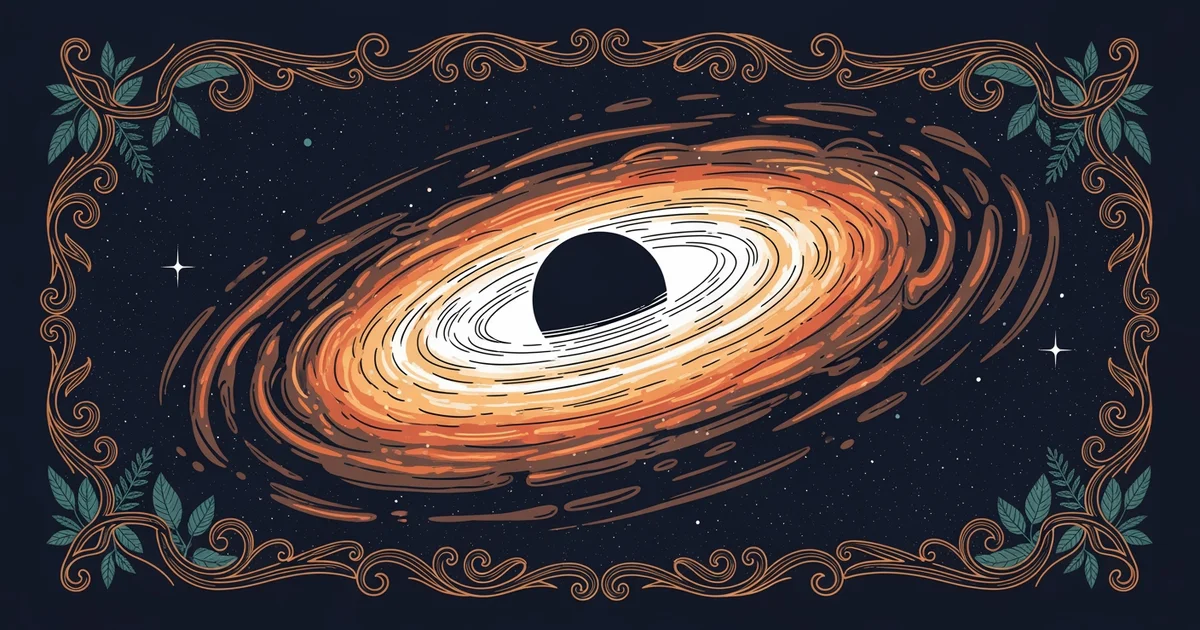
When the core finally gives way, the remaining material undergoes a massive transformation. The outer layers are blasted into space, leaving behind a dense remnant. This remnant can become a neutron star or, if the mass is great enough, a black hole. This is the ultimate consequence of gravity winning the war against nuclear energy. Understanding these stages helps us see how the universe recycles matter into new stars and planets. The debris from these explosions contains the heavy elements needed for life, such as iron and calcium. We are essentially looking at the cosmic origin of the materials that make up our world.
Massive stars maintain their size through a constant battle between nuclear fusion and gravity, which ends when the star runs out of fuel and collapses.
Next, we will explore how the final collapse creates a region of space where gravity is so strong that not even light can escape.