
The Legacy of Ancient Mechanics
TL;DR: Ancient builders achieved immortality by mastering compression and using materials that age gracefully, whereas modern steel-reinforced structures trade longevity for rapid assembly and high-tensile strength, creating a "maintenance debt" that requires constant intervention.
The Geometry of Forever
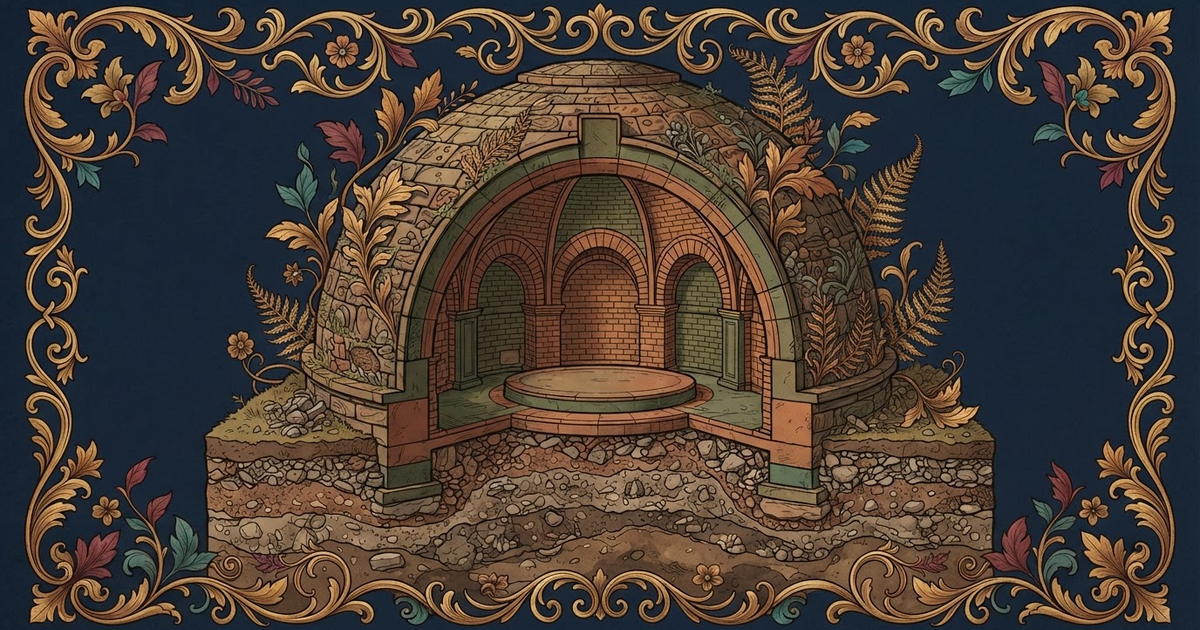
We have journeyed through the failures of the past and the ingenuity of the ancients. Now, we stand at the final summit: why do the Pantheon’s unreinforced concrete domes and the Great Pyramids remain while our modern glass-and-steel skyscrapers anticipate their own demolition in a mere century? The secret lies in the of the ancients. They built for the "deep time" of geology, utilizing massive stone and lime-based mortars that actually strengthen over centuries through chemical carbonation. While we obsess over the speed of construction, ancient engineers prioritized the permanence of the material. They understood that if you force a material to act against its nature—like pulling stone apart—it will eventually fail. Instead, they kept their materials in .
The Carbon Footprint of Time
When we compare the environmental cost of a structure, we have to look beyond the initial build. Modern reinforced steel is a miracle of the industrial age; it allows us to build soaring, thin, and lightweight skeletons. However, steel is a thirsty material. It oxidizes—it rusts—and when it does, it expands, cracking the concrete around it. This is the Achilles' heel of modern architecture. Ancient stone, by contrast, is essentially "dead" material; it has already weathered the elements for millions of years.
| Feature | Ancient Stone/Concrete | Modern Reinforced Steel |
|---|---|---|
| Primary Force | Compression | Tension & Compression |
| Lifespan | Millennia | 50–100 Years |
| Maintenance | Low (passive) | High (active) |
| Carbon Cost | High initial, zero operational | High initial, high replacement |
We are currently trapped in a cycle of building structures that require constant energy to prevent decay. Ancient builders avoided this by designing systems where the weight of the structure held itself together. They didn't fight gravity; they channeled it directly into the earth.
The Unresolved Mystery
There is a persistent question that still haunts structural engineers: how much of the ancient "miracle" was pure trial and error, and how much was a sophisticated understanding of chemical bonds we are only now starting to replicate? We can analyze the chemical composition of Roman concrete, but we struggle to reproduce its self-healing properties on a commercial scale. Modern chemistry is excellent at creating high-strength materials, but we are surprisingly poor at creating materials that improve with age. We know how to build tall, but we have yet to relearn how to build forever.
As we look forward, the challenge for the next generation of engineers is not just to build faster or taller, but to integrate the ancient wisdom of passive stability into our high-tech world. We are moving toward a future where "smart" materials might mimic the self-healing abilities of ancient lime mortars, bridging the gap between the rapid-fire construction of the 21st century and the enduring monuments of the past.
Ancient structures endure because they align with the natural compressive strength of their materials, while modern structures rely on high-tension steel that inevitably degrades over time.
Now that you understand why the pillars of antiquity still stand, you have the lens required to look at any city skyline and see not just glass and light, but a ticking clock of maintenance and structural intent.