
The Strength of Mud and Straw
TL;DR: Ancient builders mastered the art of survival by mixing mud with straw to create sun-dried bricks, a composite material that resists cracking and holds immense weight by spreading pressure across broad foundations.
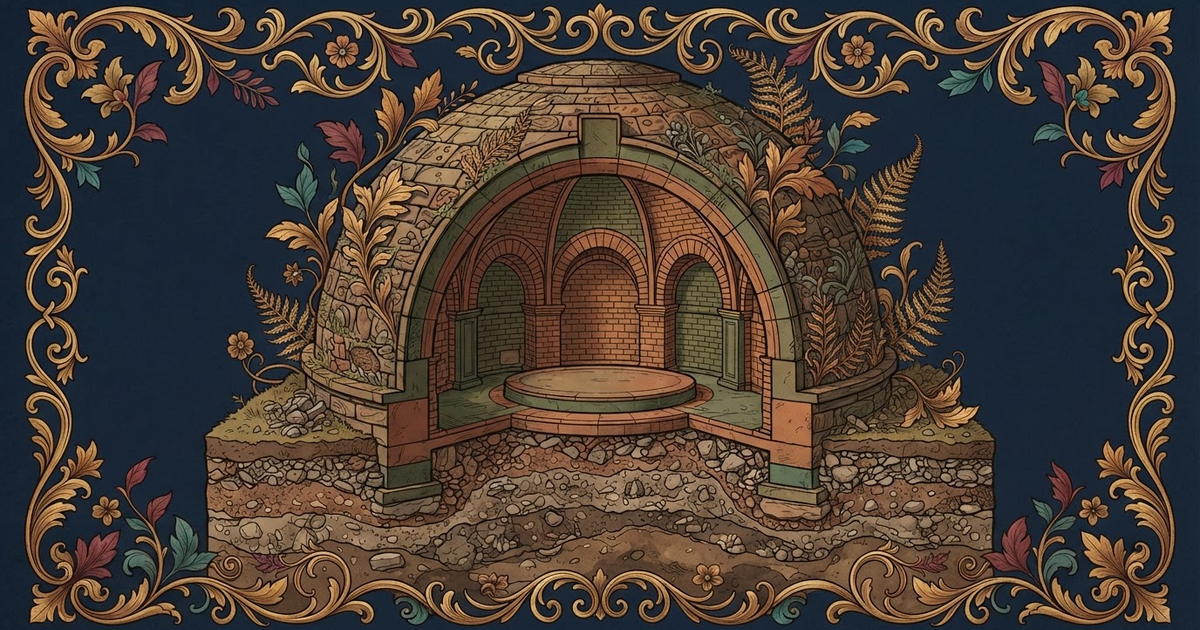
The Alchemy of Earth and Grass
In our last stop, we explored how ancient structures relied on the raw, immovable weight of stone. But what happens when you don't have a quarry nearby? You look down. The ground beneath your feet is the most abundant resource on the planet, but raw mud is a fickle friend. If you just pack it into a mold and let it dry, it shrinks, warps, and eventually fractures under its own weight.
Ancient engineers solved this with a simple, brilliant trick: they added straw. When you mix organic fibers into wet clay, you aren't just making a mess; you are creating a material. The straw acts like a web of tiny, flexible anchors. As the mud dries and tries to pull apart, the straw holds the particles together, preventing the cracks that usually destroy earthen walls. This might seem fragile compared to modern steel, but it allowed civilizations to rise from the desert floor.
The Science of the Sun-Baked Block
Why does this work? It comes down to the way the material handles . Mud bricks are champions at being pushed down, but they fail if you try to pull them apart or bend them. By drying them in the sun rather than firing them in a kiln, builders kept the bricks slightly flexible. This was a strategic choice. In regions prone to minor ground shifts, a wall that can give just a fraction of a millimeter without snapping is a wall that stays standing for centuries.
However, there is a limit. Because these bricks are heavy and lack the internal skeleton of modern buildings, the height of a wall is strictly governed by gravity. If you stack them too high, the bricks at the bottom begin to crumble under the sheer weight of the ones above. To prevent this, early urban planners used a technique called tapering—making the base of the wall significantly wider than the top. This effectively spreads the load over a larger surface area, ensuring the foundation doesn't just turn back into dust.
Calculating the Load
If you were an ancient architect, you had to be a master of the "rule of thumb." Without calculators, you relied on observing how much weight a specific width of wall could support before showing signs of fatigue.
Assessing Wall Integrity
Procedure · 4 steps- 1Measure the base width of the wall in relation to its total height.
- 2Observe the drying patterns for vertical hairline cracks.
- 3Test the moisture content to ensure even shrinkage.
- 4Increase the base width by 20% for every additional meter of height.
This isn't just about building walls; it’s about managing energy. A building is essentially a machine that holds itself up. By using sun-dried bricks, builders were using the energy of the sun to harden their materials, creating massive, cool, and stable environments in some of the hottest climates on Earth. They didn't defy gravity; they negotiated with it, giving it a wide base to rest upon.
The addition of straw to mud creates a composite material that prevents structural cracking, allowing ancient builders to construct massive, stable walls by carefully managing the downward force of gravity through widened foundations.
Now that you understand how to make the earth stand tall, you might wonder how we can build without any binding agent at all. Next, we head to the world of dry-stack construction, where the secret isn't in the mud, but in the perfect, gravity-defying balance of stone on stone.