
The Secrets of Roman Concrete
TL;DR: Roman concrete stays strong for thousands of years because it uses volcanic ash that reacts with seawater to grow new, reinforcing minerals, effectively 'healing' the structure over time.
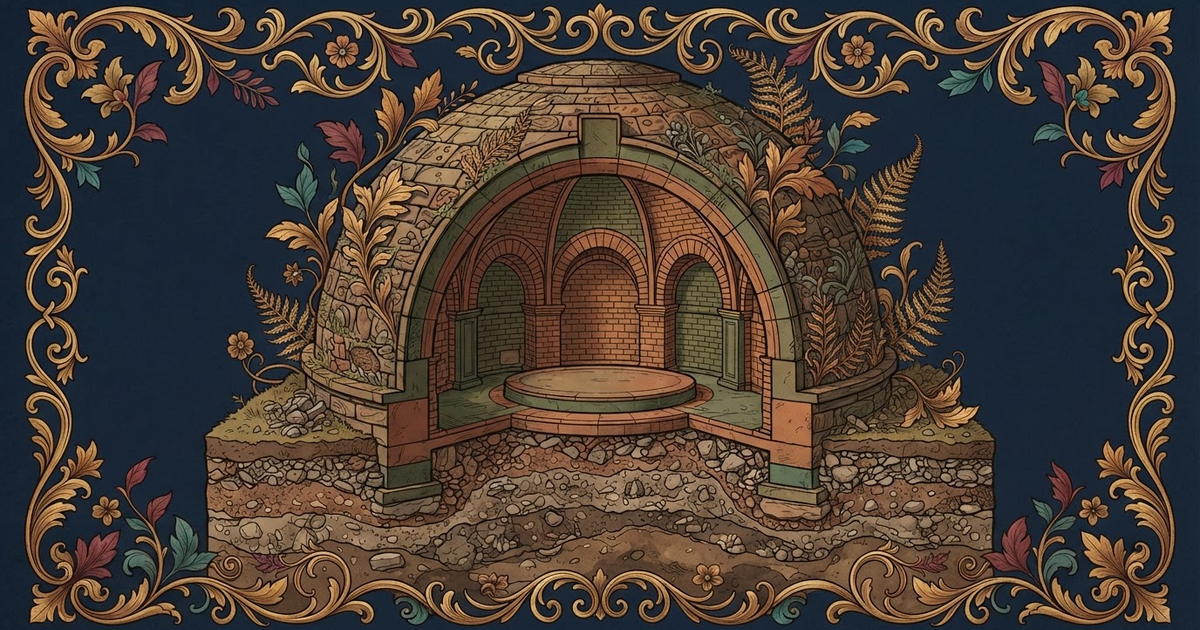
The Secret in the Ash
We have already explored how timber frames rely on precise joints and gravity to hold up roofs, but once you move to the water, wood just doesn't cut it. The Romans faced a massive engineering hurdle: how to build durable harbors that could withstand the relentless, corrosive pounding of the Mediterranean Sea. Their solution wasn't just a recipe; it was a chemical transformation. While modern concrete is designed to be inert—meaning it doesn't react with its environment—Roman concrete was designed to thrive on it.
At the heart of this material is . When mixed with lime and seawater, this ash triggers a series of chemical reactions that allow the material to harden even while submerged. While modern builders fight to keep water away from their foundations, the Romans invited it in, turning the salt and moisture into the very tools that cemented their structures together.
The Chemistry of Endurance
To understand why these structures are still standing, we have to look at what happens inside the concrete at a microscopic level. In standard modern concrete, we use a binder that creates a rigid, static structure. If a crack forms, the concrete stays cracked. Roman concrete, however, performs a trick called the .
When seawater filters through the cracks of a Roman harbor, it doesn't just erode the stone; it dissolves the volcanic ash trapped within the mortar. This creates a chemical soup that eventually recrystallizes into a rare mineral called tobermorite. Think of this as a self-healing mechanism. As the ocean water interacts with the concrete, it grows new, tiny crystals that plug the gaps, making the material tougher and more tightly bound the longer it sits in the surf. It is essentially a living, breathing material that gains strength from the very elements that destroy lesser structures.
Engineering for the Ages
This wasn't just a lucky accident. Roman engineers were masters of material science who understood exactly how to balance their ingredients. They layered their concrete with volcanic tuff and brick to manage the heat generated by the chemical reaction, preventing the structure from cracking as it set. By controlling the internal temperature and the chemical composition, they created massive breakwaters that have survived two millennia of storms, tides, and tectonic shifts.
We often think of progress as moving toward stronger, faster, and more efficient materials. Yet, when we look at Roman concrete, we see a design philosophy that prioritized longevity over immediate utility. They didn't just build for their own generation; they built for the next thousand years. It is a humbling reminder that sometimes the most advanced technology isn't the one that resists nature, but the one that knows how to work with it.
Roman concrete survives for millennia because its volcanic ingredients react with seawater to create self-healing mineral structures that grow stronger over time.
Now that we understand how the Romans mastered the chemistry of the earth to anchor their world, we must look at how they mastered the geometry of the sky. In the next station, we will climb away from the harbor and into the temples to explore how Greek proportions and columns turned simple stone into the language of architectural beauty.