
Why Ancient Buildings Stay Up
TL;DR: Ancient buildings stay standing because they masterfully balance , which stone loves, against , which stone hates.
The Gravity Problem
Every structure you see—from a humble garden wall to a soaring cathedral—is locked in a permanent, silent wrestling match with gravity. Gravity is the relentless force that wants to pull every atom of a building straight down into the dirt. If you simply stack rocks, gravity will try to shift them, slide them, and eventually tumble them until they lie flat on the ground. To defy this, ancient builders didn't need fancy gadgets; they needed to understand how materials react to stress.
Think of your own body. When you stand, your bones are being squeezed by your weight—that is compression. If you try to pull your arms apart, the muscles and tendons are being stretched—that is tension. Ancient builders realized early on that stone is a superhero at handling compression but a total failure at handling tension. If you take a long, thin slab of stone and try to bend it, it will snap like a dry twig. This fundamental physical reality dictated the shape of the ancient world.
Mastering the Squeeze
To build anything tall, you have to keep the material in compression. This is why the most iconic shapes in history, like the pyramid or the arch, are so effective. A pyramid is essentially a massive pile of stone where every layer is pushing down on the one below it. Because the weight is directed straight toward the earth, the stones are trapped in a state of permanent, stable compression. There is no room for the material to pull apart or bend.
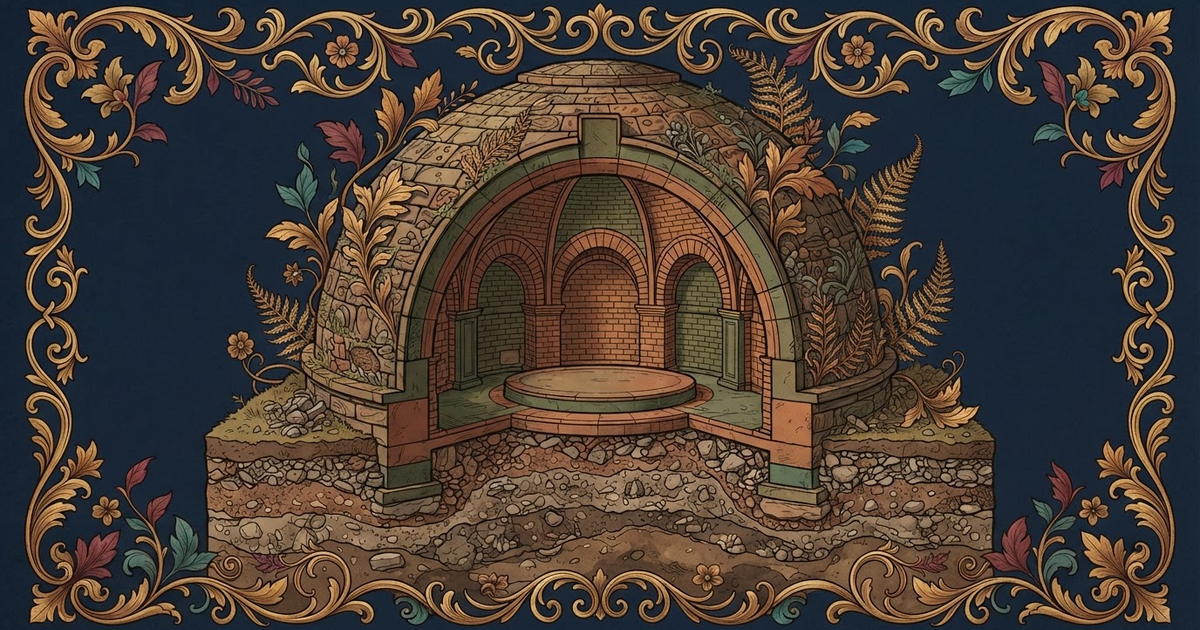
However, builders eventually wanted to create interior spaces, not just solid mountains. This led to the invention of the arch. An arch is a clever trick: it takes the vertical force of gravity and redirects it outward and downward along a curved path. By shaping stones into a wedge (the ), builders ensured that every piece of the arch is constantly being squeezed by its neighbor. As long as the arch is held tight, the stones cannot fall because they are literally wedged into a state of compression.
The Hidden Trade-off
If stone is so good at being squeezed, why don't we just use it for everything? The answer lies in the limitations of tension. If you want to span a wide gap—like a ceiling over a grand hall—you cannot simply lay a flat stone beam across it. The weight of the beam itself will pull the bottom surface apart, causing it to crack and collapse under its own gravity.
Ancient builders had to get creative. They used thick, heavy pillars to support roofs, which kept the stone in compression. They also learned that if they couldn't stretch a material, they had to stack it. By keeping the load path vertical, they avoided the "snap" that tension causes. They didn't fight gravity; they channeled it into the ground through the most efficient path possible.
| Structural Element | Primarily Handles | Best Material |
|---|---|---|
| Column | Compression | Stone / Brick |
| Arch | Compression | Stone / Brick |
| Beam | Tension | Wood / Steel |
| Foundation | Compression | Stone / Earth |
When you look at a ruin today, you aren't just seeing old rocks. You are seeing a successful negotiation with physics. The buildings that remain are the ones that successfully funneled every ounce of weight into the earth without ever asking the stone to do something it wasn't built to do.
Ancient monuments remain standing because their designs force gravity to act through compression, avoiding the tension that causes brittle materials like stone to fail.
Now that you understand the invisible forces of compression and tension, we are ready to move beyond stone and explore how ancient builders innovated with the humble, flexible strength of mud and straw.