
The Invention of the Arch
TL;DR: The arch works by turning the downward pull of gravity into a diagonal force, pushing outward against heavy supports called abutments to keep the structure from collapsing.
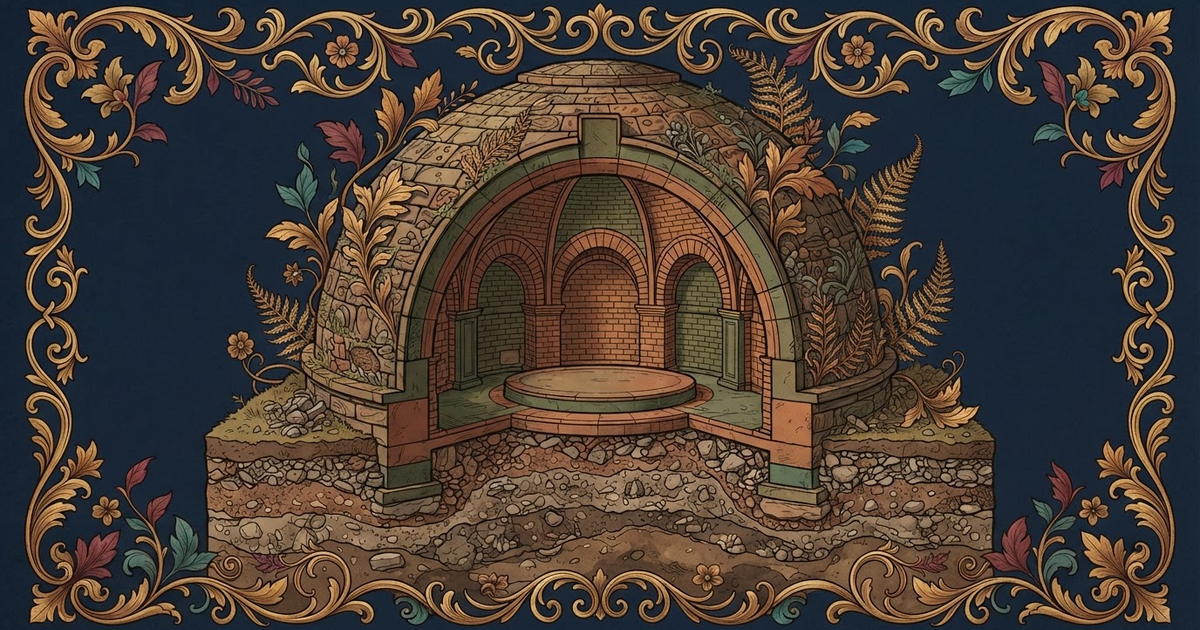
The Geometry of Gravity
In our last stop, we looked at how stacking stones relies on friction and gravity to hold things together. But as soon as you want to span a gap—like a doorway or a bridge—stacking stones alone fails. Gravity wants to pull everything straight down. If you place a flat stone across two vertical columns, the weight of the stone pushes down in the middle, creating a "bending" force that eventually snaps the beam. To build bigger and wider, we needed a way to trick gravity into moving sideways.
That is where the comes in. Instead of fighting gravity, the arch embraces it. By arranging stones in a curve, we force the weight of the structure to travel along the curve itself, eventually reaching the ground at an angle. This is the secret to moving from simple stone stacks to the grand monuments that have defined human history.
From Vertical Weight to Horizontal Thrust
Imagine you are holding a stack of books. If you try to hold them perfectly vertical, your arms get tired quickly because you are fighting gravity head-on. But if you lean them against a wall, the wall takes some of the pressure. The arch does exactly that.
Each stone in an arch is cut into a wedge shape, called a . These wedges lean against each other, passing the weight down the line. The very top stone, the one that locks the whole thing in place, is the . Once that keystone is dropped into position, the entire arch becomes a single, rigid unit.
However, there is a catch. Because the arch is curved, it doesn't just push down; it pushes out. This outward pressure is called . If you don't provide something to stop that thrust, the arch will simply splay out at the bottom and collapse. This is why you see massive, thick walls or extra pillars at the base of arches. These are the . They act like a heavy anchor, holding the arch in place against its own desire to spread wide.
Visualizing the Path of Force
To understand the mechanics, think of the arch as a path for the weight to travel. If you were to draw a line representing the force, it wouldn't be a straight vertical drop. Instead, it follows the curve of the stones down toward the earth.
If the abutment is too thin, the force line "escapes" the stone and the arch fails. If the abutment is heavy and thick, it redirects that diagonal force safely into the foundation. This is the fundamental trade-off of structural engineering: you gain the beauty and strength of the span, but you pay for it with the requirement for massive, solid supports at the base.
Why This Matters
Once builders mastered the arch, they stopped being limited by the length of the stones they could find in nature. They could build bridges across raging rivers, massive aqueducts to carry water across miles of desert, and soaring cathedrals that reached toward the clouds. They learned that by shaping the material, they could change the direction of the forces acting upon it.
We have moved from simple gravity-based stacking to a sophisticated system of directed force. Now that we can span gaps and manage horizontal thrust, we are ready to look at how we can put a roof over our heads without needing to build walls that are ten feet thick.
The arch is a geometric solution that converts the downward pull of gravity into diagonal thrust, which must be contained by heavy abutments to keep the structure standing.
Next, we will look at how we can use these same principles to create complex timber frames that keep our roofs dry and our buildings standing tall.