
Bridging Rivers and Valleys
TL;DR: To move water across a valley, you need a steady, shallow slope maintained by arches that transfer massive weight down to solid ground, whereas wooden bridges rely on flexible, lightweight trusses to span gaps without the need for permanent, heavy masonry.
The Gravity of the Situation
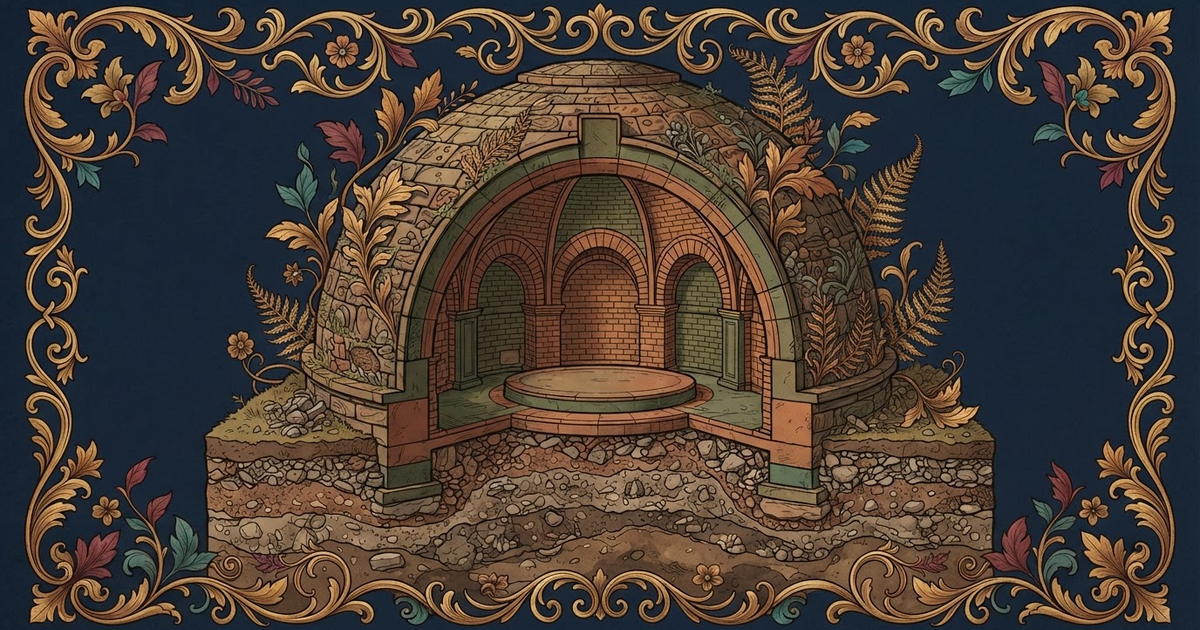
We have already explored how allow us to enclose space without crumbling. Now, we are taking that same geometry and laying it flat across the landscape. When you need to move water from a mountain spring to a city, you cannot just lay a pipe and hope for the best. Water is heavy, and it refuses to climb hills on its own. To keep it moving, you need a precise, constant —often dropping only a few inches for every hundred feet of distance.
If the ground falls away into a valley, you have two choices: go around it, which takes forever, or build a bridge to carry the water channel. This is where the structural engineering of an aqueduct becomes a masterclass in weight management. Unlike a bridge meant for people or carts, an aqueduct is a permanent, heavy load that never stops pushing down. You aren't just building a road; you are building a mountain that stays put.
Stone Arches vs. Wooden Trusses
When we look at building materials, we are really choosing how we want to handle stress. Stone is incredible under , but it has no strength when you try to pull it apart. If you tried to build a long, flat stone beam to bridge a valley, the middle would snap under its own weight. By using arches, we force the stone to stay in compression. The weight of the water channel is funneled through the curve of the arch and down into the thick, sturdy pillars.
Wooden bridges, however, operate on a different philosophy. Wood has the unique ability to handle both compression and . This allows us to build . A wooden bridge is lightweight and flexible. It can sway slightly in the wind or under the weight of a wagon without shattering. If you tried to build an aqueduct out of wood, it would rot, warp, and likely collapse under the constant, heavy flow of water. Stone is the choice for permanence and mass; wood is the choice for agility and speed.
Calculating the Path
To keep water flowing, you must calculate your arch spacing based on the terrain. If the valley is deep, you need taller arches. If the span between pillars is too wide, the stone beam at the top will fail. You must balance the height of the pier with the width of the gap.
Aqueduct Gradient Calculation
Procedure · 5 steps- 1Determine the total elevation drop required for the water flow rate.
- 2Divide the total drop by the total distance to find the slope per foot.
- 3Identify the lowest point of the valley floor to set your base pillar height.
- 4Space arches to ensure the stone lintels do not exceed their structural load limit.
- 5Align the center of each arch to the center of the vertical pier to ensure even load distribution.
| Feature | Stone Aqueduct | Wooden Bridge |
|---|---|---|
| Primary Stress | Compression | Tension & Compression |
| Lifespan | Centuries | Decades |
| Flexibility | Rigid | Elastic |
| Best Use | Constant Heavy Load | Variable Dynamic Load |
If you place your pillars too far apart, the stone between them—the —will crack. If you place them too close, you waste materials and block the valley floor. The perfect design is the one that uses the fewest arches necessary to keep the water channel perfectly level.
Structural success relies on matching your material’s natural strengths—compression for heavy stone masonry or tension for flexible wooden trusses—to the specific demands of the load you are carrying.
Next, we move away from moving water and toward keeping people out, as we examine the massive, defensive engineering required for fortresses and siege walls.