
Failure Analysis of Antiquity
TL;DR: Ancient structures often failed not because the materials were weak, but because builders underestimated the lateral force of gravity and the shifting nature of their foundations.
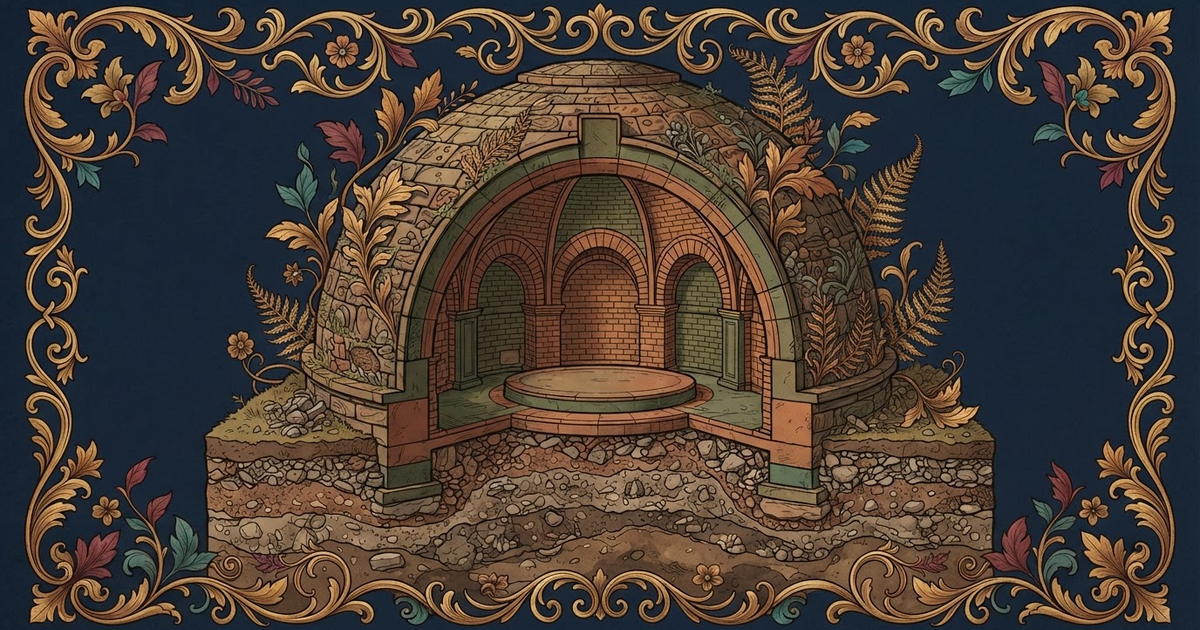
The Anatomy of a Collapse
When we look at the ruins of antiquity, we tend to see them as survivors. We celebrate the Pantheon or the Great Pyramids, forgetting the thousands of structures that crumbled into dust long ago. In the world of structural engineering, a collapse is rarely a mystery; it is a confession. By analyzing why a wall bowed out or why a vault cracked, we can read the structural intent of the original builder.
Most ancient failures stem from a misunderstanding of . In our previous look at earthquake-resistant design, we learned how to distribute energy. However, even without an earthquake, gravity is a constant, relentless engineer. If an arch is not properly balanced, it acts like a wedge, pushing its supports outward until the entire system loses its geometry. When the geometry goes, the gravity wins.
Reading the Cracks
Engineers today use a process called to decode these ancient failures. Think of a cracked stone arch. If the crack appears at the top center, the arch was likely too flat. If the cracks appear at the sides, the supports were shifting or spreading.
Foundation settlement is the silent killer of history. Ancient builders often relied on intuition rather than soil mechanics. When a heavy stone temple was placed on soft, water-rich clay, the ground would compress unevenly. This caused one corner of a building to sink, creating a tilt that increased the stress on the upper masonry. Once the vertical load was no longer perfectly aligned with the center of the columns, the stones began to slide. It wasn't a sudden explosion of failure, but a slow, agonizing slide toward instability.
The Point of Failure
In our study of structural history, we have seen how materials like limestone and marble transformed the landscape. Yet, even the finest marble is useless if the is not properly seated. In many collapsed vaults, we find that the failure began at the connection point between the arch and the vertical pier.
When you examine a failed vault model, you must look for the "hinge point." This is where the structure stopped acting like a rigid solid and started acting like a series of connected levers. Once three or more hinges form in a masonry arch, it becomes a mechanism—it is no longer a structure, but a falling object. Modern engineers look for these specific failure patterns to ensure that our own skyscrapers don't replicate the mistakes of the past. We have moved from trial-and-error to digital modeling, but the physical laws remain identical. The weight must go down, and the foundation must be able to hold it.
Ancient structural failures were almost always the result of a mismatch between the outward push of heavy stone arches and the ability of the ground or side walls to resist that force.
Now that we understand why things fall down, we are ready to look at how the ancient world mastered the mechanics of lifting, pulling, and moving massive weights. Next, we explore the legacy of ancient mechanics, where we will see how the simple tools of the past became the heavy machinery of the future.