
The Mechanics of Amphitheaters
TL;DR: Ancient amphitheaters relied on a precisely engineered system of radiating barrel vaults and massive concrete rings to channel the weight of thousands of spectators directly into the earth.
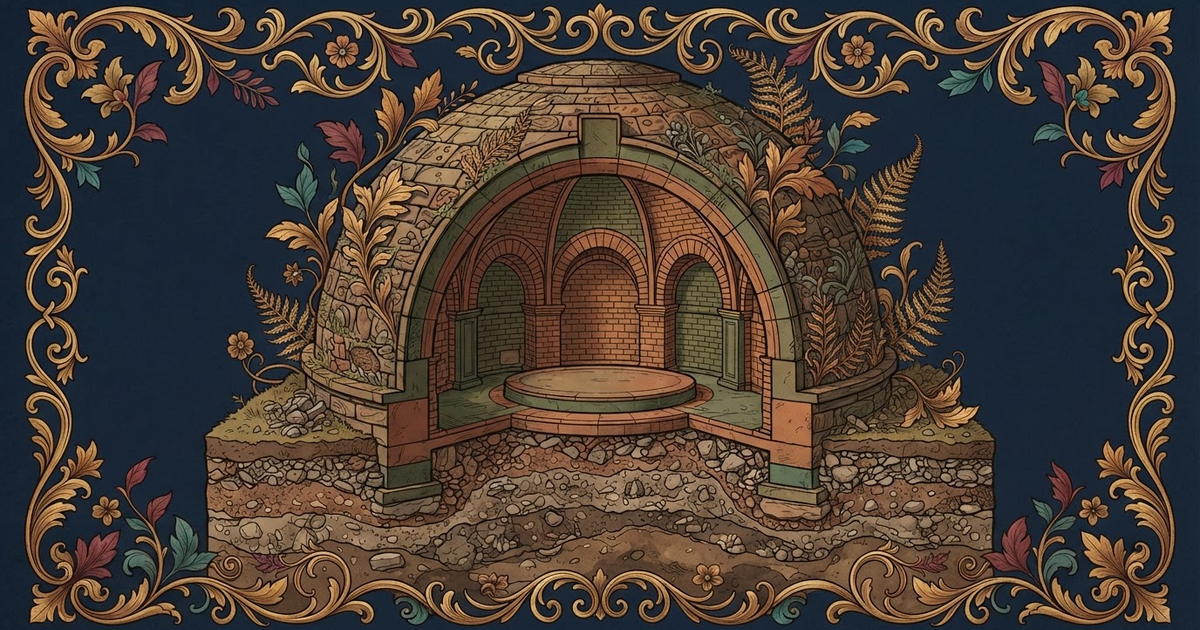
The Gravity of the Crowd
In our previous stop, we looked at how walls were built to keep people out. Now, we are looking at how to hold thousands of people up. An amphitheater is essentially a gravity-defying machine. When you pack 50,000 spectators into a stadium like the Colosseum, you aren't just dealing with the weight of stone; you are dealing with the dynamic load of human movement. Ancient engineers understood that if they simply piled stone higher, the structure would collapse under its own mass. Instead, they used the structural geometry of the circle to distribute force.
The Geometry of the Vault
To understand how these structures stand, you have to visualize the . Think of a tunnel made of stone. When you place a weight on top of a flat stone beam, it wants to snap in the middle. But in a barrel vault, the weight is pushed outward and downward along the curve, traveling through the stone until it hits the ground.
By arranging these vaults like the spokes of a wheel, builders created a system where every seating section was supported by its own independent structural spine. This meant that the weight of the crowd in one section didn't rely on the section next to it to stay upright. If you were sitting in the nosebleeds, your weight was being transferred through a series of inclined arches—essentially stone ramps—down to the heavy, load-bearing piers at the base.
The Foundation Ring
At the very bottom of this system sits the foundation. Imagine a giant, circular concrete donut buried deep in the earth. This is the bedrock of the entire operation. All those radiating vaults we just discussed terminate at this ring. By spreading the weight across this continuous circle, the engineers prevented the structure from sinking into the soil. It is the architectural equivalent of wearing snowshoes; by increasing the surface area at the base, you keep the whole monument from punching a hole in the ground.
The Hidden Mechanics of Flow
Beyond just holding weight, these structures had to move people. The genius of the amphitheater design lies in the integration of the substructure with the circulation paths. The same arches that held up the seats also acted as tunnels, or vomitoria, allowing thousands of people to enter and exit in minutes. This was a masterclass in structural efficiency: the load-bearing elements were never just "dead weight." They were hollow, functional spaces that served the human flow.
We have moved from the static strength of defensive walls to the complex, load-distributing geometry of public arenas. You have seen how stone can be bent into vaults and how foundations can be shaped into rings to manage massive forces. But what happens when we take these engineering principles away from the solid ground and move them to the water?
Amphitheaters survive for millennia because they use radiating arches to funnel the immense weight of a crowd into a continuous circular foundation that prevents collapse.
Next, we will look at how ancient engineers conquered the shifting, unpredictable forces of the sea in our study of harbor engineering challenges.