
Documentation Methods
When the 2018 fire damaged the historic Notre-Dame Cathedral, experts relied on digital archives to guide reconstruction efforts. They used precise laser scans taken years earlier to replicate intricate stonework that otherwise would have been lost forever. This scenario demonstrates the power of digital documentation, a process that turns physical structures into permanent computer models for future use. Just as a bank keeps a detailed ledger of every transaction to protect your savings, historic preservationists keep digital ledgers of buildings to protect our shared cultural wealth. Without these records, we lose the exact blueprints of our past when physical materials inevitably weather and decay over time.
Modern Tools for Recording History
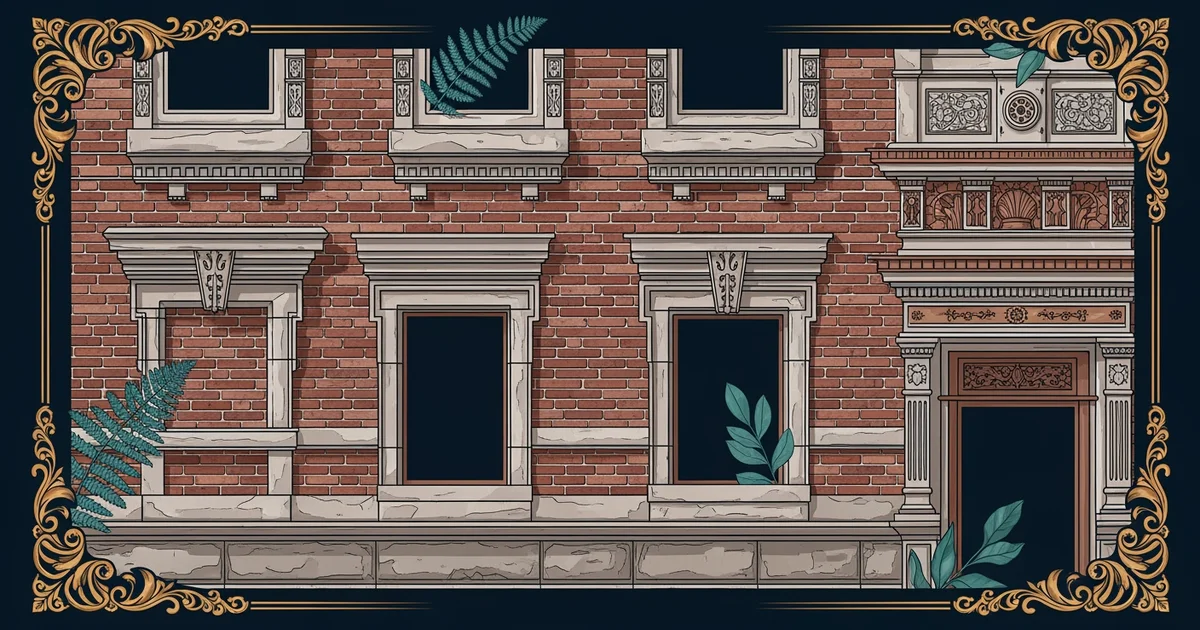
To capture a building accurately, you must move beyond simple tape measures and paper sketches. Professionals now use advanced tools to collect spatial data that creates a perfect virtual replica of any site. These methods ensure that every molding, crack, and structural angle remains preserved in a high-resolution format. Recording a structure today is like taking a high-definition photograph of a moment in time, but this photo contains depth and measurements you can manipulate. By gathering this data, you create a safety net for the building that survives even if the original structure suffers damage.
Key term: Photogrammetry — a technique that processes hundreds of overlapping photographs into a single, accurate 3D model through software calculations.
Effective site recording often requires combining several different technologies to achieve the highest level of accuracy for preservation. You should consider the following methods when documenting a historic structure for your own local project:
- Laser scanning provides precise point cloud data that maps every surface of a building to within a few millimeters of actual size.
- Aerial drone surveys allow you to capture high-altitude imagery of roofs and chimneys that are otherwise impossible to see from the ground level.
- Handheld digital tablets allow for real-time annotation of specific architectural features while you are physically standing inside the historic space itself.
Managing Your Digital Archive
Once you have gathered all this raw data, you must organize it into a format that remains useful for years. A digital record is only as good as the system you use to store and search through the files. Think of this process like organizing a massive library where every book has a specific tag for easy retrieval. If your data is messy, future architects cannot find the information they need to fix a broken wall or replace a missing window frame. Proper management ensures that your hard work serves as a reliable guide for the next generation of building restorers.
| Tool Type | Primary Function | Best Use Case | Accuracy Level |
|---|---|---|---|
| Laser Scan | Spatial Mapping | Complex Facades | Very High |
| Digital Photo | Visual Record | Surface Details | Moderate |
| Hand Sketch | Contextual Note | Layout Planning | Low |
Using these tools helps you understand how a building behaves under stress, which is essential for long-term maintenance. When you record a structure, you are not just saving a picture, but you are also saving the logic behind the design. This practice connects your current efforts to the original builders, ensuring that their intent remains clear for those who follow in your footsteps. By applying these digital methods, you become an active guardian of the history embedded in the walls around you.
Digital documentation provides a permanent, measurable blueprint that allows us to repair and protect historic sites with perfect accuracy.
But this digital record becomes difficult to manage when we attempt to integrate modern systems into these fragile historic structures.