
Concert Hall Design
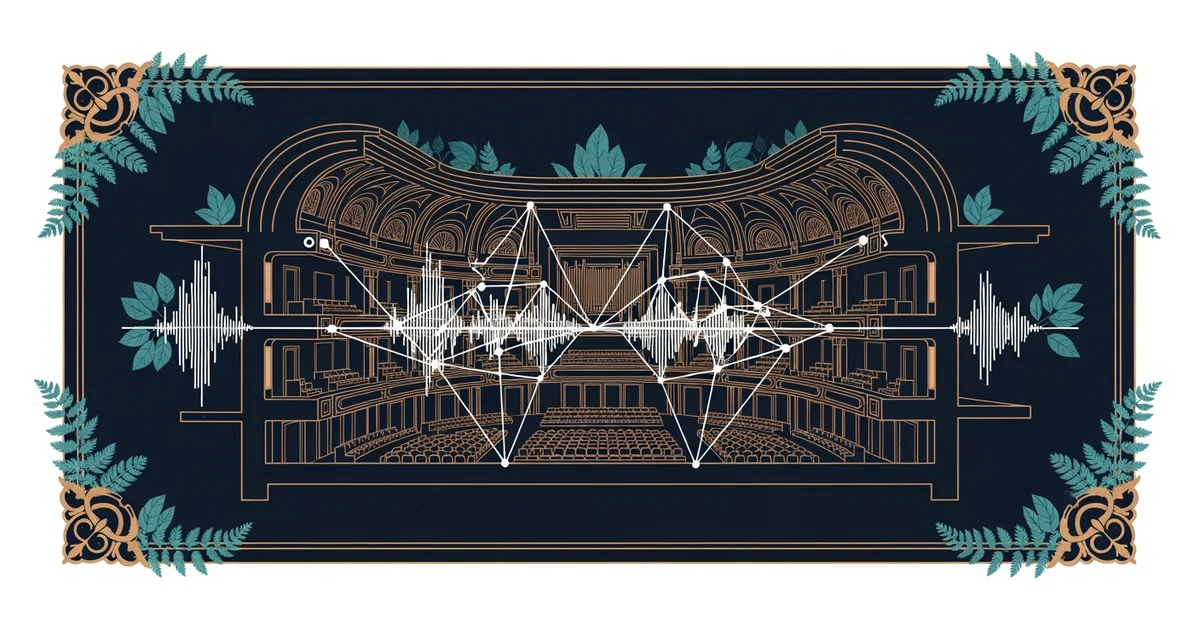
When the Walt Disney Concert Hall opened in Los Angeles, architects faced a massive challenge in managing complex sound waves. They had to ensure every listener heard the same crisp notes regardless of their specific seat location. This problem requires careful control of how sound energy moves across a large, open space. Without proper design, sound waves bounce off hard surfaces and create messy echoes that ruin the musical experience. Architects treat the hall like a giant musical instrument to solve this tricky acoustic puzzle.
Shaping Sound for Performance
Sound behaves much like water flowing through a series of pipes and wide chambers. When a performer plays a note, the sound expands outward in waves until it hits a surface. If the walls are flat and hard, the sound reflects back in a single, harsh direction. This creates a phenomenon called specular reflection, which acts like a mirror for sound waves. To prevent this, architects use irregular wall shapes to scatter the sound energy in many directions. This process, known as diffusion, ensures that the sound remains balanced and clear throughout the entire room.
Key term: Diffusion — the process of scattering sound waves across a surface to create a uniform listening environment.
By breaking up flat surfaces, designers stop sound from bunching up in one specific area. Imagine you are pouring water into a bowl with many small rocks at the bottom. The rocks force the water to spread out evenly rather than splashing back at you. Architects apply this logic by adding textured panels or angled balconies to the interior walls. These features catch the sound waves and redirect them toward the audience. This strategy keeps the energy level high while reducing the risk of annoying echoes or dead spots.
Managing Time and Clarity
Once the sound is scattered, designers must manage how long those waves linger in the air. This duration is called reverberation time, and it dictates how "live" or "dry" a hall feels to listeners. A long reverberation time makes music sound rich and full, which is perfect for large orchestral pieces. However, too much lingering sound makes speech hard to understand. Designers balance this by using materials that absorb specific sound frequencies to keep the room from sounding muddy.
| Feature | Purpose | Impact on Sound |
|---|---|---|
| Textured Walls | Diffusion | Spreads energy evenly |
| Soft Seats | Absorption | Reduces unwanted echoes |
| Angled Panels | Reflection | Directs sound to ears |
Architects adjust these features based on the primary use of the hall. A room built for opera needs different settings than a room for jazz. They calculate the total volume of the space and the number of people inside to predict the final sound quality. This careful planning ensures that the music reaches the back row with the same power as the front row. The goal is to make the architecture disappear so the music becomes the only thing the listener perceives.
To manage these complex factors, architects often use a combination of hard and soft materials. Hard surfaces like wood or plaster reflect sound to maintain volume, while soft materials like fabric or foam soak up excess noise. By layering these materials, designers create a dynamic environment that supports both soft whispers and loud crescendos. This interaction between the physical structure and sound waves is the core of successful concert hall design.
Concert hall design succeeds by balancing sound reflection and absorption to ensure every listener experiences clear, uniform audio quality.
The ability to control sound in this way leads directly into the next challenge of managing noise in professional office environments.