
Diffusion and Scattering
Imagine standing in a large, empty hall where every word you speak echoes back as a harsh, sharp slap against your ears. This experience happens because smooth, flat surfaces reflect sound waves directly back to your position without changing their path. Architects must manage these reflections to make a space feel comfortable for listeners instead of overwhelming or confusing. You can think of this process like managing a crowded room where people move in organized paths rather than bumping into each other randomly. By using specific tools, designers ensure that sound energy spreads evenly across a room to improve the quality of what you hear.
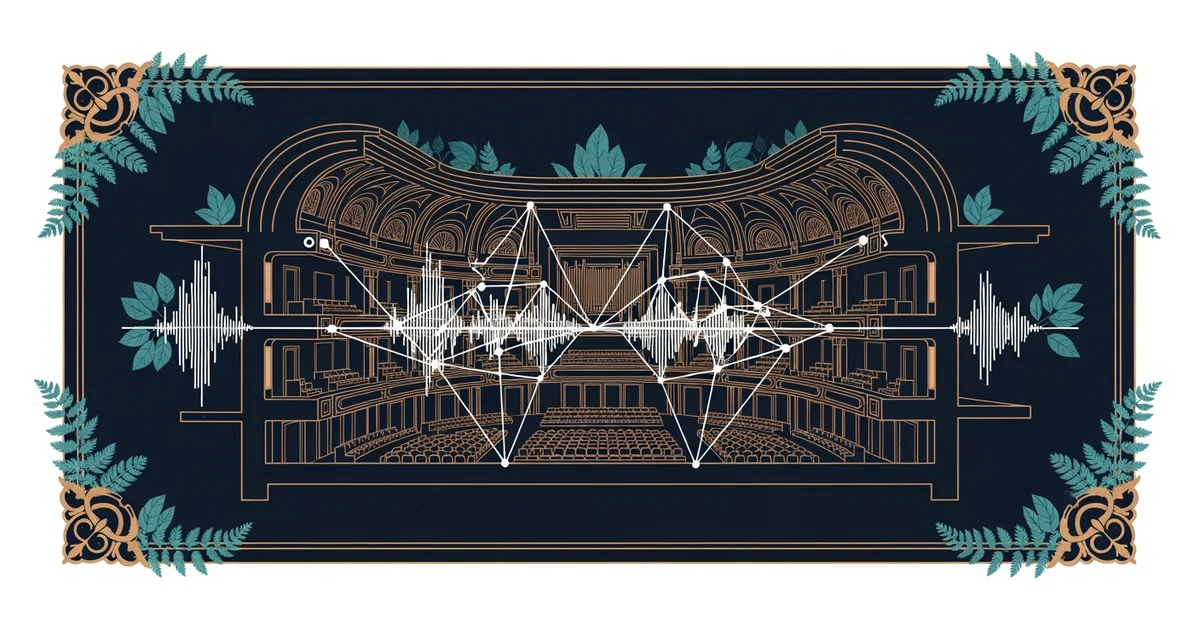
Managing Sound Reflections Through Geometry
When sound waves hit a hard wall, they bounce off like a ball hitting a concrete floor. This direct reflection creates an echo that makes speech difficult to understand in large, open rooms. To solve this problem, designers use diffusion, which is the process of scattering sound waves into many smaller, weaker reflections. Instead of one strong bounce, the sound hits a textured surface and breaks into numerous directions. This technique prevents sound from gathering in one place and creating loud spots that hurt your ears. By breaking up the energy, the room sounds natural and balanced for everyone sitting inside the space.
Key term: Diffusion — the process of scattering sound energy across a wide area to prevent echoes and create a more uniform listening environment.
Think of diffusion like a garden sprinkler that takes a single stream of water and turns it into a fine mist. The total amount of water remains the same, but it covers a much larger area without soaking one spot. In a room, the diffuser acts as the sprinkler head that forces the sound energy to disperse outward. This prevents the harsh buildup of noise that occurs when sound waves strike a flat surface. A well-designed space uses these shapes to ensure that every listener receives a clear, pleasant version of the original sound.
Tools for Controlling Sound Energy
Designers rely on specific physical structures to achieve this scattering effect effectively in modern building designs. These tools come in various shapes and sizes to handle different types of sound frequencies during daily use. The following table highlights common methods used to manage these sound waves in professional architectural projects:
| Method | Primary Action | Best Use Case | Effect on Sound |
|---|---|---|---|
| Quadratic Diffuser | Uses varied depths | High frequencies | Scatters sound evenly |
| Convex Panels | Curves surface out | Mid frequencies | Spreads energy wide |
| Slotted Walls | Uses open gaps | Low frequencies | Traps and disperses |
These tools work by forcing the sound wave to travel different distances before it bounces back. Because each part of the wave hits a different depth, they arrive at your ears at slightly different times. This timing difference makes the sound feel richer and more spacious rather than thin or hollow. You can observe these patterns in concert halls where the walls feature complex, carved wooden designs. These patterns are not just for decoration, as they serve a vital purpose in keeping the sound quality high.
There are three main ways that these physical structures improve the overall experience for a listener in a room:
- Uniform coverage ensures that the sound level remains consistent throughout the entire room so that no single area feels too loud or quiet.
- Reduced echo intensity prevents the buildup of harsh reflected noise that often makes it difficult to understand speech or enjoy music clearly.
- Increased sense of space creates an environment where the sound feels surrounding and immersive, which makes the room feel much larger than it is.
Each of these benefits relies on the careful placement of materials that break up sound waves effectively. When an architect plans a space, they must calculate where sound will travel and place these diffusers at the exact points of impact. This precision ensures that the room performs exactly as intended for its specific purpose, whether it is a small office or a large theater. By controlling the physics of the environment, designers turn a simple box into a space that sounds truly professional and inviting for everyone who enters.