
Absorption and Reverberation
Imagine standing inside a large, empty stone cathedral while you clap your hands loudly. You hear a lingering, ghostly tail of sound that slowly fades away as it bounces off the hard walls. This effect is known as reverberation, and it describes how sound continues to persist in a space after the original source stops. Architects must carefully manage this energy to ensure that music sounds rich or that speech remains clear and understandable for every listener. Without control over these decaying sound waves, a room can quickly turn into a chaotic mess of overlapping echoes that mask important details.
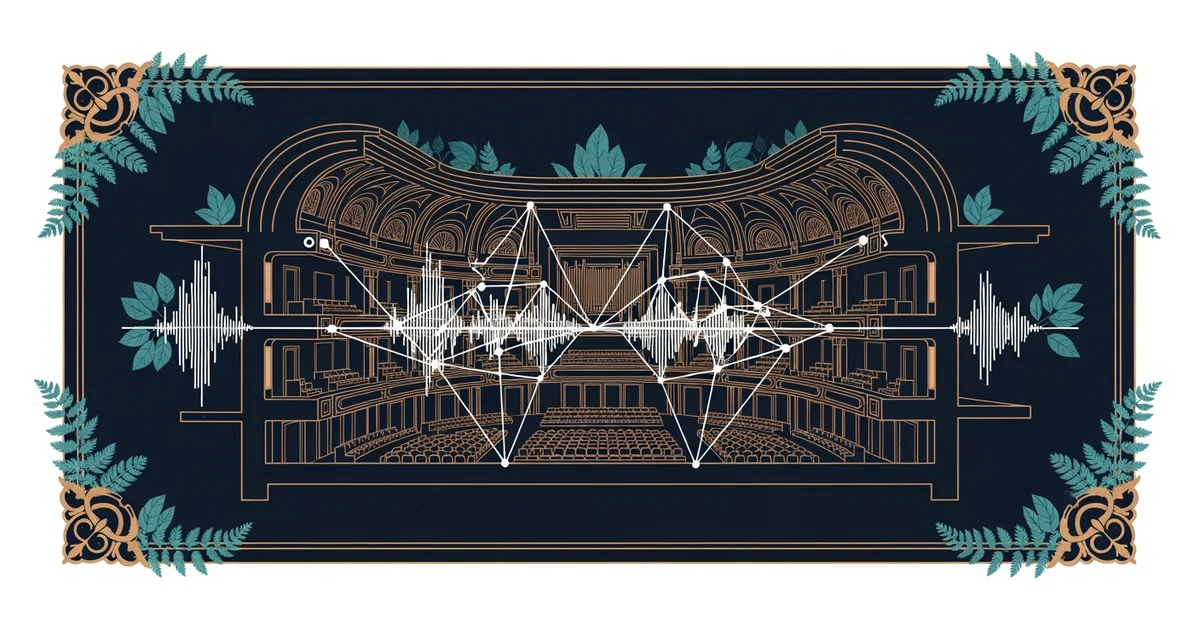
Understanding Sound Decay and Absorption
To manage this lingering energy, designers focus on the concept of absorption, which is the process of soaking up sound waves using soft materials. When sound waves strike a hard surface like concrete or glass, they reflect back into the room with almost all their original energy intact. However, when those same waves hit porous materials like thick curtains, foam panels, or heavy carpets, the energy is trapped within the tiny fibers and converted into heat. Think of this process like water being poured onto a dry sponge rather than a flat piece of metal. The sponge captures the liquid and prevents it from splashing everywhere, just as acoustic panels capture sound energy to stop it from bouncing endlessly.
Key term: Absorption — the physical process where sound energy is converted into heat by porous materials to reduce overall echo.
Designers calculate the total amount of sound energy a room can hold by looking at the surface materials. They use a specific metric called the absorption coefficient to rank how well different materials perform in a space. A material with a high coefficient will soak up most of the sound, while a material with a low coefficient will reflect most of it back. By balancing these surfaces, an architect can tune a room to match its intended use, such as a crisp lecture hall or a warm, melodic concert space.
Calculating Room Reverberation Time
The time it takes for a sound to drop by sixty decibels is known as the reverberation time. Professionals use this specific measurement to predict how a room will feel to an audience before they even start building the structure. If the time is too long, the room sounds muddy, making it hard to distinguish one word from the next in a conversation. If the time is too short, the room feels dead and lifeless, which can make music sound thin and uninspiring to the performers.
| Room Type | Ideal Decay Time | Typical Surface Materials |
|---|---|---|
| Speech Hall | 0.5 to 1.0 s | Acoustic tiles and carpet |
| Music Room | 1.5 to 2.0 s | Hardwood and plaster walls |
| Cathedral | 3.0 to 5.0 s | Stone, glass, and marble |
Selecting the right materials requires a careful balance between aesthetics and functionality. An architect might choose hard wood floors for their beauty, but they must then add heavy ceiling baffles to ensure the room does not become too echoey for its occupants. Every choice made during the design phase directly impacts the listener experience within that specific environment. By knowing how to calculate these decay rates, designers can create spaces that serve their purpose perfectly while maintaining a high level of comfort for everyone inside the room.
Managing the balance between reflective surfaces and absorptive materials allows architects to control how sound lingers and decays within any given space.
The next Station introduces sound isolation techniques, which determine how external noise is blocked from entering a controlled acoustic environment.