
Integrated System Analysis
When you lift a heavy box, your body acts like a complex series of levers and pulleys. You might think of movement as a simple action, but it actually requires a perfect balance of forces across your skeletal system. Every muscle contraction generates tension, while your bones serve as rigid beams that rotate around joints. This mechanical dance relies on the same laws of physics that engineers use to design bridges or robotic arms. By viewing the human frame as a machine, you can see how physics sets the absolute limits for our physical strength and range of motion.
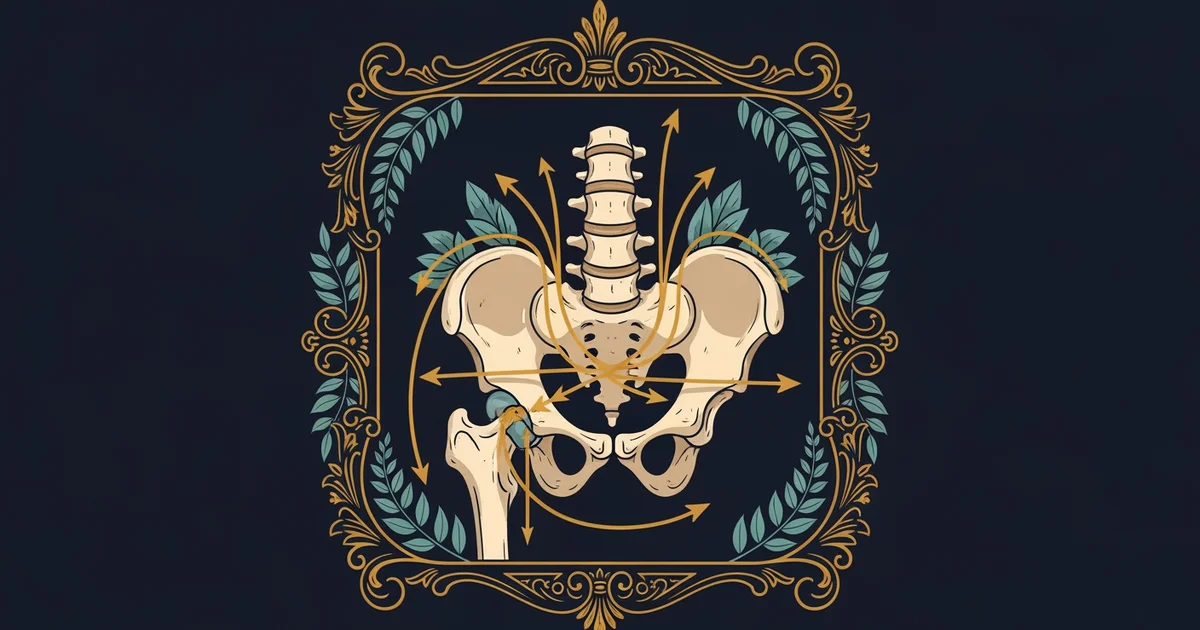
The Mechanics of Human Movement
To understand how we move, we must look at the interaction between torque and muscular force. Your joints act as pivot points, often called fulcrums, which allow your limbs to rotate through space. When you bend your elbow to lift an object, your bicep muscle provides the force needed to overcome gravity. This setup creates a lever system where the distance from the joint determines how much weight you can move. Because our muscles attach close to the joints, we often sacrifice raw mechanical advantage for greater speed and range of motion. This trade-off is why you can throw a ball quickly even though you cannot lift a heavy boulder with one hand.
Key term: Torque — the rotational force applied to an object that causes it to turn around a specific pivot point.
Your body manages these forces through a process of constant adjustment across different physical domains. Think of your nervous system as the control software for a high-end vehicle, constantly monitoring the load on your structural frame. When you stand on uneven ground, your brain calculates the required corrections to keep your center of mass stable. This process involves integrating data from your inner ear, your eyes, and the pressure sensors in your feet. If the load becomes too great, your body triggers a safety response to prevent structural damage to your tendons and bones.
Integrated Systems and Physical Limits
Physics dictates the boundaries of our performance by defining how energy moves through our biological tissues. We can compare our internal systems to an electrical circuit where the heart acts as a pump and the nerves act as wires. The efficiency of this system depends on how well we distribute energy to meet the demands of our environment. Earlier stations explored how ergonomics helps us work safely, but this station highlights how those designs must respect our fundamental physical constraints. We cannot simply engineer our way around the laws of thermodynamics or the limits of material strength.
| System | Physical Role | Energy Source | Primary Constraint |
|---|---|---|---|
| Skeletal | Structural frame | Minerals | Material density |
| Muscular | Force generator | ATP molecules | Contraction speed |
| Nervous | Control signal | Ion gradients | Signal latency |
These systems must work in total harmony to produce fluid motion rather than jerky, inefficient actions. If your muscles fire before your brain stabilizes your posture, you risk losing your balance or suffering an injury. This integration is the reason why athletes train for years to refine their movement patterns. They are essentially tuning their biological hardware to operate at the edge of their physical capacity. The following table shows how different parts of your body work together to maintain stability during complex tasks:
- Sensors detect a shift in your center of gravity while you perform a task.
- The brain processes this input and sends electrical signals to the core muscles.
- Muscles contract to generate counter-torque, keeping your skeleton aligned and stable.
- Energy is recycled or dissipated as heat to maintain internal temperature levels.
This continuous feedback loop allows humans to perform delicate tasks while also exerting significant force. We are limited by the speed at which our nerves can transmit signals and the rate at which our cells can produce energy. These are the same constraints that govern the performance of any complex machine built in a lab. Understanding these limits is the first step in learning how to optimize your own physical output safely.
The human body operates as an integrated physical system where structural levers, energy conversion, and neural control must align perfectly to overcome the rigid constraints imposed by the laws of physics.
Future engineering will likely use these insights to create seamless interfaces between human biology and advanced mechanical technology.