
Levers in the Skeleton
Imagine lifting a heavy bag of groceries by pulling on your own forearm like a rope. Your muscles pull on bones to create movement, turning your limbs into complex machines that perform daily tasks effortlessly.
Understanding the Mechanical Advantage of Bones
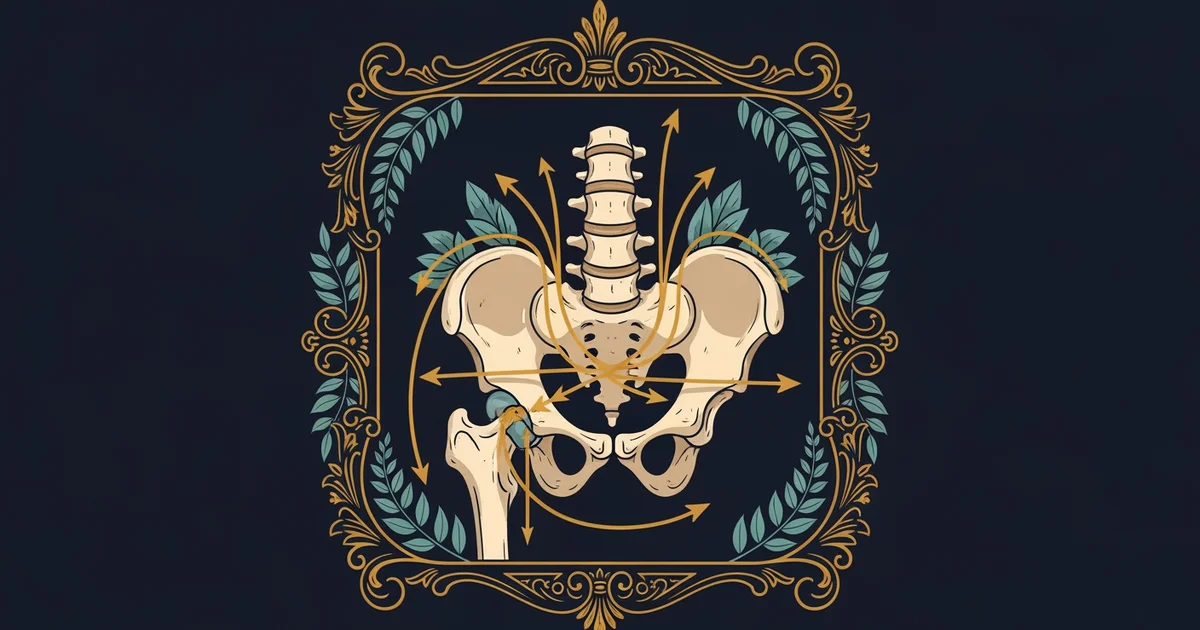
Your skeleton functions as a series of rigid levers that allow your body to move through space. A lever is a simple machine consisting of a beam that pivots around a fixed point called a fulcrum. In your body, the bones act as the rigid beams, while the joints serve as the necessary fulcrums. Muscles provide the force required to move these bones against the resistance of gravity or external objects. Think of this system like a seesaw on a playground where you sit on one side to lift a friend. If you move closer to the center, you need more force to lift the same weight. Your body constantly adjusts these internal positions to balance strength against the need for speed and range of motion.
Key term: Fulcrum — the stationary pivot point around which a lever rotates to create movement or lift weight.
To understand how these levers function, we must classify them based on the placement of the force, the fulcrum, and the load. This classification helps us predict how much effort is needed for specific body movements. The arrangement of these three components determines whether a joint favors power or speed. When the fulcrum sits between the force and the load, it acts like a pair of scissors. When the load sits between the fulcrum and the force, it acts like a heavy wheelbarrow. Finally, when the force sits between the fulcrum and the load, it acts like a pair of tweezers. Most human joints prioritize range of motion over raw strength, which explains why we are agile but sometimes struggle with very heavy lifting.
Classifying Skeletal Lever Systems
We can organize the joints of the human body into three distinct categories based on their mechanical layout. Each class offers unique trade-offs between the speed of movement and the force required to complete the action.
| Lever Class | Fulcrum Position | Load Position | Force Position |
|---|---|---|---|
| First Class | Between force/load | Ends of beam | Ends of beam |
| Second Class | At one end | Between fulcrum/force | At opposite end |
| Third Class | At one end | At opposite end | Between fulcrum/load |
These classifications demonstrate how anatomy dictates physical limits. First-class levers are quite rare in the body but provide excellent balance. An example is the way your skull pivots on the top of your spine to hold your head steady. Second-class levers are also rare, yet they allow for powerful movements like standing on your tiptoes. Third-class levers are the most common type found in human anatomy. These levers allow your limbs to move quickly through a large range of motion, even if they require more internal muscle force to function.
Consider the elbow joint as a classic third-class lever during a bicep curl. The elbow is the fulcrum, the bicep muscle provides the force, and the hand holds the weight of the dumbbell. Because the muscle attaches very close to the joint, it must pull with much more force than the weight of the object being lifted. This trade-off is the price we pay for the ability to reach out and manipulate objects with precision. While this might seem inefficient, it allows our limbs to move through wide arcs rapidly. This biological design choice favors survival and utility in a changing environment over simple mechanical efficiency. Every movement you make relies on these internal levers to turn small muscle contractions into large, coordinated actions.
The skeleton uses three types of lever systems to balance the competing physical demands of force production and range of motion.
The next Station introduces fluid dynamics of blood, which determines how pressure gradients move nutrients through the body.