
Joint Torque Mechanics
Imagine trying to turn a heavy door by pushing near the hinges instead of the handle. You would find that your effort produces very little motion because you lack the proper leverage to rotate the door effectively. Human limbs operate under these same mechanical laws whenever we lift objects or move our bodies through space. Our muscles attach to bones near the joints to create a system of levers that allow for fluid movement. Understanding how these forces interact helps us grasp the limits of human strength during daily activities.
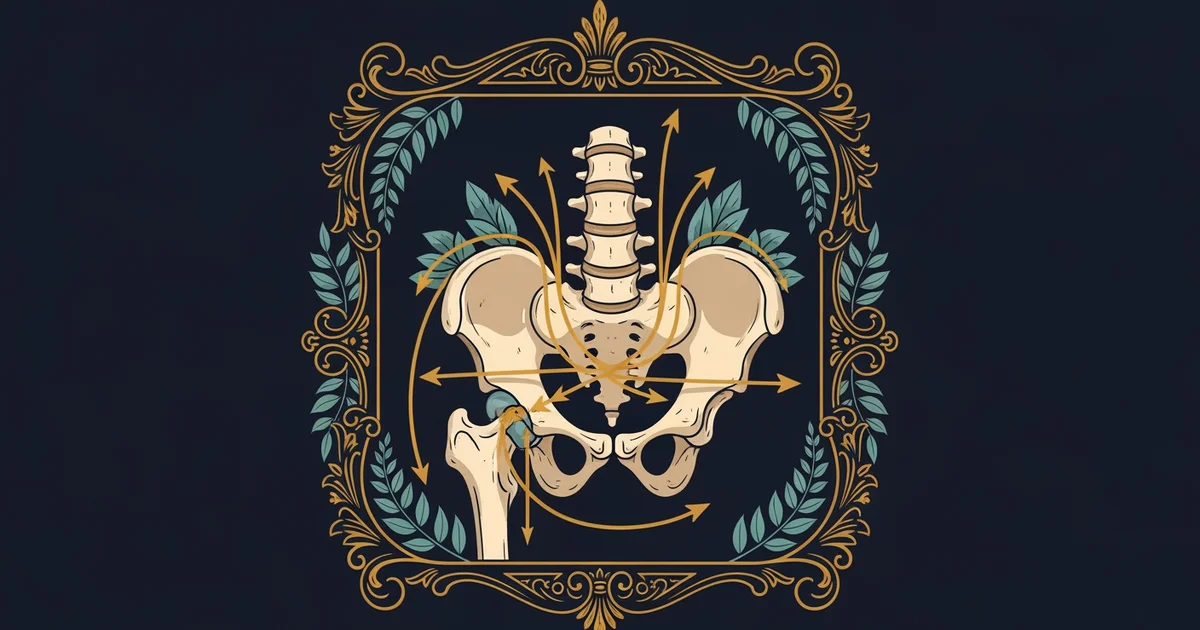
The Mechanics of Rotational Force
When a muscle contracts, it pulls on a bone to create a rotational effect known as torque. This force depends on both the amount of tension applied by the muscle and the distance from the pivot point. We define this relationship using the formula , where represents the distance from the joint and represents the force. The angle between the muscle and the bone further dictates how much effective torque is generated. If the muscle pulls at a right angle, the efficiency reaches its maximum potential for that specific joint position.
Key term: Torque — the rotational force generated around a joint pivot point that allows limbs to move or hold weight.
Think of your arm like a crane working on a construction site to lift heavy cargo. The bicep acts as the engine, pulling on the forearm bone to raise a weight held in your hand. Because the muscle attaches very close to the elbow joint, it must generate massive force to overcome the weight of the load. This is similar to a business owner paying high overhead costs to maintain a small storefront in a busy city center. The high cost of operation is the price paid for the speed and range of motion our limbs provide.
Calculating Joint Load and Efficiency
To see how this works in practice, we must look at the balance of forces acting on the forearm. The body must balance the torque created by the bicep against the opposing torque created by the weight in your hand. This equilibrium is expressed as , which allows us to solve for unknown force requirements. The following table shows how different factors influence the total torque required for a simple bicep curl:
| Variable | Role in System | Impact on Torque |
|---|---|---|
| Muscle Force | Input tension | Directly increases torque |
| Lever Arm | Distance to joint | Increases mechanical advantage |
| Load Angle | Direction of pull | Changes efficiency of force |
We can summarize the factors that determine how much strain a joint experiences during a movement:
- The insertion point of the tendon determines the length of the lever arm, which means individuals with different anatomy have varying mechanical advantages for lifting.
- The angle of the limb relative to the load changes the effective torque, explaining why certain positions feel easier or harder during exercise.
- The total weight of the object being lifted requires the muscle to produce a counter-torque, which increases as the load moves further from the elbow.
When you hold an object, your body continuously adjusts the tension in your muscles to maintain stability. If the weight moves further away from your body, the lever arm increases and requires more force from the bicep. This explains why holding a heavy box close to your chest feels much easier than holding it with your arms fully extended. The physics of our joints proves that our strength is not just about muscle mass but also about the geometry of our skeletal system. By optimizing how we position our limbs, we can reduce the strain on our joints while performing heavy lifting tasks.
Human movement relies on the precise balance of rotational torque where muscle force must overcome external loads acting across specific skeletal lever arms.
Since we understand how muscles move bones to create force, we must now ask how the body manages the invisible gases that power these complex mechanical systems.
Want this with sources you can check?
Premium Learning Paths for Physics & Quantum Mechanics are researched against open-access libraries — PubMed, arXiv, government databases, and more — with their distinctive claims cited to real sources and independently checked.
See what Premium includes