
Dark Energy Influence
Imagine you are driving a car that suddenly accelerates forward even though you took your foot off the gas pedal. This strange behavior mirrors the current state of our universe as it grows larger and faster every single day. Astronomers once believed that gravity would eventually pull all matter together to slow down cosmic expansion. Instead, they discovered that the expansion is actually speeding up because of an invisible force pushing space apart. This mysterious influence is what scientists call dark energy, and it dominates the total composition of our vast cosmos.
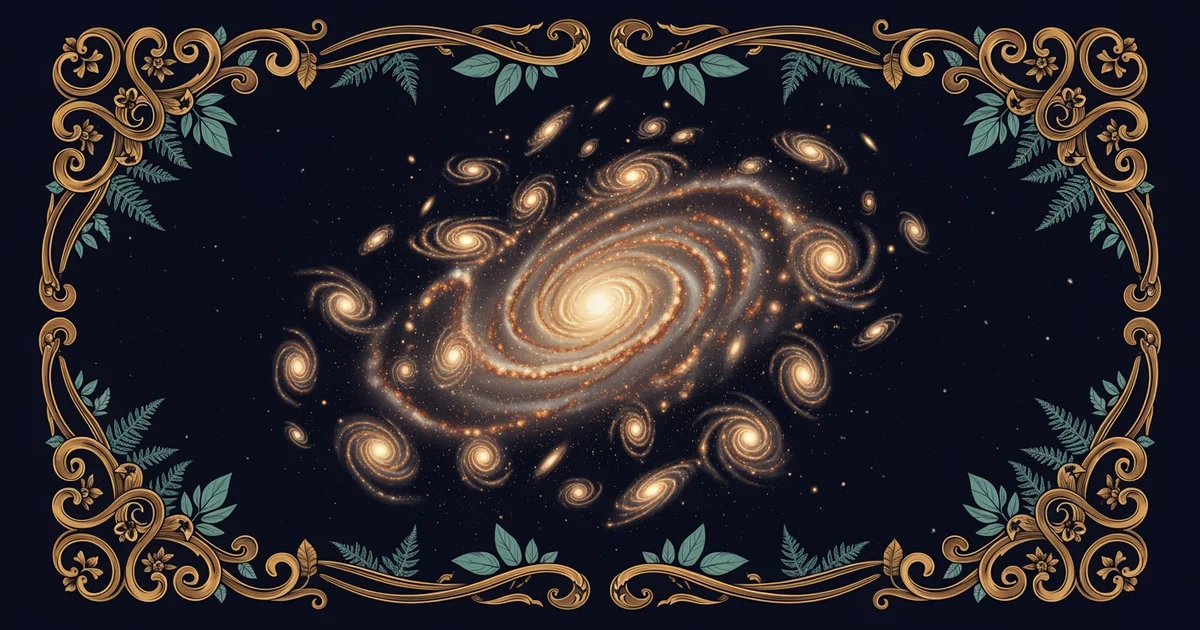
The Mechanism of Cosmic Acceleration
When we look at the history of the universe, gravity acts like a heavy anchor pulling things together. Stars and galaxies form because gravity gathers gas and dust into dense, swirling pockets of matter. You might expect this gravitational pull to act as a brake on the expansion of space itself over time. However, observations of distant supernovae reveal that galaxies are moving away from us at increasing speeds. This acceleration suggests that a repulsive force exists within the vacuum of space, which overcomes the attractive pull of gravity on a massive scale. Think of this process like an economic market where growth becomes self-sustaining and accelerates beyond the initial investment. Just as compound interest drives financial growth forward, dark energy pushes space to expand faster as more space is created. This expansion does not happen to the objects inside the universe, but rather to the empty space between them.
Key term: Dark energy — the unknown form of energy that permeates all of space and exerts a repulsive pressure to accelerate the expansion of the universe.
Because we cannot see this force directly, we measure its presence by observing how it affects the movement of distant light. Scientists use the rate of cosmic expansion to calculate how much energy must be present to produce such observed effects. The current model indicates that dark energy makes up roughly sixty-eight percent of the total energy density of the universe. This leaves only a small fraction for the matter we can actually see, such as stars and planets. The influence of this energy remains constant throughout time, meaning its total effect grows as the universe expands. As the volume of the universe increases, the total amount of dark energy also increases, which keeps the acceleration moving forward.
Comparing Universal Components
To understand how different forces shape our reality, we can look at the three main ingredients that make up the cosmos. Each component plays a distinct role in determining the final fate of our universe. The following table highlights these primary parts and their specific contributions to cosmic structure.
| Component | Primary Effect | Interaction Type | Density Contribution |
|---|---|---|---|
| Dark Energy | Pushes space apart | Repulsive pressure | High (68 percent) |
| Dark Matter | Pulls matter together | Gravitational attraction | Medium (27 percent) |
| Normal Matter | Forms stars/planets | Electromagnetic/Gravity | Low (5 percent) |
- Dark energy provides the repulsive pressure that drives the ongoing acceleration of the universal expansion.
- Dark matter provides the gravitational scaffolding that allows galaxies to cluster into larger cosmic structures.
- Normal matter represents the atoms we interact with daily, which form the visible stars and galaxies.
These components exist in a delicate balance that determines the shape and future of everything we observe. While matter tries to hold the universe together, dark energy works to tear it apart at the seams. Because the density of matter drops as the universe expands, the relative influence of dark energy becomes more dominant over time. This shift explains why the universe did not start accelerating immediately after the initial expansion began billions of years ago. It took time for the universe to grow large enough for the repulsive effect of dark energy to overcome the gravitational pull of matter. We currently live in an era where the influence of dark energy is clearly visible in our astronomical data. This discovery forces us to rethink our basic understanding of how the cosmos evolves from a simple point into a vast, stretching web of light.
The universe expands at an accelerating rate because the repulsive pressure of dark energy overcomes the gravitational pull of matter as cosmic volume increases.
But what does this expansion mean for the future of our observational methods?