
The Nature of Gravity
You feel a constant downward pull when you jump off a small garden wall. This simple force keeps your feet planted firmly on the ground every single day.
The Invisible Force of Attraction
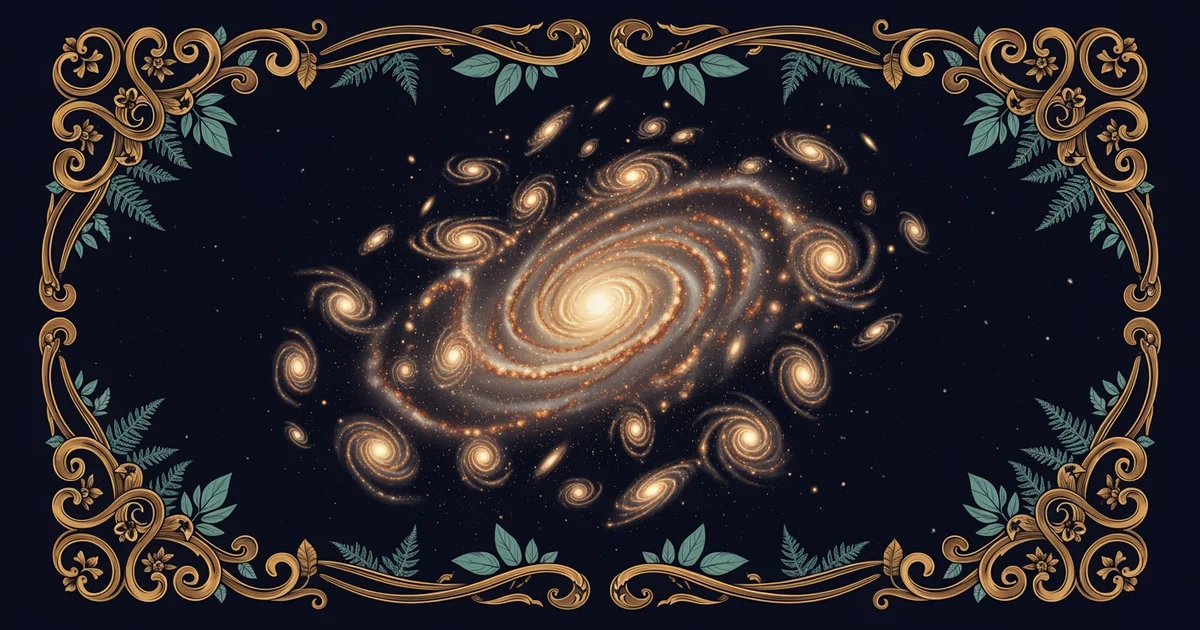
Gravity acts as the fundamental glue that holds our entire solar system together. It functions like a massive, invisible tether connecting every single object with mass. When you consider the vast scale of space, this force dictates how planets orbit around stars. Imagine a heavy bowling ball placed on a thin, stretched rubber sheet. The ball creates a deep curve that forces smaller marbles to roll toward its center. This analogy shows how mass distorts the fabric of space to create an attractive pull. Without this constant interaction, stars would drift apart and planets would fly off into deep space. Every object in existence exerts this pull on every other object nearby.
Key term: Gravity — the universal force of attraction that acts between all matter possessing mass.
Massive objects like the Sun exert a much stronger pull than smaller rocks. We measure this interaction using specific physical laws that define how distance changes force. If you double the distance between two objects, the gravitational pull drops quite significantly. This relationship ensures that orbits remain stable over billions of years of cosmic time. Gravity is not just a local phenomenon but a universal constant of nature. It shapes the birth, life, and eventual death of every star we observe. You can think of it as a cosmic tax that every piece of matter must pay.
Measuring Cosmic Interactions
Scientists use precise mathematical models to predict how objects move through the dark void. The strength of the force depends on the mass of both objects involved. We represent the force of gravity between two bodies using a standard formula. The equation describes this relationship with great accuracy. Here, represents the force, while stands for the mass of each object. The symbol represents the distance between them, and is the gravitational constant. This constant ensures our calculations work across the entire known universe without any errors.
Understanding these interactions helps us map the movement of galaxies across the sky. We can observe how gravity influences the following celestial behaviors:
- Orbital stability describes how planets maintain a consistent path around their host star without crashing or drifting away into the cold void.
- Tidal forces explain how the gravity of one body stretches another object, which creates the rhythmic rise and fall of ocean tides.
- Gravitational lensing occurs when massive objects bend the path of light, allowing us to see galaxies that are hidden behind other structures.
| Interaction Type | Primary Influence | Resulting Motion |
|---|---|---|
| Planetary Orbit | Solar Mass | Elliptical Path |
| Tidal Stretching | Lunar Gravity | Ocean Movement |
| Light Bending | Galactic Mass | Distorted Image |
These interactions prove that gravity is the primary architect of the large-scale universe. Every movement of a moon or a star follows these strict mathematical rules. By studying these patterns, we learn how the universe organizes itself into complex systems. Gravity turns a chaotic collection of gas into the structured beauty of a spiral galaxy. We are simply living inside a grand, gravitational dance that has continued for ages. This force remains the most influential sculptor of our physical reality from start to finish.
Gravity acts as a universal architect that uses mass and distance to organize the chaotic motion of all celestial bodies.
Light acts as the next vital tool for us to observe these distant cosmic structures.