
Dark Matter Mysteries
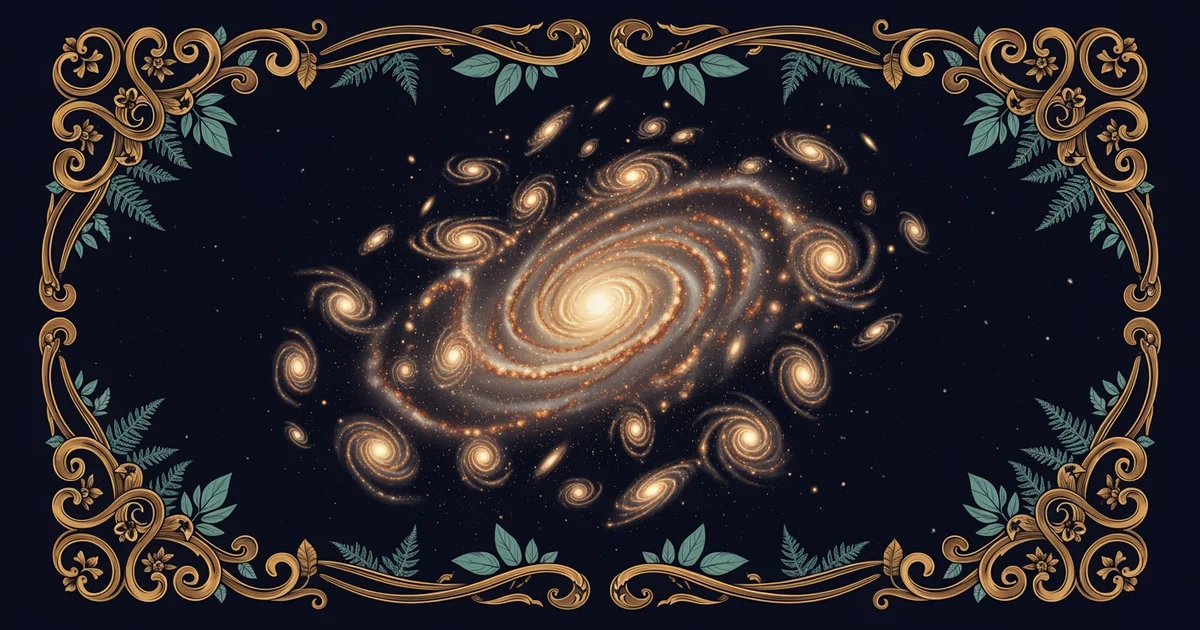
Imagine watching a carousel spin at a park where the outer horses appear to move at the same speed as those near the center. In our physical world, this would imply that the outer horses are somehow connected by a rigid, invisible force that keeps the entire structure moving as one solid piece. When astronomers observe distant galaxies, they notice that stars at the far edges orbit the center just as fast as stars near the bright core. This observation defies our current understanding of gravity because those outer stars should be flying off into space if only visible matter existed. The missing link that keeps these galaxies spinning in a stable formation is known as dark matter.
The Invisible Influence of Mass
Gravity relies on mass to pull objects toward a central point, but the visible light from stars and gas does not account for the total mass required to hold galaxies together. If we calculate the gravitational pull based only on the stars we see, the outer regions of a galaxy would lose their stars to the surrounding void. This suggests that a vast, unseen substance surrounds every galaxy like a giant, invisible halo. This substance does not emit, reflect, or absorb light, making it impossible to detect with traditional telescopes that rely on electromagnetic radiation. Instead, we must rely on how this mass influences the motion of visible objects that we can actually track across the sky.
Think of this situation like an empty highway where you see cars moving at high speeds but notice no drivers behind the wheels. You know someone must be steering the vehicles because they stay perfectly within their lanes without crashing into the guardrails. In this analogy, the cars are the stars, and the unseen drivers represent the gravitational influence of this mysterious matter. Without these invisible forces, the cosmic traffic would scatter into chaos rather than maintaining the orderly, rotating structures we observe. This comparison helps us understand that we detect the presence of something through its effect on its environment rather than seeing the object itself.
Detecting the Hidden Cosmic Scaffold
To measure the amount of this hidden material, researchers use precise tools to track the velocity of galactic rotation. By observing how fast gas clouds and stars travel at different distances from the center, they create a rotation curve that maps the distribution of mass. These curves consistently show that galaxies contain far more mass than their visible light suggests, implying that this invisible component makes up most of the total mass in the universe. Scientists categorize the evidence for this phenomenon through several distinct observations that confirm the presence of this non-luminous matter:
- Gravitational lensing occurs when the massive gravity of unseen matter bends the light from distant background galaxies, creating distorted images that reveal the distribution of the hidden mass.
- Cosmic microwave background radiation patterns show tiny fluctuations in the early universe that act as seeds for the large-scale structure we see today, requiring extra mass to form.
- Galaxy cluster dynamics show that individual galaxies move within their clusters at speeds far too high to be held by visible mass alone, indicating the presence of a binding force.
| Observation Type | Primary Metric | Resulting Inference |
|---|---|---|
| Rotation Curves | Orbital velocity | Extra hidden mass |
| Lensing Effects | Light distortion | Mass distribution |
| Cluster Motions | Velocity dispersion | Binding gravity |
These findings suggest that our visible universe is merely a small fraction of the total substance present in space. We are essentially living inside a massive, invisible web that provides the structural support for everything we see. While we cannot touch or see this material, its influence on the evolution of the universe is undeniable and profound. The next step involves identifying the specific particles that constitute this dark substance, as they do not match any known matter within our standard model of physics.
Dark matter provides the necessary gravitational pull to keep galaxies intact, acting as an invisible scaffold for the entire visible universe.
The next Station introduces black hole dynamics, which explains how extreme gravity influences the regions surrounding these dense, collapsed objects.