
The Expanding Universe
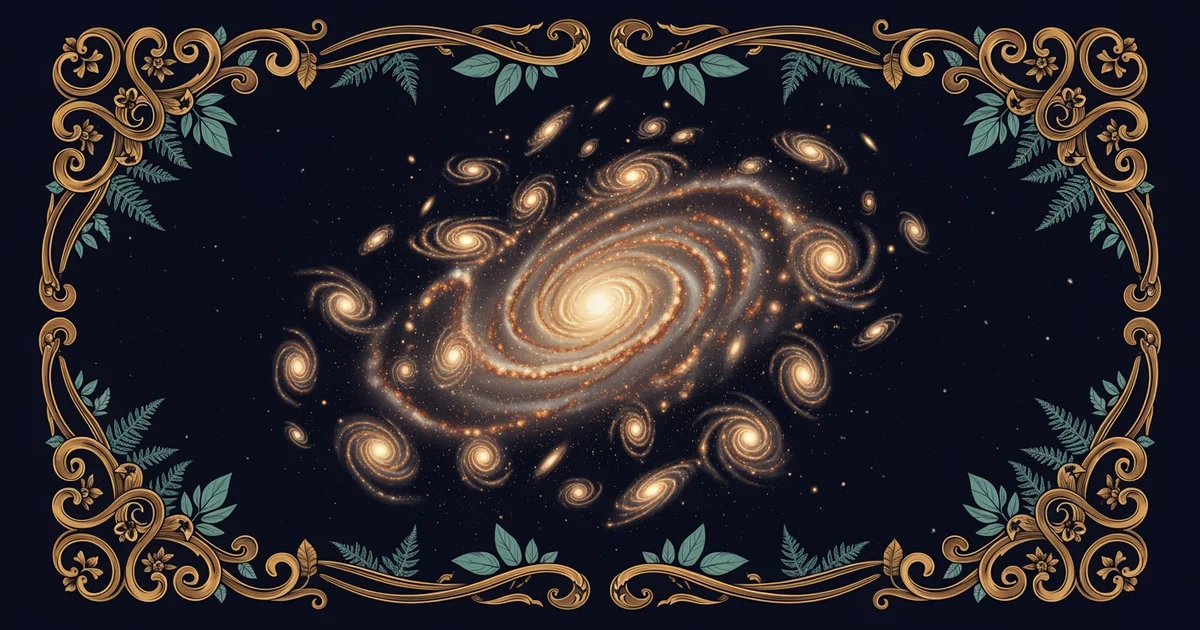
Imagine you are standing in a crowded room where every person is slowly drifting away from everyone else. You notice that people further away from you appear to move faster than those standing nearby. This simple observation of movement reveals the fundamental nature of our entire universe. Just like that room, space itself is constantly stretching in every single direction at once. This expansion means that galaxies are not moving through space, but rather space is growing between them. Understanding this process helps us see how the cosmos evolved from a tiny, hot point into the vast collection of stars we see today.
The Discovery of Cosmic Expansion
When scientists first observed distant galaxies, they noticed a strange pattern in the light coming toward Earth. This light displayed a phenomenon called redshift, which occurs when light waves stretch out as a source moves away from an observer. Because the light from distant galaxies shifted toward the red end of the spectrum, researchers concluded that these objects were rapidly receding from us. This observation provided the first solid evidence that the universe is not static or unchanging. Instead, it is a dynamic system that has been growing larger for billions of years since its initial formation.
Key term: Redshift — the process where light from distant galaxies stretches into longer wavelengths because the space between objects is expanding.
To visualize this, imagine a loaf of raisin bread rising inside a hot oven. As the dough expands, the individual raisins move further apart from one another in every direction. The raisins themselves do not grow larger, but the space between them increases as the dough stretches. In this analogy, the raisins represent galaxies, while the dough represents the fabric of space itself. This simple comparison explains why every observer in the universe sees other galaxies moving away from their own position.
Evidence from the Early Universe
Beyond the movement of galaxies, we have captured a snapshot of the universe when it was very young. This evidence is known as cosmic background radiation, which is a faint glow of microwave energy filling the entire sky. This radiation acts like an echo from the Big Bang, representing the moment the universe became transparent to light. By studying this heat signature, astronomers can map the early conditions of the cosmos with incredible precision. This data confirms that the universe began in a state of extreme heat and density before expanding outward.
| Observation | What it reveals | Significance |
|---|---|---|
| Redshift | Receding galaxies | Proves expansion |
| Background glow | Early heat energy | Confirms Big Bang |
| Galaxy spread | Uniform distribution | Shows consistency |
These observations show that the universe follows a consistent pattern of growth across all regions of space. Scientists use these measurements to calculate the age of the universe and its overall rate of expansion. The consistency of this radiation tells us that the early universe was remarkably smooth and uniform before gravity pulled matter into the stars we see today. Without this background glow, we would lack the primary evidence needed to understand the timeline of cosmic history. This light remains the most important tool for testing our theories about the origin of everything that exists.
The universe is not a static container of matter, but a dynamic, stretching fabric that carries galaxies apart from one another as space grows.
The next Station introduces dark matter mysteries, which explains how invisible gravity keeps those galaxies from flying apart completely.