
General Relativity Basics
Imagine you place a heavy bowling ball onto a soft, stretched trampoline surface. The fabric curves downward around the ball, creating a deep dip in the middle. If you roll a smaller marble nearby, it follows the curved path toward the center of the dip. This simple visual represents how massive objects influence the geometry of the space around them. You are observing the core idea behind how gravity functions in our vast, complex universe today.
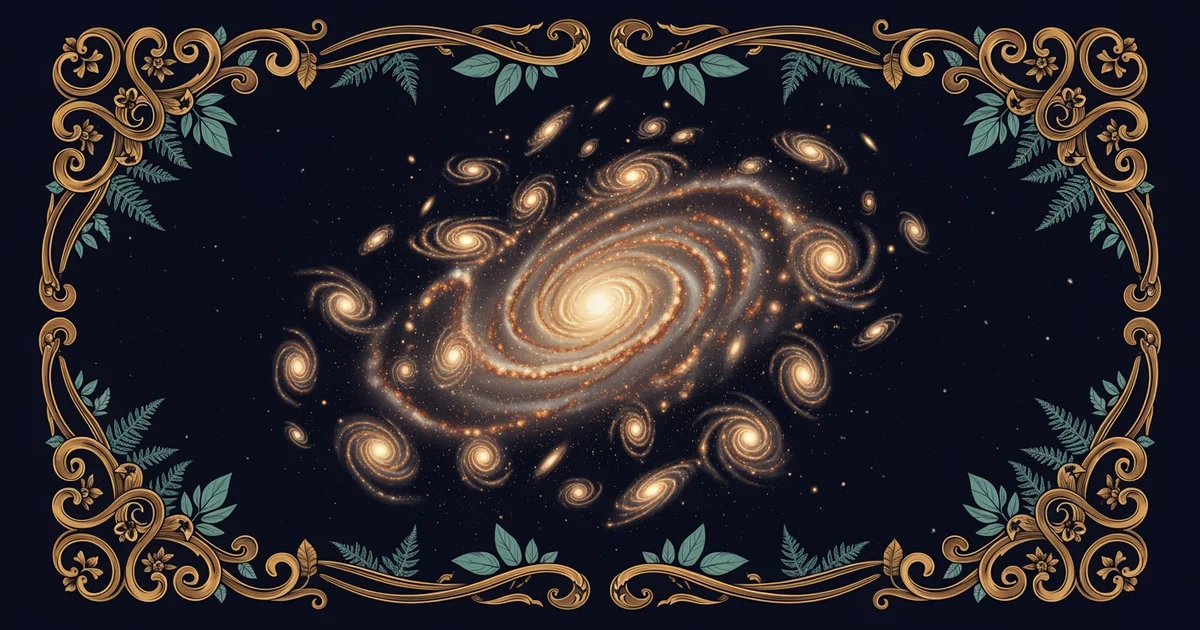
The Geometry of Spacetime
Gravity is not merely a mysterious pulling force acting between two separate objects in space. Instead, it is the result of massive objects warping the very structure of the cosmos. Scientists call this four-dimensional framework spacetime, which combines the three dimensions of space with the single dimension of time. When an object with significant mass exists, it forces this fabric to bend and stretch. This curvature dictates how every other object moves through the local environment. Any path taken by an object or even a beam of light follows these curves. Because the geometry changes, the movement of objects appears to follow a curved trajectory instead of a straight line.
Key term: Spacetime — the unified four-dimensional fabric that connects all points in space and time.
This curvature explains why planets orbit stars without needing an invisible rope to hold them. The star creates a massive dent in spacetime that forces the planet to travel along a curved path. You can think of this as a ball rolling along a track that is constantly bending. The planet is simply following the shortest path through a distorted region of space. As the mass of the star increases, the depth of the curvature becomes more pronounced for everything nearby. This process happens everywhere, from the smallest asteroid to the largest clusters of galaxies in space.
Visualizing Gravitational Effects
Understanding how mass dictates geometry requires looking at how objects interact with this flexible fabric. Massive bodies do not just pull on other things; they change the rules of movement. Consider these specific ways that mass influences the surrounding environment in our universe:
- Large stars create deep wells in the fabric of spacetime, which forces light to bend around them.
- Time itself slows down near massive objects because the fabric of spacetime stretches thinner in those regions.
- Objects moving through space follow the path of least resistance along these curves, which we perceive as orbits.
These effects are not theoretical guesses, as they have been measured with extreme precision by modern instruments. When we observe light from distant stars, we see it curve around massive galaxies that sit in the foreground. This phenomenon, known as gravitational lensing, proves that the space itself is actually distorted by the mass present. Without this constant bending of the fabric, the universe would look entirely different to our telescopes and sensors.
| Feature | Influence on Spacetime | Resulting Motion |
|---|---|---|
| Small Mass | Slight indentation | Minor path change |
| Large Mass | Deep curvature | Strong orbital pull |
| High Density | Extreme warping | Light path bending |
This table highlights how the amount of mass directly relates to the level of geometric distortion. A small object like a moon creates a tiny curve, while a massive black hole creates a bottomless pit. Every object in the cosmos contributes to this ongoing dance of geometry and movement. By studying these interactions, we gain a much deeper understanding of how the universe maintains its structure. This framework provides the essential foundation for predicting the behavior of everything from tiny atoms to massive galaxies.
Massive objects reshape the fabric of spacetime, creating curved paths that dictate how everything in the universe moves.
The next Station introduces the expanding universe, which explains how the fabric of spacetime itself is currently stretching across the cosmos.