
Future Telehealth Trends
Digital health systems often face the tension of managing high data volumes while maintaining personal care. Doctors currently struggle to balance screen time with the need for deep, meaningful patient interactions.
Advancing Remote Diagnostic Tools
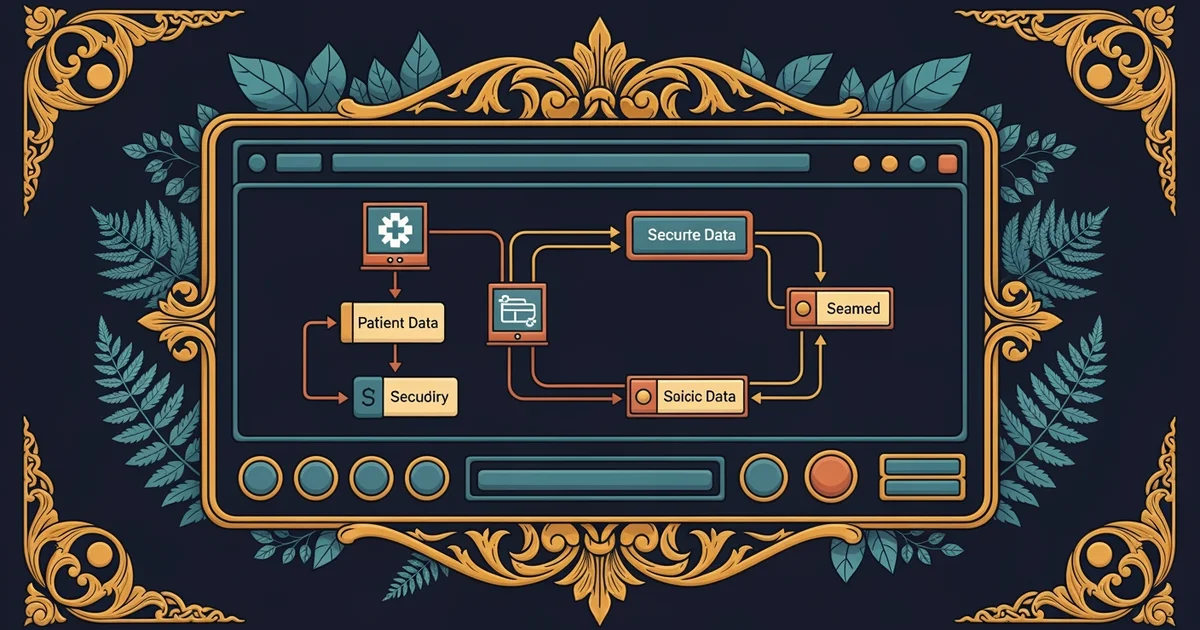
Future clinical workflows will rely on predictive analytics to process patient data before the actual visit begins. These systems act like a digital triage nurse, sorting through biometric data to highlight the most urgent health concerns. By analyzing trends in heart rate or sleep patterns, software can suggest specific focus areas for the physician. This reduces the time spent on manual data entry during the appointment. Doctors then spend their energy discussing solutions rather than gathering basic history. Efficiency improves because the system filters out the noise, leaving only the actionable signals for the provider to review. This shift allows for a more focused conversation that centers on patient needs rather than administrative tasks.
Key term: Predictive analytics — the use of historical data and statistical algorithms to identify the likelihood of future health outcomes.
Integrating these tools requires a robust foundation, such as the system scalability strategy discussed in earlier modules. When networks grow, the data processing must remain fast and reliable. Without scalability, the predictive models would lag, causing frustration for both the medical staff and the patients. The infrastructure must handle spikes in usage during peak hours without compromising the speed of the diagnostics. By balancing these technical needs, health systems ensure that doctors remain supported by technology rather than hindered by it. This creates a sustainable environment where remote care feels as personal and effective as an in-person visit.
Future Integration of Smart Monitoring
New tools for clinical practice will likely include advanced wearable sensors that provide real-time updates to medical charts. These ambient intelligence systems monitor health metrics automatically, removing the need for patients to manually log their own daily symptoms. The data flows directly into the clinical workflow, creating a continuous stream of health information. This constant feed helps doctors spot subtle changes that a single check-up might miss entirely. The transition from episodic care to continuous monitoring represents a massive leap in how we manage chronic conditions. Physicians gain a clearer picture of health, which leads to more accurate and timely adjustments to treatment plans.
| Feature | Current Telehealth | Future Telehealth | Impact on Care |
|---|---|---|---|
| Data Entry | Manual reporting | Automatic capture | Higher accuracy |
| Focus | Episodic visits | Continuous flow | Proactive care |
| Sorting | Human triage | Predictive models | Faster response |
As we look toward the horizon, the field faces an unresolved question regarding data privacy and patient consent. While technology offers immense potential for better health outcomes, the community has not yet settled on how to balance constant monitoring with individual privacy rights. Researchers continue to debate whether the benefits of ambient monitoring outweigh the risks of data exposure. Finding this equilibrium remains the most significant challenge for the next generation of digital health leaders. Establishing trust through transparent data policies will be just as important as the technical development of the tools themselves.
Providing better care from a distance requires a seamless blend of automated data processing and human empathy. By using predictive analytics and ambient monitoring, doctors can stay organized while focusing on the unique needs of every patient. This path shows that efficiency and quality care are not mutually exclusive goals but are instead partners in modern medicine. The future of healthcare relies on our ability to design systems that serve both the provider and the patient with equal care and precision. Understanding these trends helps us build a more responsive and effective medical landscape for everyone involved.
Optimizing clinical workflows involves using automated data tools to handle information so that doctors can prioritize direct patient engagement.
Effective telehealth requires a careful balance between technological automation and the preservation of human-centered care standards. This content is educational only and does not constitute medical advice. Always consult a qualified healthcare professional for personal health decisions.