
Integrated EHR Connectivity
A doctor often struggles to find patient notes while staring at a video screen. This disconnect creates a frustrating barrier that keeps providers from focusing on the person during a telehealth visit. When systems do not talk to each other, the quality of care drops because the doctor spends more time clicking through windows than listening to the patient. Effective medical care requires a smooth flow of information between the video platform and the patient files. This process is known as Integrated EHR Connectivity and it serves as the backbone of modern remote health services.
The Mechanics of Digital Integration
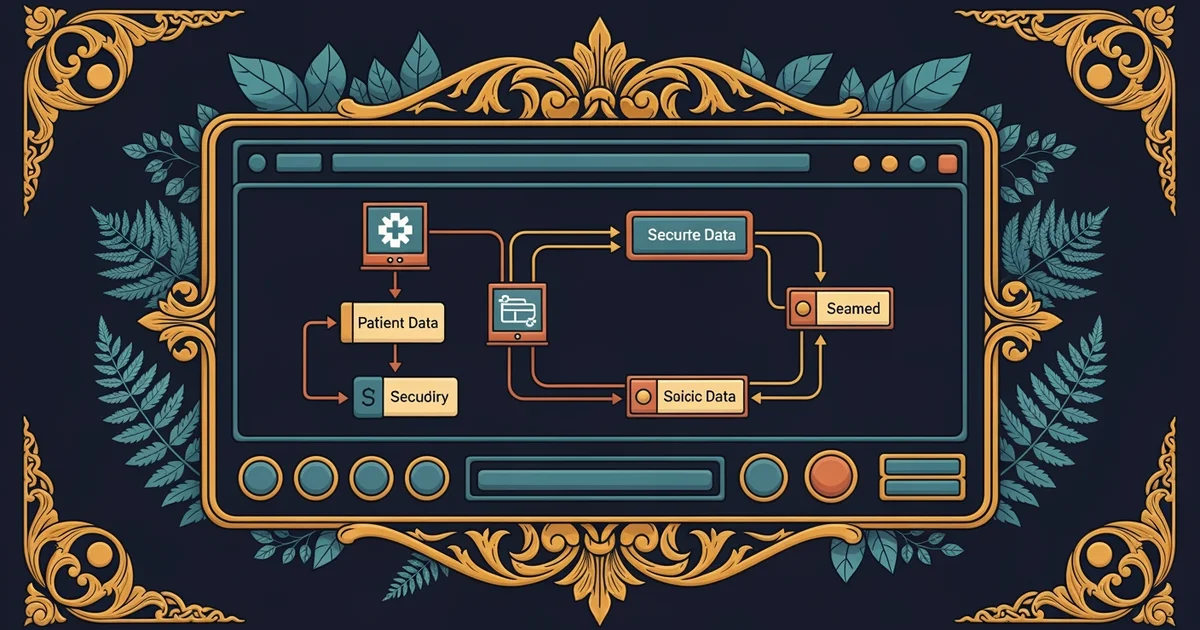
When a clinic connects its video software to the Electronic Health Record or EHR, it creates a digital bridge between two distinct systems. Imagine a library where the person at the front desk cannot see the books kept in the back storage room. Without a catalog to link the two areas, the librarian must walk back and forth to find every item requested by a visitor. EHR connectivity acts like an automated conveyor belt that brings the right files directly to the desk. This setup ensures that patient data appears on the screen the moment a virtual visit begins. Providers can see past medical history and current medications without needing to open secondary programs or manual spreadsheets.
Key term: Electronic Health Record — a digital version of a patient’s medical history that includes notes, lab results, and medication lists used for clinical decision making.
This integration requires specific technical standards to function correctly across different computer networks. Systems must use a shared language to translate data so that one program understands what the other is saying. When a doctor updates a note during a call, the system automatically saves that entry into the main patient record. This prevents the common error of having two different versions of a patient story existing at the same time. Accuracy improves because the data entry happens in real time during the conversation. Patients benefit from this because their records stay updated without the need for administrative staff to retype information later.
Benefits of Seamless Data Flow
Clinical workflows improve significantly when doctors stop switching between multiple software tabs during their busy days. The following list explains how this connectivity changes the daily routine for medical staff:
- Automated check-in processes allow the system to alert the doctor when a patient arrives in the virtual waiting room, which saves time spent checking schedules.
- Shared clinical dashboards provide a central view of vital signs and notes, which helps the provider make faster decisions without searching through deep archives.
- Instant data synchronization ensures that prescriptions or follow-up orders are sent to the pharmacy immediately, which reduces the chance of errors or forgotten tasks.
By keeping all tools in one place, the clinic functions like a well-oiled machine where parts move in harmony. The doctor acts as the operator who monitors the flow rather than the person who must manually move every gear. This efficiency allows for more time spent on patient interaction rather than repetitive computer tasks. When the technology works in the background, the human element of medicine becomes the primary focus of the visit. Research suggests that clinicians report lower stress levels when their software systems are fully connected and automated.
| Feature | Without Integration | With Integration |
|---|---|---|
| Data Entry | Manual and slow | Automated and fast |
| Screen Usage | Multiple windows | Single interface |
| Update Speed | Delayed by hours | Real-time updates |
| Error Rate | Higher risk | Lower risk |
This table highlights why clinics choose to link their systems for better performance. The transition to integrated workflows represents a major shift in how health services operate today. By reducing the friction between digital tools, providers can focus on delivering better health outcomes for their patients.
Linking video platforms to patient records transforms scattered data into a unified tool that supports better clinical decisions.
But what does it look like in practice when we start tracking patient health metrics from their own homes?
This content is educational only and does not constitute medical advice. Always consult a qualified healthcare professional for personal health decisions.
Want this with sources you can check?
Premium Learning Paths for Medicine & Health Sciences are researched against open-access libraries — PubMed, arXiv, government databases, and more — with their distinctive claims cited to real sources and independently checked.
See what Premium includes