
Future Sensory Research
Imagine a world where your vision extends beyond light and your touch feels digital data. Engineers today develop devices that plug directly into human nerves to expand how people perceive their surroundings. While early systems simply restored lost function, modern research aims to add entirely new sensory channels for humans. This shift represents a major change from fixing biological errors toward upgrading the basic human experience. Scientific teams now focus on how to merge synthetic sensors with the brain to create seamless feedback loops for users.
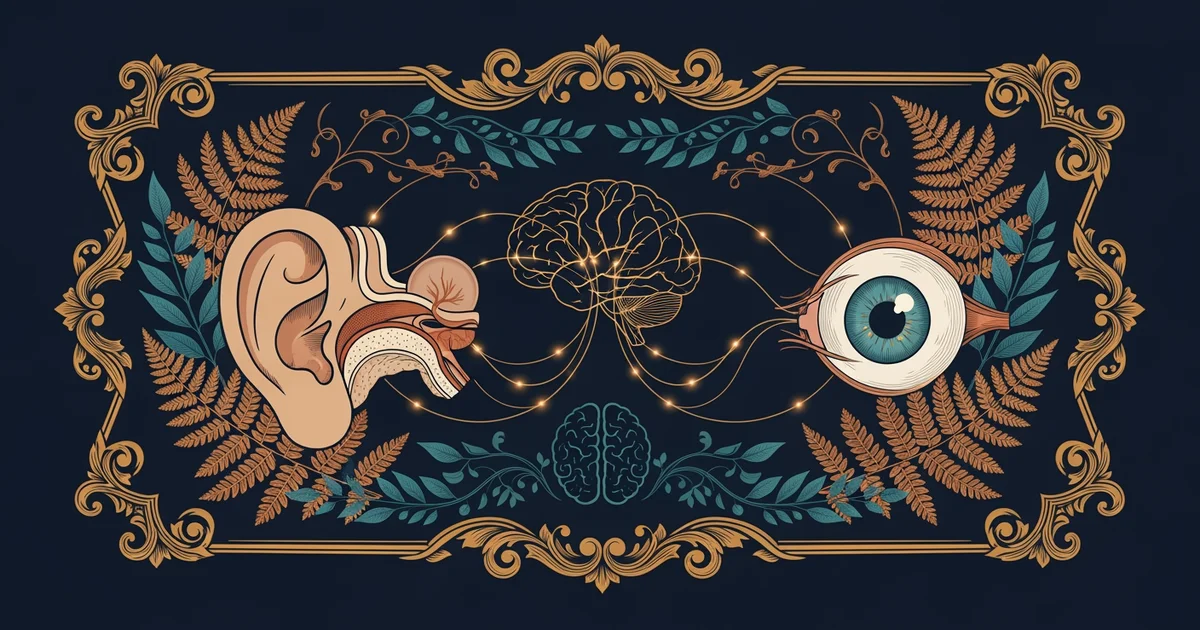
Advancing Neural Interface Technology
Researchers currently design advanced interfaces that bypass traditional organs to send data straight to the brain. By using tiny electrodes, these devices stimulate neurons to mimic natural inputs like sound or sight. This process relies on understanding how the brain interprets electrical signals as meaningful information. When researchers map these signals, they can create custom inputs that the brain learns to process over time. This is much like a computer learning to read a new file format after installing a specialized driver update. The main goal involves creating high-resolution links that feel as natural as the senses people are born with today.
Key term: Neural interface — a device that creates a direct communication pathway between an external electronic system and the human nervous system.
These systems must overcome significant hurdles before they become common tools for the general public. Stability remains a primary concern because the body often treats foreign objects as invaders to be rejected. Scientists work on flexible materials that move with tissue to reduce long-term damage at the implant site. Furthermore, the brain must possess enough plasticity to integrate these new signals without losing existing sensory functions. Ongoing studies suggest that focused training helps users adapt to these artificial inputs more quickly than previously expected.
Future Possibilities for Sensory Expansion
Future sensory research will likely focus on adding capabilities that humans never possessed in their natural evolutionary history. Scientists are testing sensors that detect infrared heat or magnetic fields to alert users to hidden changes in the environment. These additions could transform how people navigate complex spaces or interact with invisible digital networks. The following list highlights key areas where artificial sensors might change human interaction:
- High-bandwidth data streaming allows users to perceive complex information sets directly through touch or sound patterns.
- Enhanced environmental awareness provides real-time alerts about invisible hazards like radiation or shifting chemical levels in the air.
- Collaborative sensory sharing enables two people to experience the same physical sensation across vast distances through connected neural links.
| Sensor Type | Primary Function | Potential Application |
|---|---|---|
| Infrared | Heat detection | Night navigation |
| Magnetic | Field sensing | Precise orientation |
| Ultrasonic | Distance mapping | Obstacle avoidance |
Integrating these tools requires careful consideration of how the brain manages sensory overload. If a person receives too much data at once, the brain might struggle to prioritize what matters most for survival. This challenge mirrors how an economy functions when too many goods flood a market at once, causing confusion instead of value. To solve this, researchers study how to filter inputs so that only relevant data reaches the conscious mind. By balancing synthetic inputs with natural ones, scientists hope to create systems that feel like helpful extensions rather than distracting intrusions.
As we look back at the foundation of this path, we see that translating the physical world into electrical signals is not just a biological trick. It is a fundamental process that we can now replicate and modify using modern technology. By combining the integrated sensory systems from previous stations with these new synthetic interfaces, we move toward a future where human perception is limited only by our engineering capabilities. The ability to sense the world is no longer fixed by biology but is now a field of active design and constant innovation. Understanding these systems empowers people to participate in the coming changes to human capability and awareness.
True sensory evolution now involves merging biological hardware with synthetic data streams to expand the limits of human perception.
This final station shows that sensory science is moving from a model of repair to a model of enhancement for all people. This content is educational only and does not constitute medical advice. Always consult a qualified healthcare professional for personal health decisions.