
The Nervous System Connection
Imagine you are walking through a dark house and suddenly stub your toe on a chair leg. Your brain does not feel the pain in your foot directly, because the sensation must travel a long distance before it becomes a conscious experience. This process relies on a complex highway system that connects your physical body to the command center in your skull. Understanding this connection explains why your body reacts to the world around you with such incredible speed and precision.
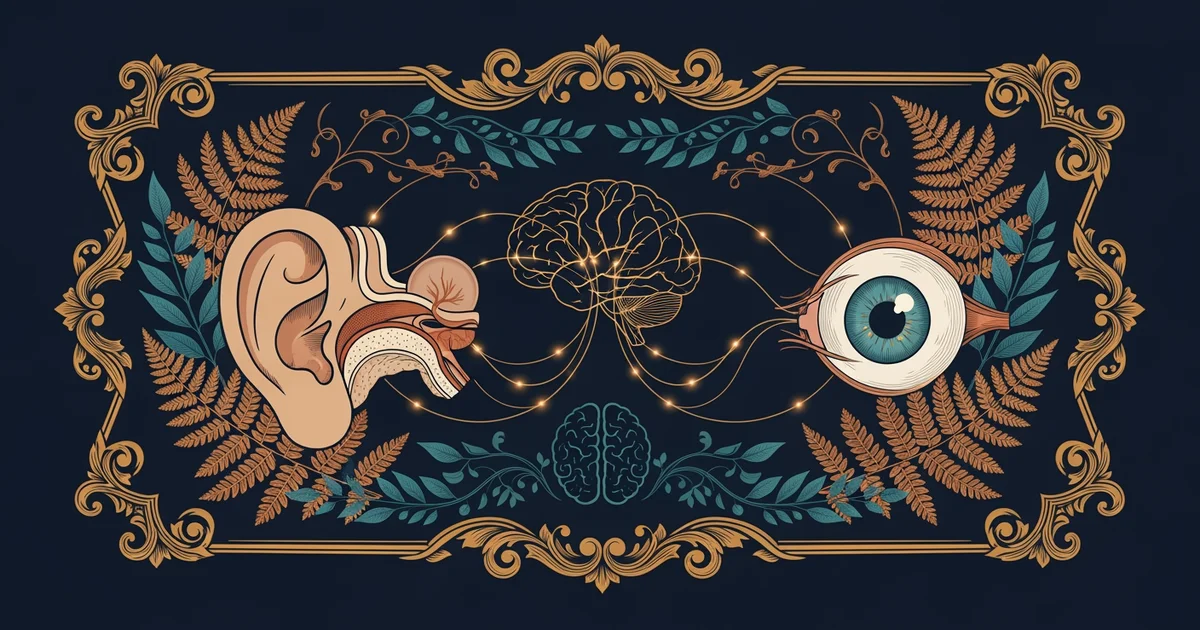
The Pathway of Nerve Signals
Your sensory organs act like tiny antennas that capture data from the environment, such as light, sound, or physical pressure. These organs convert that raw input into action potentials, which are electrical pulses that travel along specialized cells called neurons. You can think of these neurons like wires in a massive electrical grid that span your entire body. When a sensory receptor detects a change, it fires a signal that races toward the spinal cord. From there, the message moves upward to the brain for final processing, ensuring that you can respond to your surroundings without delay.
Key term: Action potential — a rapid electrical signal that travels along a nerve cell to communicate information between the body and the brain.
This transmission process is essential because the brain is isolated inside your skull and cannot interact with the outside world on its own. It relies entirely on the incoming stream of electrical traffic to build a mental map of your current reality. If these signals were interrupted, the brain would remain in total darkness, unaware of any events happening outside your body. The system functions like a high-speed internet network where the brain acts as a server that interprets incoming data packets to generate a coherent user interface for your consciousness.
Processing Sensory Information
Once the electrical signal reaches the brain, specific regions must decode the message to determine what it means. The brain does not simply receive a "pain" signal; it receives a pattern of impulses that it must categorize based on location and intensity. This interpretation happens in the cerebral cortex, which acts as the main hub for processing incoming sensory data. The efficiency of this system allows you to identify a sharp object or a warm surface almost instantly, protecting you from potential harm by triggering an immediate motor response.
| Sensory Type | Primary Input | Brain Region | Processing Goal |
|---|---|---|---|
| Somatosensory | Touch/Pressure | Parietal Lobe | Identify location |
| Visual | Light Waves | Occipital Lobe | Interpret imagery |
| Auditory | Sound Waves | Temporal Lobe | Recognize patterns |
Different parts of the brain specialize in handling distinct types of input, ensuring that your experience of reality remains organized. For example, the visual cortex handles light, while the auditory cortex manages sound, preventing sensory overload. This division of labor allows the brain to process millions of signals every second without confusion or delay. Without this specialized structure, your brain would struggle to distinguish between the feeling of a breeze on your skin and the sound of a distant car horn.
By organizing these signals into distinct categories, your brain creates a stable and predictable version of the world. This internal model helps you navigate complex environments, such as a crowded room or a busy street, by predicting what might happen next. The connection between your senses and your nervous system is the foundation for all human behavior and thought. As research continues to show, even minor delays in these pathways can significantly alter how an individual perceives their environment and interacts with others. This complex relay system ensures that your conscious mind stays connected to the physical reality of your body.
The brain acts as a central processing unit that transforms raw electrical signals from the body into a meaningful perception of reality.
The next step involves examining the specific types of receptors that allow us to detect such a wide variety of physical stimuli. This content is educational only and does not constitute medical advice. Always consult a qualified healthcare professional for personal health decisions.