
The Mechanics of Vision
Imagine you are standing in a dark room and suddenly flick a light switch to see your surroundings. Your eyes perform an instant transformation that turns scattered photons into a detailed picture of the world around you. This rapid process happens every single moment your eyes remain open to the environment. Understanding how this works reveals the complex biological engineering that allows humans to experience sight through the translation of energy. The journey begins when light waves enter the eye and ends when the brain interprets these signals as meaningful visual information.
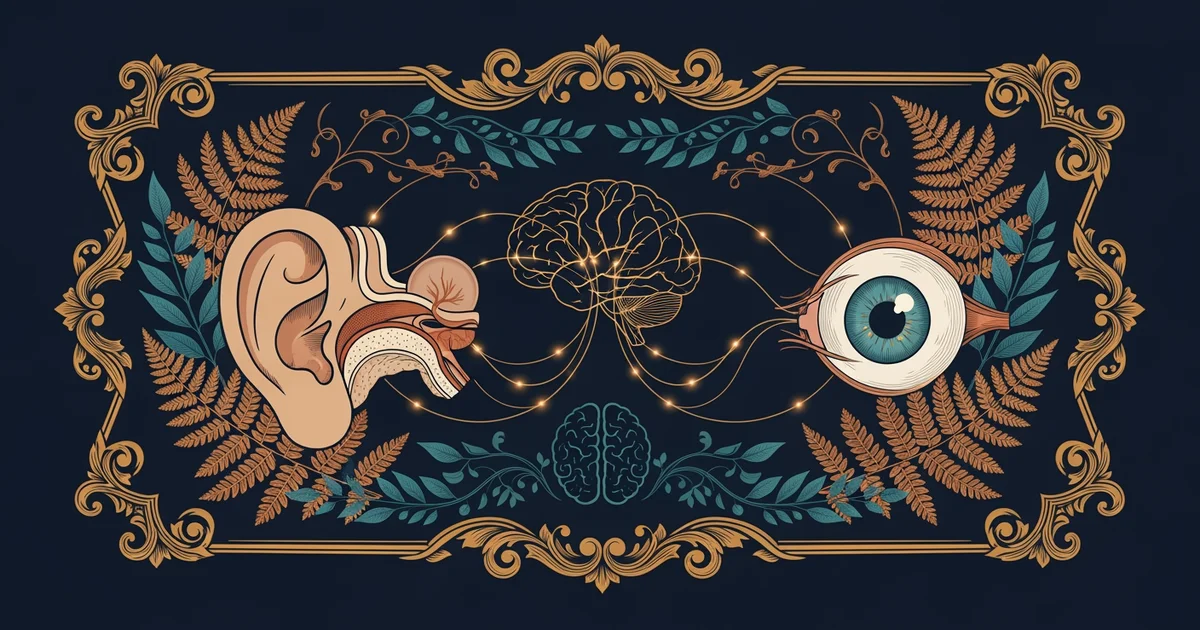
The Path of Light Through the Eye
Light enters the eye through the cornea, which acts like a protective clear window. This curved surface bends the incoming light waves to focus them toward the center of the eye. After passing through the cornea, the light travels through the pupil, a small opening controlled by the iris. The iris adjusts its size to regulate how much light enters the inner chamber. Behind the pupil, the lens fine-tunes the focus by changing its shape to ensure the image lands clearly on the back of the eye. This sequence ensures that the incoming light remains sharp and organized before it hits the sensory layer.
Key term: Retina — the light-sensitive tissue lining the back of the eye that converts physical light energy into electrical neural signals.
Once the light reaches the retina, the real work of translation begins through specialized cells. These cells act like a high-speed camera sensor that captures raw light data. The retina contains two main types of photoreceptors, known as rods and cones, which serve specific roles. Rods are highly sensitive to low light levels, helping people see shapes in dim environments. Cones function best in bright light and provide the color detail that defines our daily visual experience. Without these cells, the eye would simply be a dark chamber with no way to send data to the brain.
To understand this translation, consider the analogy of a digital telegraph office located inside your head. The light waves are like incoming Morse code signals arriving at the station from across the ocean. The rods and cones act as the telegraph operators who must manually transcribe these light pulses into electrical messages. Once they finish the transcription, they send these electrical impulses along the optic nerve to the brain. Just as a telegraph message is useless until someone reads it, these electrical impulses only create vision once the brain decodes them into a coherent image.
| Cell Type | Sensitivity | Primary Function | Lighting Condition |
|---|---|---|---|
| Rods | Very high | Detects motion | Dim light levels |
| Cones | Low | Detects color | Bright light levels |
| Ganglion | Moderate | Transmits data | All light levels |
The process of vision relies on a specific sequence of biological events that occur in milliseconds. The following steps show how the eye handles visual input:
- Light enters the eye through the cornea to begin the focusing process.
- The pupil and lens adjust to direct the light onto the retina.
- Photoreceptors absorb the light energy and trigger a chemical reaction.
- This chemical change creates an electrical signal that travels through nerves.
- The optic nerve carries these signals to the brain for final processing.
This system allows individuals to navigate complex spaces without conscious effort or delay. The brain takes these raw electrical pulses and reconstructs them into the depth, color, and motion we perceive as reality. This content is educational only and does not constitute medical advice. Always consult a qualified healthcare professional for personal health decisions.
Vision occurs when the eye converts physical light energy into electrical impulses that the brain decodes into a visual image.
The next Station introduces auditory processing basics, which determines how sound waves are converted into electrical signals for the brain.
This content is educational only and does not constitute medical advice. Always consult a qualified healthcare professional for personal health decisions.