
Neural Pathway Integration
Imagine a bustling city where thousands of delivery trucks arrive at a central sorting hub every single second. Each truck carries different goods from distant neighborhoods that need to reach the right final destination to keep the city functioning smoothly. Your body operates exactly like this complex logistics network when it processes information from the outside world. Sensory organs act as the loading docks, while your neural pathways serve as the highways that transport data to the central brain office.
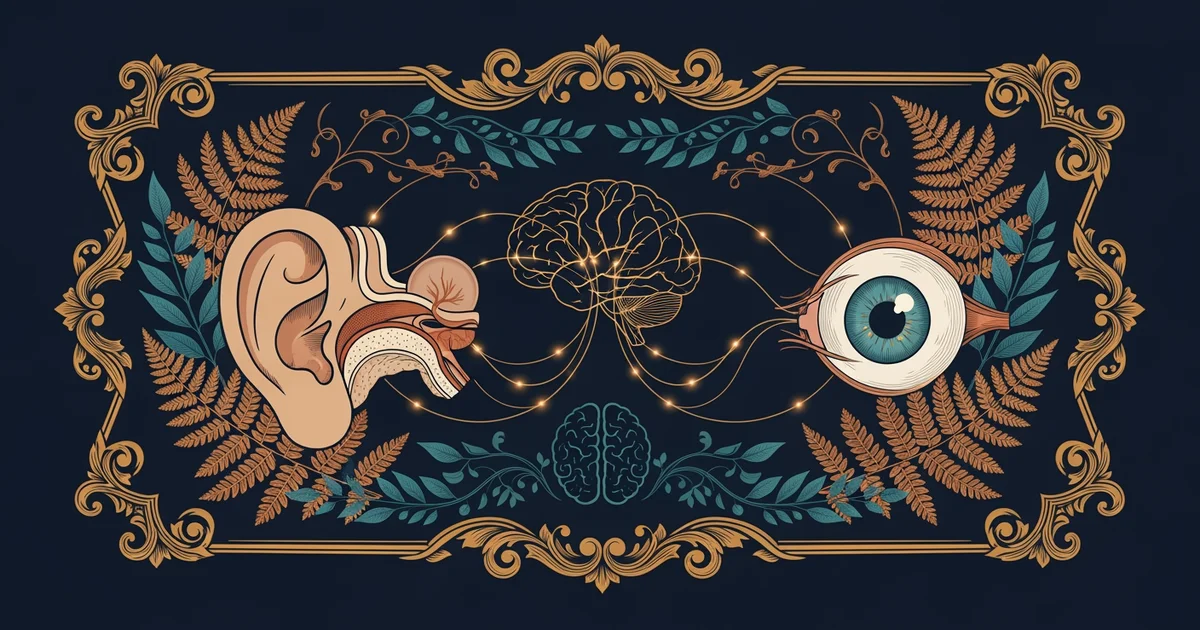
Mapping the Neural Distribution Network
When your senses capture physical stimuli, they do not just send data to a single location. Instead, they transmit signals through specialized pathways that ensure the brain receives the right message at the right time. These pathways act like a high-speed transit system that connects peripheral nerves to specific processing centers. Think of this process like a global shipping company that routes packages based on their final destination address. A package marked for a local branch goes to one hub, while urgent international mail moves through a different, faster route. Your nerves act as the couriers who ensure that visual data reaches the occipital lobe while auditory data travels toward the temporal lobe for interpretation.
Key term: Neural pathway — the series of connected neurons that transmit electrical signals from a sensory receptor to a specific destination in the brain.
This distribution system relies on a process called signal routing to maintain order during high-traffic periods. Without this specific organization, the brain would receive a chaotic jumble of sensory input that makes no sense. The thalamus acts as the main dispatcher for this system, deciding which information is important enough to reach the conscious mind. It filters out background noise, like the hum of a refrigerator, so you can focus on the sound of a friend speaking nearby. This sorting mechanism allows you to maintain focus in environments that are filled with constant, competing sensory distractions.
Processing Centers and Sensory Integration
Once the signals reach their designated brain regions, they undergo a transformation that turns raw data into a coherent experience. This integration phase is where the brain combines different inputs to create a unified picture of your surroundings. If you walk into a kitchen, you might smell baking bread, see the golden crust, and hear the oven timer ringing all at once. Your brain does not process these as three separate events but rather as a single, cohesive moment. This happens because the brain uses shared pathways to cross-reference data, ensuring that your perception matches the physical reality of the environment.
| Sensory Type | Primary Destination | Main Function |
|---|---|---|
| Visual | Occipital Lobe | Image Processing |
| Auditory | Temporal Lobe | Sound Analysis |
| Somatosensory | Parietal Lobe | Touch Perception |
This table shows how the brain organizes incoming data into distinct zones for efficient analysis. Each zone specializes in a specific type of information, which allows the brain to work faster and more accurately. When you touch a hot stove, the sensory pathway triggers a reflex that pulls your hand away before you even consciously feel the pain. This rapid response is possible because the signal does not need to travel all the way to the thinking part of your brain to initiate a basic protective movement. The efficiency of these pathways determines how quickly you can react to potential dangers in your environment.
By mapping these routes, scientists can see how different parts of the brain communicate to build your reality. This internal map remains flexible, allowing the brain to adjust when certain pathways become stronger or weaker over time. When you learn a new skill, your brain actually builds new connections to make these pathways more efficient. This constant refinement process ensures that your sensory systems remain optimized for the specific challenges you face in your daily life. The brain is not a static organ but a dynamic system that constantly updates its own wiring to better serve your needs.
The brain functions as a sophisticated distribution hub that routes incoming sensory data to specialized processing centers to create a unified and meaningful perception of reality.
But what happens when these established pathways need to change or adjust to new sensory environments?
This content is educational only and does not constitute medical advice. Always consult a qualified healthcare professional for personal health decisions.