
Sensory System Disorders
When a person suddenly loses their ability to detect the texture of a surface, they often struggle to adjust their grip strength during routine tasks. A simple act like holding a glass of water becomes an exercise in uncertainty because the brain lacks the feedback required to calibrate muscle force. This failure reflects a breakdown in the sensory pathway, similar to a faulty sensor in a complex factory line. If the sensor stops reporting data, the machines cannot adjust their speed to prevent damage or errors. This is the sensory processing disorder concept from Station 11 working in real conditions, where the link between physical input and neural output is severed.
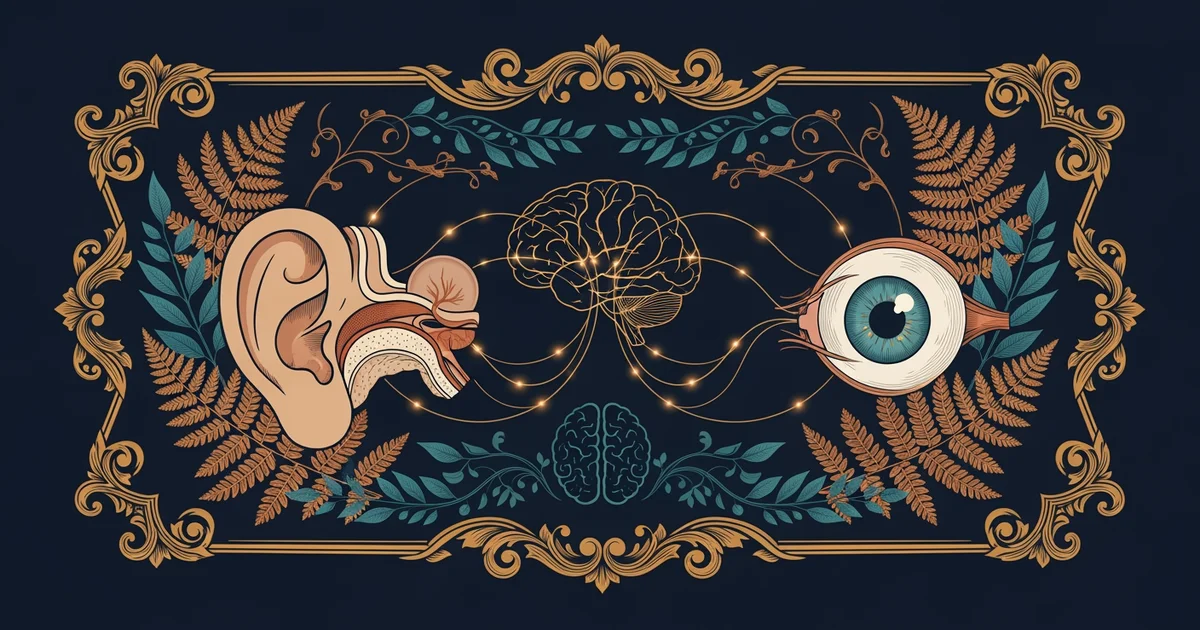
Mechanisms of Sensory System Failure
Sensory pathways rely on specialized cells called transducers to convert physical stimuli into electrical signals for the brain. When these cells sustain damage, the primary translation of the world into reality stops functioning as expected. This disruption can occur at the receptor level, along the nerve fibers, or within the brain regions responsible for interpretation. Imagine a courier service where the delivery drivers stop reading the addresses on the packages correctly. The messages arrive at the destination, but the information is garbled or incomplete, leaving the recipient unable to make sense of the incoming instructions.
Key term: Transducers — specialized biological cells that convert physical energy from the environment into electrical signals the brain can process.
Many factors can influence how well these systems perform over time, leading to varying levels of sensory impairment. Research indicates that persistent exposure to extreme environments can stress these delicate biological pathways. When the pathways suffer from chronic interference, the brain may attempt to compensate by amplifying other signals. This process often leads to distorted perceptions, where normal environmental input feels overwhelming or insufficient. The following table outlines how different types of sensory failures manifest in daily life:
| Sensory System | Common Failure Type | Observable Impact |
|---|---|---|
| Visual System | Signal attenuation | Difficulty distinguishing fine details in low light |
| Auditory System | Frequency filtering | Inability to separate speech from background noise |
| Somatosensory | Feedback latency | Clumsy handling of objects due to delayed touch |
Impact on Cognitive Integration
Beyond simple input errors, sensory disorders often disrupt the way the brain integrates multiple streams of data. The brain constantly merges visual, auditory, and tactile information to build a coherent model of the immediate surroundings. If one stream provides faulty data, the internal model becomes unstable, forcing the brain to rely on less reliable sources. This instability creates a significant cognitive load, as the brain must work harder to verify the accuracy of its own perceptions. Studies suggest that this extra effort often leads to fatigue, as the system consumes more energy to maintain basic awareness.
When the integration process fails, individuals might struggle with balance or spatial orientation because the brain cannot reconcile conflicting inputs. For example, if the eyes report movement but the inner ear remains stationary, the brain encounters a conflict that it cannot resolve. This mismatch is a core feature of many sensory processing issues, where the internal map of reality fails to match the external world. The brain constantly updates this map, but it requires consistent and accurate signals to ensure that the navigation remains precise and safe.
Maintaining a healthy sensory system requires the brain to filter out irrelevant background noise while prioritizing critical environmental cues. When this filtering mechanism becomes compromised, the system becomes flooded with unnecessary data, making it difficult to focus on essential tasks. This is not merely a problem of reception but a challenge of efficient data management within the nervous system. By understanding these failures, researchers can develop better methods to support those who experience these challenges in their daily lives.
Sensory disorders emerge when biological pathways fail to accurately transmit or interpret the physical data required for the brain to maintain a stable reality.
But this model breaks down when we consider how artificial devices can bypass damaged pathways to restore functional sensory input.
This content is educational only and does not constitute medical advice. Always consult a qualified healthcare professional for personal health decisions.