
Perception and Reality
When a person walks into a crowded room, their brain ignores the background noise while focusing on a single voice. This common experience demonstrates the gap between the physical energy hitting the ears and the actual message the brain chooses to process. The brain acts like a busy filter that ignores unimportant data to save energy for the things that matter. This process of filtering is how individuals navigate the world without becoming overwhelmed by the constant flood of sensory input.
The Construction of Subjective Reality
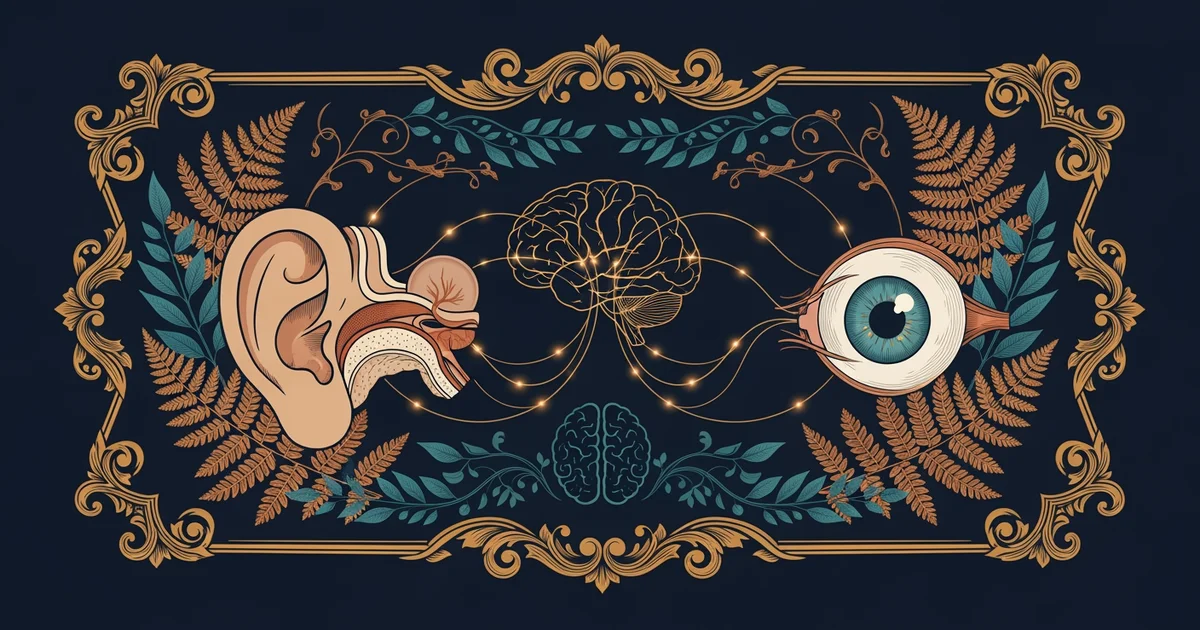
Sensory input provides the raw materials for experience, but the brain performs the actual construction of our reality. While the eyes capture light and the ears capture sound waves, the brain interprets these signals based on internal expectations. This is perception, the active process of organizing and interpreting sensory information to give it meaning. If the brain did not interpret these signals, the world would feel like a chaotic mess of colors and noises. Instead, the brain builds a mental model that helps people understand their surroundings and make quick decisions.
Key term: Perception — the brain's internal process of organizing and interpreting raw sensory data into a coherent and meaningful experience.
This mental model relies on shortcuts to process information quickly, which sometimes leads to errors in judgment. Because the brain prioritizes speed over perfect accuracy, it often fills in missing information based on previous experiences. This approach is similar to an investor who buys stock based on past trends rather than waiting for every piece of future data. The investor assumes the pattern will continue, just as the brain assumes the environment will behave according to past rules. This efficiency allows for survival but creates a subjective view that may not match the objective world.
The Influence of Past Experience
Beyond the immediate sensory input, the brain relies heavily on past experiences to shape current interpretations. When an individual encounters a familiar object, the brain does not re-analyze every single detail from scratch. Instead, it uses top-down processing, which uses prior knowledge and expectations to guide perception. This allows for rapid recognition of objects and situations, saving valuable time during daily activities. Without this system, even simple tasks like walking through a doorway would require intense mental effort and constant re-learning of the environment.
Past experiences influence how we perceive the world in several distinct ways:
- Memory of past patterns allows the brain to predict what comes next, which reduces the need for constant, deep analysis of every new stimulus.
- Personal biases and cultural background act as filters, causing different people to notice different details even when they view the same exact scene.
- Emotional associations with certain sensory inputs can trigger immediate reactions, often before the conscious mind has a chance to analyze the situation logically.
| Feature | Bottom-Up Processing | Top-Down Processing |
|---|---|---|
| Driver | Raw sensory data | Prior knowledge |
| Speed | Slower, detailed | Faster, predictive |
| Focus | External stimuli | Internal memory |
This table illustrates how the brain balances two different ways of building our daily reality. Bottom-up processing focuses on the incoming data, while top-down processing uses what we already know to make sense of the world. By combining these two methods, the brain creates a stable and predictable environment for the individual. This is the integration of sensation and cognition working together to form a coherent view of the world. This balance is essential for maintaining a sense of consistency as we move through life.
Perception is an active mental construction that translates raw physical data into a meaningful reality by blending current sensory input with our library of past experiences.
But this model of stable perception often fails when sensory inputs are ambiguous or when our internal expectations directly contradict the physical evidence provided by the environment.
This content is educational only and does not constitute medical advice. Always consult a qualified healthcare professional for personal health decisions.