
Sensory Adaptation Processes
Imagine you walk into a room with a loud humming refrigerator that suddenly stops. You notice the silence immediately, even though the noise was present for a long time. This shift happens because your brain filters out constant background inputs to focus on new changes. This biological mechanism is known as sensory adaptation, and it serves as a vital tool for survival. Without this constant filtering process, your mind would be overwhelmed by the sheer volume of incoming environmental data. Your nervous system prioritizes novelty over stability, allowing you to ignore predictable background noise while remaining alert to potential threats or new, significant developments in your immediate surroundings.
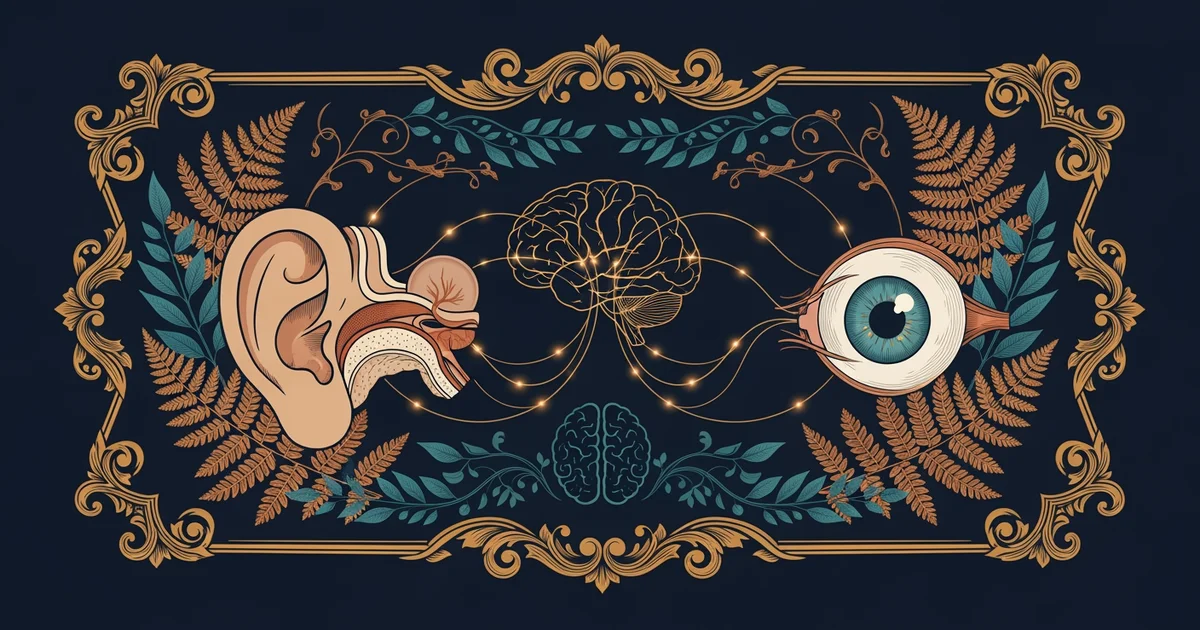
The Mechanics of Neural Filtering
When a stimulus remains constant over a period of time, the sensory receptors involved begin to fire less frequently. This reduction in the firing rate of neurons is the physical basis for your declining awareness of a stable sensation. Think of this process like a business owner who stops paying attention to the monthly rent payment after it becomes a routine expense. The money still leaves the bank account, just as the sensory signals still reach the brain, but the conscious mind no longer flags the transaction as an important event. By dampening these repetitive signals, the brain saves metabolic energy and keeps its processing capacity open for more urgent tasks.
Key term: Sensory adaptation — the process where sensory receptors decrease their response to a constant, unchanging stimulus over time.
This filtering happens across several different human senses, though it functions differently depending on the specific type of input involved. For example, your sense of smell often shows rapid adaptation to strong odors, while your sense of vision requires constant movement to prevent the image from fading entirely. If you stare at a single point without moving your eyes, the photoreceptors in your retinas will eventually stop sending strong signals to the brain. This results in the image slowly disappearing from your conscious field of view. To prevent this, your eyes perform tiny, involuntary movements that keep the visual scene fresh and active.
Examples of Daily Sensory Shifts
Because this process is built into your nervous system, you encounter it in many common situations every single day. The following list highlights how your body handles persistent sensory information to maintain a balanced state of focus:
- Temperature perception occurs when you jump into a cold swimming pool and feel a sharp shock, but the water feels normal after only a few minutes of immersion.
- Auditory habituation happens when you live near a busy train track and eventually stop hearing the sound of the passing engines as you go about your day.
- Tactile adjustment takes place when you put on a new pair of shoes, as the initial feeling of pressure against your skin fades once your feet adjust to the fit.
These adjustments ensure that your perception remains tuned to changes rather than static conditions. If your receptors continued to report the same pressure from your socks or the same ambient light levels throughout the entire day, your brain would be flooded with useless, redundant information. By ignoring the constant, your system stays ready to detect the subtle rustle of a predator or the sudden shift in temperature that might signal a change in your environment. This efficiency is a hallmark of how your neural pathways manage the massive flow of data from the external world into your internal reality.
Sensory adaptation allows the brain to ignore constant, predictable environmental inputs so that it can maintain sensitivity to new, potentially important changes.
But how does this constant filtering of the physical world shape our ultimate perception of reality?
This content is educational only and does not constitute medical advice. Always consult a qualified healthcare professional for personal health decisions.