
Bacterial Pathogen Structures
Tiny bacteria occupy every corner of the planet, yet their physical forms dictate how they survive inside a human host. Understanding these shapes reveals why some germs spread quickly while others hide within the body for years.
The Architecture of Bacterial Cells
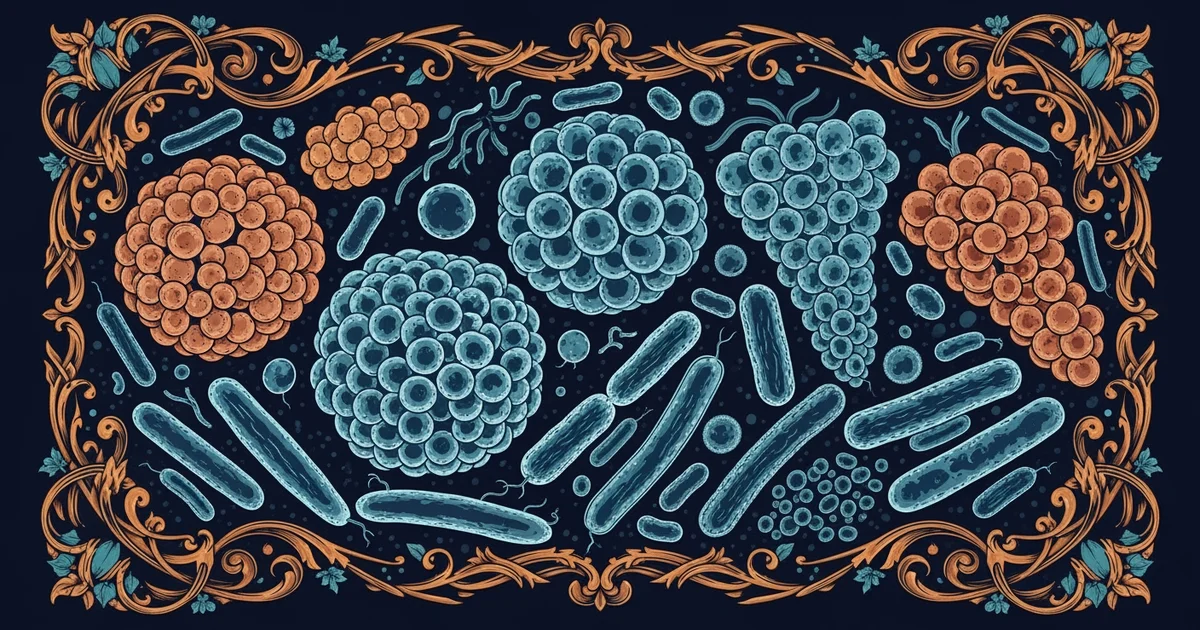
Most bacteria fall into three simple shapes that act like a structural blueprint for their survival. Scientists categorize these organisms based on their geometry because shape often dictates how a cell moves and interacts with its environment. Spheres, rods, and spirals represent the primary classifications used in clinical microbiology to identify potential threats. Think of these shapes like different types of vehicles on a highway. A sports car is built for speed and quick turns, while a heavy truck is designed for stability and hauling large loads. Bacteria use their specific shapes to navigate through blood or attach firmly to tissue surfaces. This structural variety ensures that different species can exploit diverse niches within the human body. Every shape serves a specific purpose in the ongoing struggle for resources and space against the immune system.
Key term: Morphology — the study of the physical form and external structure of an organism or cell.
Bacteria utilize their outer layers to protect themselves from harsh conditions that would otherwise destroy them. The cell wall acts like a suit of armor, providing the rigidity needed to maintain shape and resist internal pressure. Some bacteria possess a thick layer of peptidoglycan, which acts as a sturdy shield against external damage. Other species have a much thinner wall protected by an outer membrane that acts like a specialized gatekeeper. These variations in wall thickness determine how well a bacterium can survive inside a host or resist common cleaning agents. If a bacterium loses its structural integrity, it cannot maintain its shape or function, leading to its eventual death. This internal pressure is quite high, so the wall must be strong enough to prevent the cell from bursting.
Identifying Pathogenic Traits
When we examine these organisms, we look for specific traits that allow them to cause disease in people. Many pathogens use specialized appendages to attach to human cells or move through fluid environments to find better locations. These features turn a simple cell into a dangerous intruder that can bypass natural barriers. The following traits often indicate that a bacterium is capable of causing a severe infection:
- Flagella act like tiny motors that propel the cell through liquids, allowing it to reach new tissues.
- Pili function as adhesive hooks that lock the bacterium onto the surface of human cells for colonization.
- Capsules provide a slippery outer coating that helps the organism hide from the body's defensive white cells.
- Endospores serve as a dormant survival state that allows the cell to wait out extreme heat or dryness.
These structures are not present on every bacterium, but they are common among those that impact human health. When a pathogen possesses these tools, it gains a significant advantage in the race to multiply before the immune system reacts. The presence of a capsule, for instance, makes it very difficult for immune cells to grab and destroy the invader. Without these protective or mobile features, a bacterium would likely be swept away by the body's natural cleaning processes. Scientists study these traits to develop better ways to stop infections before they spread throughout the entire body.
| Feature | Primary Function | Clinical Impact |
|---|---|---|
| Flagella | Movement | Rapid tissue spread |
| Pili | Attachment | Strong colonization |
| Capsule | Protection | Immune system evasion |
This table illustrates how specific structures provide a clear tactical advantage for bacteria during an active infection. By identifying these features, healthcare professionals can better understand how a particular pathogen behaves inside the human system. It is important to remember that not all bacteria are harmful, as many reside in the body without causing any distress. Only a small fraction of these organisms have evolved the specific structural tools needed to overcome human defenses. Understanding the distinction between harmless residents and dangerous pathogens remains a central goal of modern medical research. Each structure represents an evolutionary adaptation that has been refined over millions of years of survival.
The survival and impact of a bacterial pathogen depend entirely on its unique structural features and its ability to interact with the host environment.
The next Station introduces viral replication cycles, which determines how non-living infectious agents hijack human cells to create more copies of themselves. This content is educational only and does not constitute medical advice. Always consult a qualified healthcare professional for personal health decisions.