
History of Microbial Discovery
A single spoiled batch of food can ruin a family dinner, yet we often overlook the invisible agents causing such chaos. Before we knew about germs, people blamed bad air or bad luck for sudden illnesses that swept through entire towns. This historical blind spot meant that doctors could not stop the spread of sickness, as they did not understand the true origin of infection. We now know that microscopic life exists everywhere, acting as both a silent builder of our ecosystems and a potential threat to human health.
The Shift Toward Germ Theory
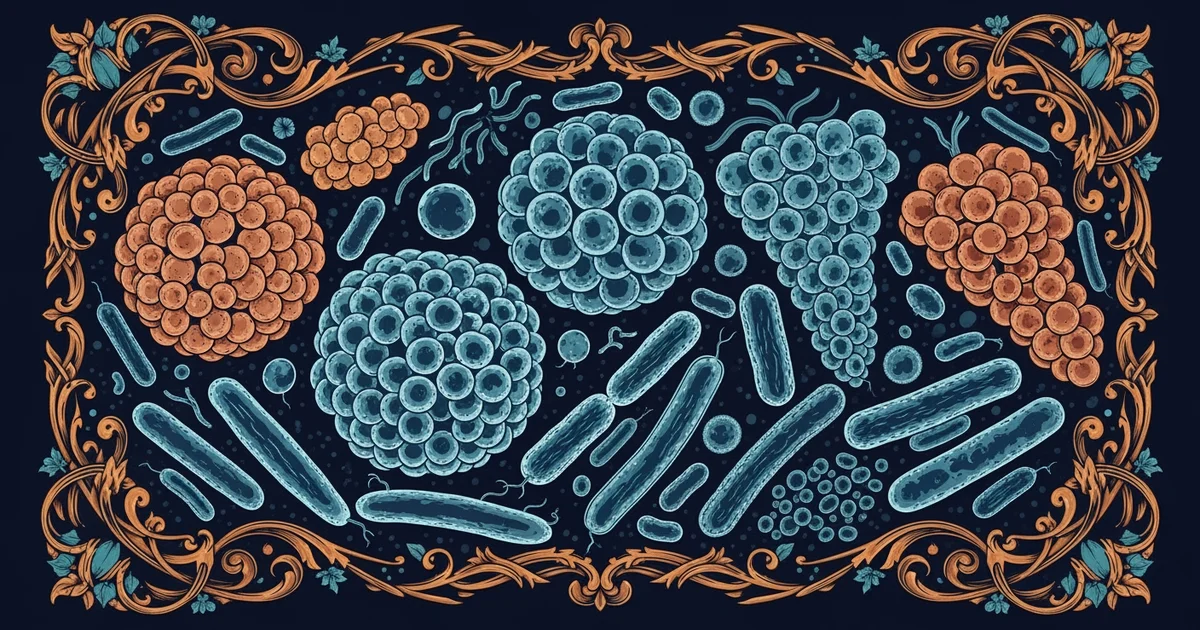
For many centuries, the scientific community believed that diseases arose from spontaneous generation, which suggested life simply appeared from non-living matter. Think of this like assuming a messy room creates dust out of thin air, rather than realizing dust enters from the outside world. This view changed when researchers began to use early tools to observe the unseen world. They discovered that tiny organisms were present in samples that had started to decay. This observation challenged the idea that life could just pop into existence without a source. By tracking these small life forms, scientists started to build a new framework for understanding how sickness moves from one person to another.
Key term: Germ Theory — the scientific principle stating that specific microscopic organisms are the actual cause of infectious diseases in humans.
This transition required proof that these tiny beings were not just bystanders but active participants in the disease process. Scientists conducted rigorous experiments to show that isolating these organisms and introducing them to healthy subjects would result in the same illness. Much like a detective tracing a crime to a single culprit, these researchers demonstrated that removing the microbe stopped the spread of the sickness entirely. This work proved that the invisible world had a direct and measurable impact on human survival and health outcomes.
Milestones in Microbial Evidence
Evidence for these theories grew as technology improved, allowing for clearer views of the microbial landscape. The following milestones represent the shift from guessing about causes to verifying them through controlled observation:
- The microscope refinement: Improved lenses allowed scientists to see living cells clearly, which moved the field past simple guesses into the realm of visual confirmation.
- Sterilization techniques: By applying heat to liquids, researchers proved that killing these invisible organisms stopped the process of fermentation and decay in food products.
- Controlled isolation: Growing specific microbes in a lab setting helped scientists link one distinct organism to one specific type of human ailment.
These steps created a standard for future medical research that continues to guide our safety protocols today. We no longer rely on guesswork, as we have clear methods to identify and manage the microbes that impact our daily lives.
| Observation Phase | Primary Goal | Resulting Knowledge |
|---|---|---|
| Early Observation | See the world | Proved life exists |
| Controlled Heat | Kill the germ | Stopped the decay |
| Lab Cultivation | Isolate types | Linked germ to ill |
This table highlights how the progression of scientific tools allowed researchers to move from simply observing life to actively managing its effects on human health. By breaking down the process into these phases, the medical field gained the ability to predict and prevent the spread of harmful agents in our communities. We now understand that these microbes are not merely passive elements, but active forces that shape our biological reality every single day. This foundation allows us to ask how we might live alongside these organisms without constant harm.
Understanding that specific microbes cause disease transformed medicine from a practice of guesswork into a precise science of prevention.
As we recognize how these tiny organisms create illness, we must also consider the vast, helpful communities of microbes living inside our bodies.
This content is educational only and does not constitute medical advice. Always consult a qualified healthcare professional for personal health decisions.