
Self Versus Non-Self
Imagine walking into a high-security building where every employee carries a unique, glowing badge that guards check at the door. If a person tries to enter without this specific badge, the security team prevents them from moving past the entrance to protect the facility. Your body operates with a similar system of constant surveillance to ensure that only authorized parts belong inside your biological borders. This process of distinguishing between your own tissues and foreign invaders is the foundation of your health and survival.
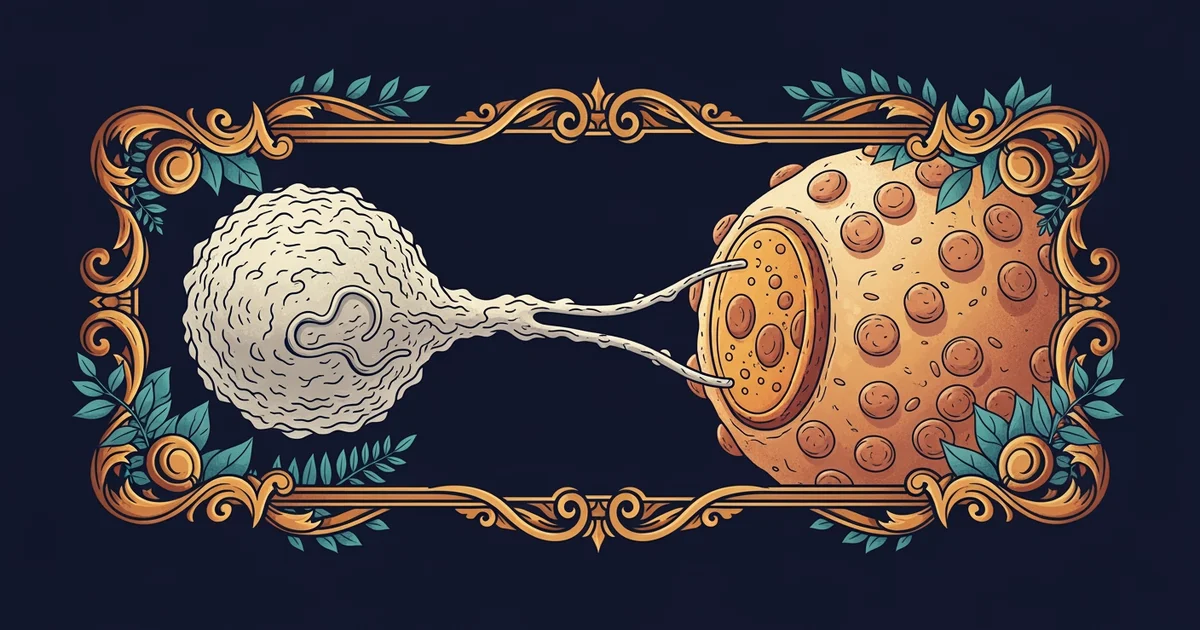
The Concept of Biological Recognition
Every single cell in the human body displays specific markers on its outer surface that act like a digital identification card. Scientists call these markers self-antigens, which serve as a chemical signature that tells the immune system that a cell is a native part of the body. When immune cells patrol your tissues, they scan these signatures to verify that everything looks correct and expected. If a cell displays a signature that matches the body's internal records, the immune system leaves it alone and continues its patrol elsewhere.
Key term: Self-antigen — a molecule on the surface of a cell that identifies it as part of the body, preventing an immune attack.
This recognition process functions much like a gated community where residents possess a key that opens the main entrance. Security personnel do not need to inspect every resident individually because the presence of the key acts as an automatic pass. Similarly, your immune cells move through the blood and tissues, constantly checking for the correct molecular keys on every cell they encounter. As long as the keys match the body's record, the immune system recognizes the cell as a friendly neighbor rather than a dangerous intruder.
Identifying Foreign Threats
When a foreign substance like a virus or bacteria enters your system, it carries markers that do not match your internal database. The immune system identifies these as non-self materials because their surface signatures are fundamentally different from your own biological code. Once the body detects these mismatched markers, it triggers an immediate defensive response to neutralize the threat before it can spread or cause damage. This rapid identification is essential for stopping infections before they become a serious health crisis for the individual.
To understand how the body differentiates between internal and external elements, consider the following list of recognition factors:
- Surface protein markers provide the primary identification method, allowing the immune system to verify if a cell belongs to the specific host or is an unwanted guest.
- Molecular shape matching happens when immune receptors physically touch the surface of a target cell to determine if the shapes fit together like a lock and key.
- Chemical signaling pathways relay information to the rest of the immune network, ensuring that once a threat is identified, the entire defense team coordinates its response.
| Feature | Self-Antigen | Foreign Antigen |
|---|---|---|
| Origin | Produced by body | External source |
| Reaction | Tolerance/Ignore | Attack/Destroy |
| Goal | Maintain integrity | Eliminate threat |
Maintaining this balance requires extreme precision, as the immune system must be aggressive enough to catch invaders but careful enough to avoid harming healthy cells. If the system misidentifies a healthy tissue as a foreign object, the resulting confusion can lead to significant health complications. Understanding how these markers function provides a clear look at why the body sometimes struggles to maintain this delicate boundary between what belongs and what must be removed. This internal sorting process happens millions of times every single day without you ever needing to think about it.
The body maintains health by using molecular identification markers to distinguish between its own native cells and dangerous foreign invaders.
Now that you understand how the body identifies its own tissues, consider what happens when this recognition system begins to fail or makes a mistake.
This content is educational only and does not constitute medical advice. Always consult a qualified healthcare professional for personal health decisions.