
Decipherment and Linguistic Archaeolog
When the Rosetta Stone arrived in the British Museum during the early nineteenth century, scholars faced a silent, carved puzzle. They held a single block of stone featuring three distinct scripts that told the same royal decree. This artifact forced experts to treat language like a locked vault where the key was hidden in plain sight. They had to compare the known Greek text against the mysterious Egyptian hieroglyphs to unlock the meaning of ancient symbols. This process mirrors how a detective uses a known witness statement to verify the details of an unknown suspect. By mapping the Greek names to the visual signs, they finally broke the code of a lost civilization. This is the core of linguistic archaeology, which serves as the foundation for recovering voices from our distant past.
The Mechanics of Linguistic Decoding
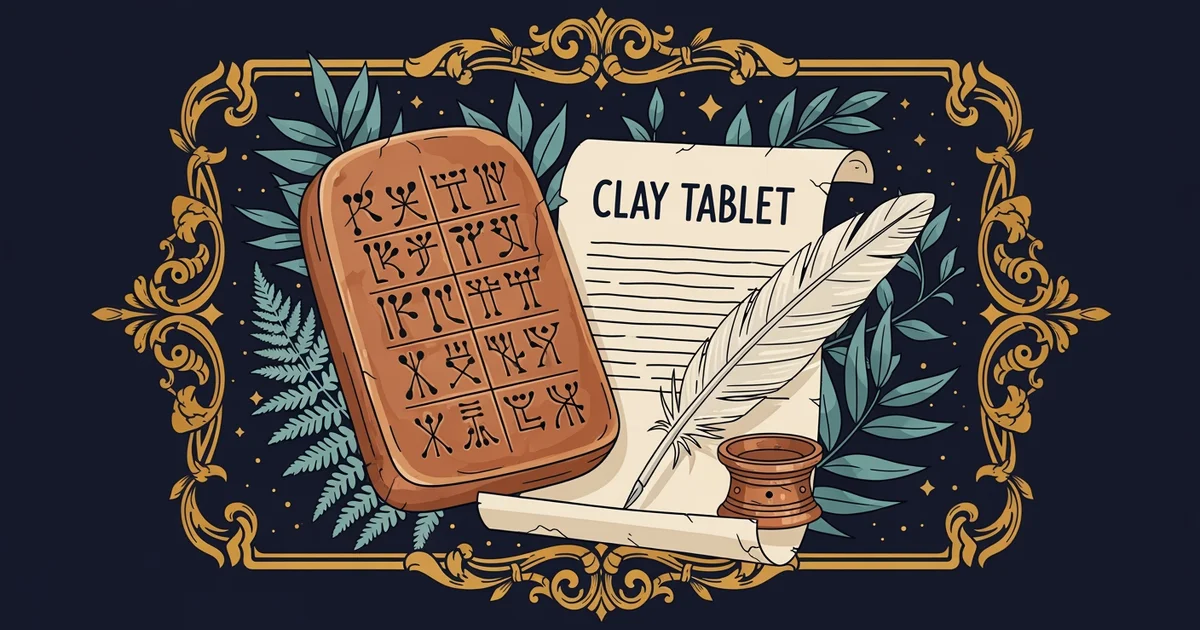
Decipherment relies on identifying repeating patterns within a text that has no modern equivalent. Researchers often start by counting the frequency of symbols to determine if they represent sounds or whole words. If a symbol appears constantly in every sentence, it likely functions as a common grammatical particle like a preposition. Once they identify these structural anchors, they can begin to test hypotheses about the language family. The goal is to isolate the underlying system by treating the script as a data set. This systematic approach turns guesswork into a repeatable scientific process that builds confidence in the final translation. Without these logical steps, the symbols remain just pretty pictures rather than functional language.
Key term: Bilingual text — a document that presents the same content in two languages, providing a direct map for translation.
When we look at how these experts work, we see a clear set of priorities that guide their efforts. They must balance raw data with historical context to avoid making false assumptions about the culture. The following list outlines the primary stages that linguists follow when they encounter a new, mysterious script:
- Identifying the script type by counting the unique symbols to see if it uses an alphabet or a syllabary.
- Mapping known names or royal titles found in the bilingual text to specific clusters of symbols within the script.
- Testing the proposed phonetic values against other untranslated texts to confirm the script remains consistent across different documents.
- Reconstructing the grammar by comparing the syntax of the known language to the structure found in the unknown script.
Challenges in Modern Archaeological Linguistics
Even with advanced tools, some scripts remain stubbornly silent because they lack a bilingual bridge. Without a known reference point, linguists must rely on internal logic to guess the meaning of the symbols. This is like trying to solve a complex crossword puzzle where you have no clues and no list of words. The difficulty increases when the language is completely extinct, leaving no descendants to provide a hint. Scholars often use statistical models to compare the unknown symbols against known linguistic structures found in the same region. This method helps narrow down the possibilities, but it rarely provides a definitive answer without a lucky discovery. We are effectively staring at a wall of symbols, hoping that the patterns will eventually reveal their own internal rules.
| Method | Primary Goal | Requirement |
|---|---|---|
| Bilingual Mapping | Direct translation | Two known languages |
| Statistical Analysis | Frequency patterns | Large data set |
| Contextual Inference | Cultural meaning | Historical records |
This table shows how different tools allow researchers to tackle various types of ancient writing systems. When a script lacks a bilingual text, researchers must shift their focus toward statistical frequency and historical context to bridge the gap. This shift requires immense patience and a deep understanding of how human societies structure their communication systems. We must remember that every script was designed to be understood by someone, which means there is always an internal logic waiting to be found. The process is slow and requires constant verification, but it is the only way to ensure that our interpretations are accurate. Every breakthrough brings us closer to understanding the daily lives and thoughts of the people who created these complex systems long ago.
Decipherment transforms unknown visual patterns into meaningful language by using known references and statistical logic to bridge the gap between past and present.
But this model breaks down when we encounter scripts that contain no internal patterns or lack any surviving historical context to guide our analysis.