
The First Logographic Systems
Imagine you are trying to describe a complex business transaction using only pictures drawn in the sand. You draw a cow to represent trade, but your partner thinks you mean a gift, leading to total confusion. This struggle to communicate precise meaning through simple images forced early civilizations to develop more reliable systems. They needed a way to ensure that a record of debt or ownership remained clear over long periods. This transition from basic drawings to structured symbols marked the true beginning of human record-keeping.
The Shift From Images To Meaning
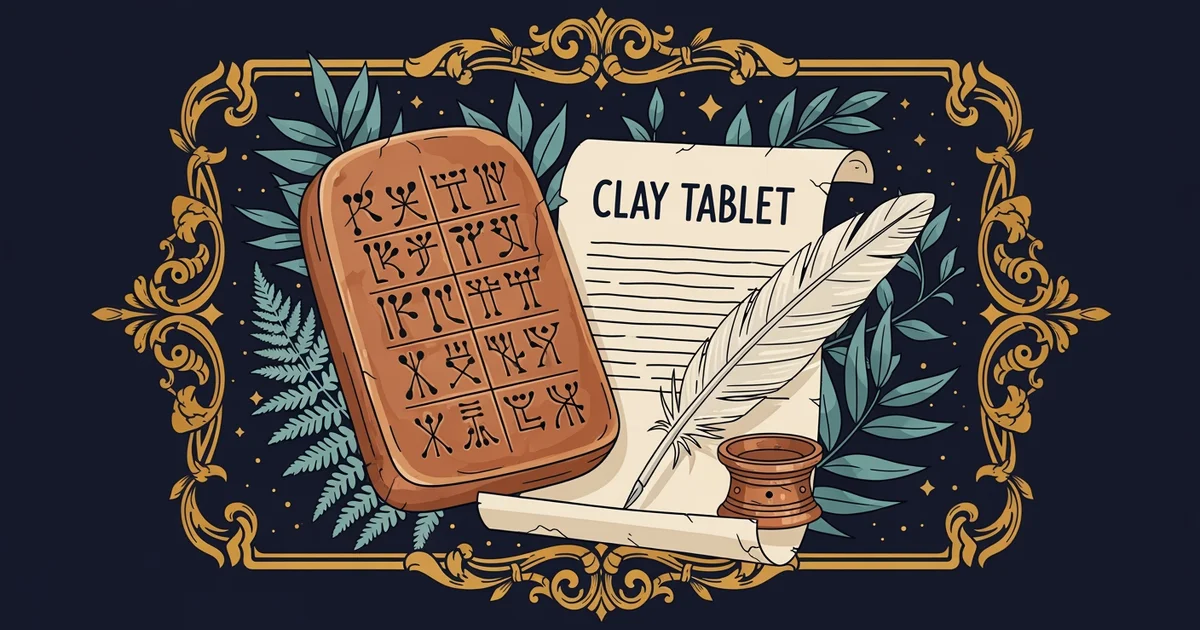
Early societies first relied on pictograms, which are simple drawings that represent physical objects in the world. If a person wanted to record the sale of three sheep, they drew three distinct images of sheep on a clay surface. While this worked for basic counting, it failed when people needed to express abstract ideas like debt, time, or legal ownership. A drawing of a sheep cannot easily explain that the animal is owed to a neighbor for a future harvest. To solve this, scribes began to assign specific, consistent meanings to shapes that moved beyond mere visual resemblance.
Key term: Logographic — a writing system where individual symbols represent entire words or morphemes rather than individual phonetic sounds.
This evolution mirrors how we use modern emojis to convey complex emotional states in a single character. Just as a yellow face with tears represents the specific concept of laughing hard, these ancient symbols became standardized tools for communication. By moving away from literal drawings, scribes could record contracts and laws that everyone in the community understood the same way. This standardization allowed for the growth of larger social structures because leaders could track resources across vast distances. Consistency replaced guesswork, turning fleeting spoken words into permanent social assets that could survive for many generations.
Characteristics Of Early Writing Structures
These early systems relied on a set of rules that separated them from simple artistic expression. When a system becomes logographic, it requires a shared social contract where every user agrees on what each symbol signifies. Without this agreement, the writing would remain a series of personal sketches rather than a functional tool for a civilization. The following table highlights the core differences between these early systems and the basic drawings that preceded them:
| Feature | Pictograms | Logographic Systems |
|---|---|---|
| Representation | Literal objects | Conceptual words |
| Standardization | Low or none | High and strict |
| Complexity | Very simple | Highly advanced |
| Primary Use | Basic tallies | Legal and historical |
To ensure these systems functioned, scribes followed specific patterns to organize their data. They focused on three primary goals to maintain order and clarity within their growing administrative records:
- Symbol consistency ensures that every person reading the document interprets the signs in the exact same manner, preventing costly disputes over property or trade agreements.
- Abstract representation allows the system to capture concepts that have no physical shape, such as the idea of justice, duty, or the passage of time.
- Structured arrangement provides a logical flow for the symbols, allowing the reader to understand the relationship between different concepts in a specific sequence.
By adopting these structural rules, ancient administrators gained the power to manage complex economies that spanned entire cities. They no longer needed to trust memory or oral tradition to settle disputes or manage food supplies. Writing became a form of technology that acted as an external memory for the state. This shift fundamentally changed how humans interacted, as they could now rely on written proof to verify claims. The ability to lock an idea into a permanent, readable form allowed for the development of the first true bureaucracies in human history. As these systems grew more refined, they paved the way for the complex scripts that would eventually define the ancient world.
The development of logographic systems transformed human communication by replacing ambiguous images with standardized symbols that could record complex, abstract concepts for future use.
Moving forward, we will examine how these early concepts evolved into the sophisticated wedge-shaped writing found in ancient Mesopotamia.