
Origins of Human Written Communication
Imagine you are trying to remember a complex trade agreement from three years ago without any written notes. You would likely struggle to recall every specific detail, such as the exact amount of grain promised or the precise delivery dates agreed upon by your partners. This common struggle highlights why humans eventually needed a way to store information outside of their own fragile memories. By creating permanent marks on physical surfaces, early societies transformed fleeting thoughts into lasting records that could survive long after the speaker had passed away.
The Shift From Oral Memory to Visual Symbols
Early humans relied entirely on oral traditions to pass down knowledge, stories, and laws across many generations. While this method worked for small groups, it became unreliable as communities grew in size and complexity. When a leader needed to track large quantities of livestock or record debts owed between merchants, the human brain reached its natural limit. This limitation acted much like a digital memory card that has run out of space, forcing people to find an external storage solution. They began using simple physical tokens or notches on bones to represent specific items. These basic tools allowed individuals to verify quantities without needing to rely on someone else’s potentially faulty memory. This transition from internal mental storage to external physical records marked the true birth of human documentation.
Key term: Record keeping — the practice of using symbols or physical objects to track and store information for future reference.
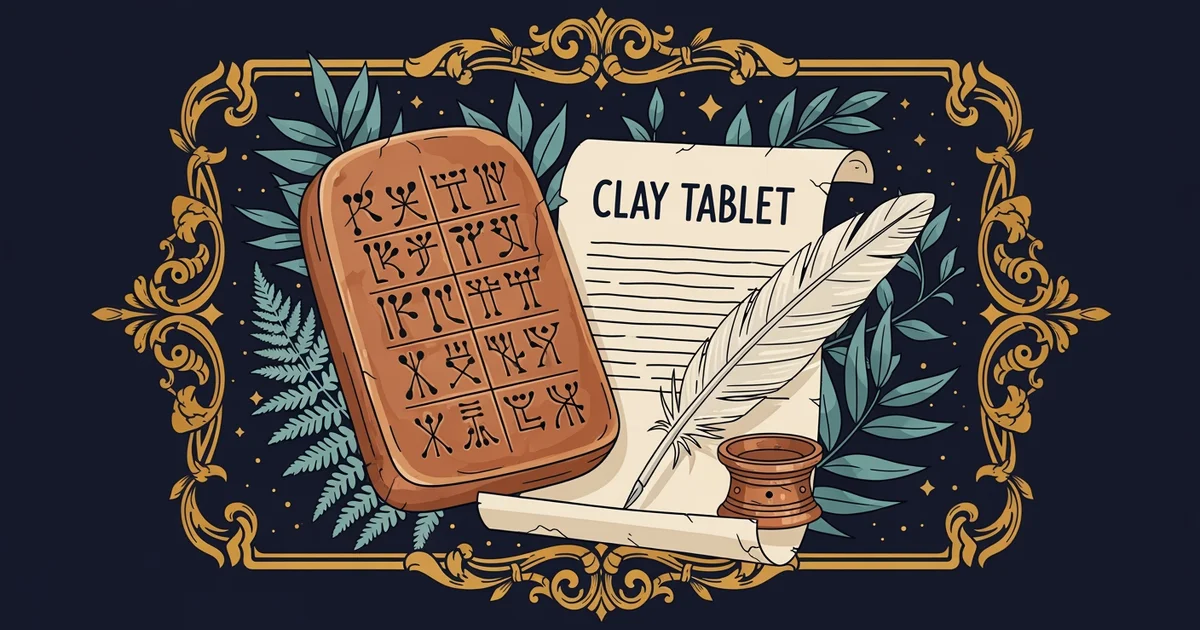
As these systems evolved, they moved from simple tally marks toward more complex symbolic representations of reality. Societies started carving images that stood for actual objects, such as a drawing of a wheat stalk to represent a harvest. This development allowed people to communicate across distances and time without being physically present to explain the message. Think of this process as creating a shared language that anyone within the culture could read and understand. It provided a stable foundation for building larger civilizations because officials could accurately track resources, taxes, and labor. The ability to look at a surface and understand a complex message changed how humans interacted with their environment and with each other.
Managing Resources Through Written Documentation
Developing these systems required a shift in how societies valued information and organized their daily economic activities. Officials needed to ensure that the records remained consistent so that everyone involved in a trade understood the terms. This need for consistency led to the creation of standardized symbols that represented specific units of measurement or types of goods. By using these markers, merchants could settle disputes about payments or inventory levels with high precision. The following table illustrates how different early systems categorized their physical assets for better management.
| Asset Type | Tracking Method | Primary Purpose |
|---|---|---|
| Grain | Clay tokens | Inventory control |
| Livestock | Notched sticks | Wealth assessment |
| Labor | Pictographic tablets | Tax calculation |
This structured approach to data helped leaders maintain order and plan for future needs during times of scarcity. When a society can accurately track its resources, it can distribute them more effectively to prevent famine or unrest. This capability is the fundamental reason why writing systems became such a vital part of human history. By moving information from the mind to the physical world, people gained a powerful tool for survival and growth.
By the end of this path, you will understand how these early systems evolved into the complex scripts that define our modern global communication.