
Oral Traditions Versus Written Records
Imagine trying to memorize a complex legal contract by heart just to pass it down to your children. You would likely forget key details or change the wording by mistake over many years. This problem of human memory serves as the primary reason why societies eventually moved toward permanent recording methods. Without a reliable way to store information, knowledge remains fragile and subject to the limitations of a single human life. Societies that relied only on speech faced a constant risk of losing their history and laws whenever a storyteller passed away unexpectedly.
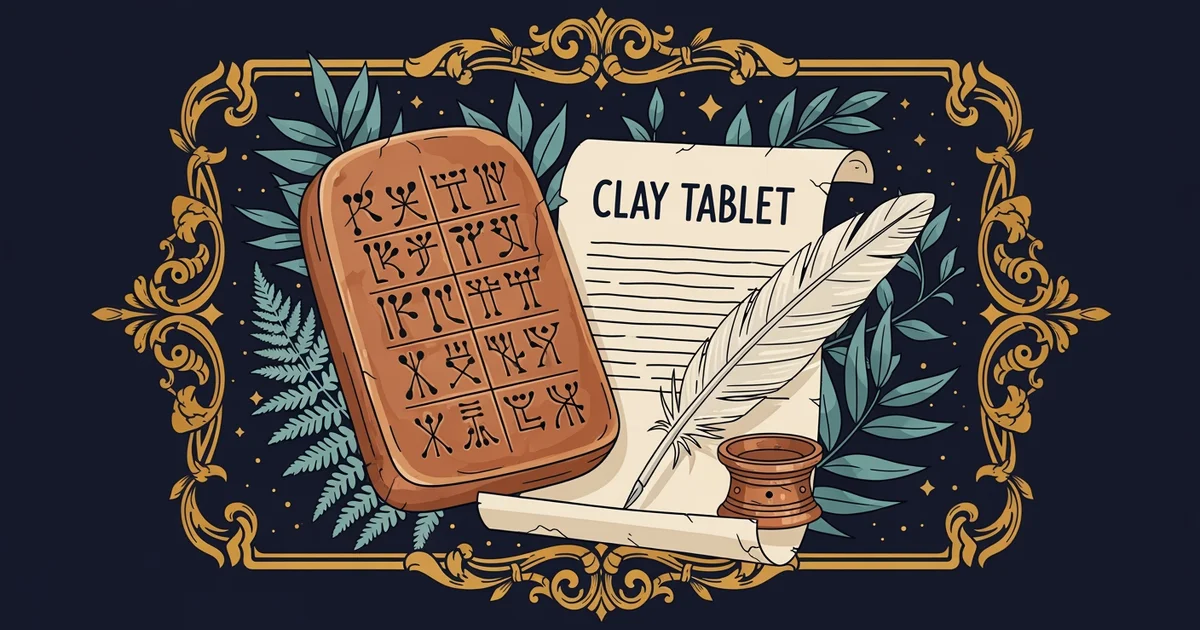
The Fragility of Memory and Oral Traditions
Oral traditions rely entirely on the human capacity for recall and the social structure of communal repetition. Elders often serve as living libraries, passing down cultural values and historical events through rhythmic songs or long narratives. This method works well for small groups where everyone hears the same message repeatedly until the core facts are memorized. However, as societies grow in size and complexity, the chance for errors during transmission becomes a significant problem. Think of this like a game of telephone where a message changes slightly as it passes through many different people. By the time the message reaches the end of the line, the original meaning is often lost or distorted. This lack of precision makes it difficult to maintain complex systems like trade agreements or legal codes across large distances or long time periods.
Key term: Oral tradition — the practice of passing down cultural knowledge, history, and laws through spoken word across generations without using writing.
Transitioning to Permanent Physical Storage
Societies eventually realized that they needed a more stable way to store essential information beyond the reach of human memory. Writing acts like a physical bank account for knowledge, allowing information to be deposited and withdrawn exactly as it was stored. When a civilization records its laws on clay tablets or stone, the information remains static regardless of who is reading it. This stability allows for the creation of complex legal systems and long-term planning that would be impossible with speech alone. Writing also enables people who have never met to share ideas across vast distances of space and time. By decoupling the message from the physical presence of the speaker, writing creates a durable record that survives long after the author has disappeared. This shift from transient speech to permanent archives represents a massive leap in how human beings manage their collective resources.
| Feature | Oral Tradition | Written Records |
|---|---|---|
| Storage | Human memory | Physical objects |
| Accuracy | Varies over time | Stays consistent |
| Reach | Local groups | Global distance |
| Duration | Limited by life | Indefinite life |
Societies that adopted writing systems gained a significant advantage in organizing their labor and resources effectively. The ability to track grain stores or tax payments meant that leaders could manage much larger populations than before. This transition was not immediate, but it followed a logical progression of needs within growing communities. As trade networks expanded, the need for precise contracts and inventories became a matter of economic survival. Written records provide a level of accountability that spoken promises simply cannot match in a busy marketplace. By standardizing the way information is recorded, civilizations could build upon the work of those who came before them without starting from scratch every single generation.
Permanent writing systems allow human societies to store and retrieve complex information with high accuracy, overcoming the natural limitations of memory and individual lifespan.
The next station will explore how these early societies developed the first logographic systems to represent specific ideas and words through visual symbols.