
Cuneiform and Ancient Mesopotamia
Imagine trying to track every bag of grain in a massive warehouse using only your memory. You would quickly lose count and forget who owed what to the central storehouse. Ancient people in Mesopotamia faced this exact problem as their cities grew larger and more complex. They needed a way to record information that would stay permanent and accurate over a long period. This need for reliable accounting forced them to move beyond simple memory and create a formal writing system.
The Evolution of Clay Records
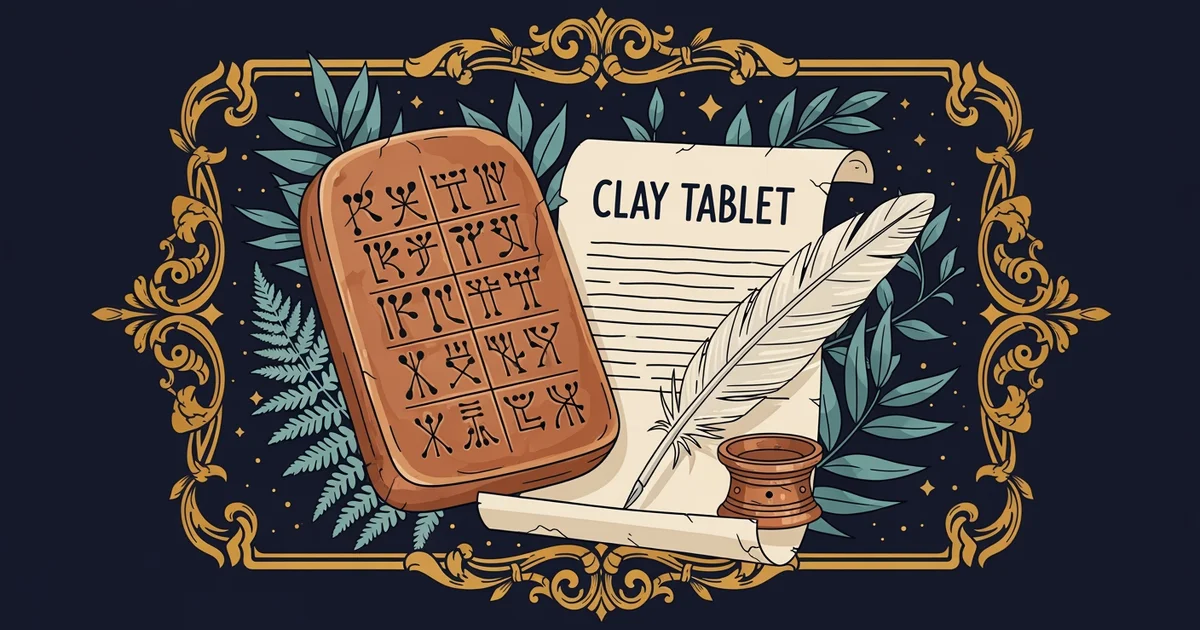
To solve their storage problems, the Sumerians began using small clay tokens to represent specific goods. These tokens served as an early form of inventory, but they were difficult to carry around in bulk. Eventually, they realized that pressing these tokens into soft clay surfaces created a lasting visual impression. This simple act of pressing changed how humans recorded their world and their daily economic transactions forever. They soon moved from using physical tokens to drawing symbols directly into the wet clay using reeds. This transition allowed them to record more complex data than simple tokens ever could. By hardening these tablets in the sun or a fire, they created permanent records that lasted for thousands of years. Think of this process like saving a digital file to a hard drive for safekeeping later. The clay tablet acts as the hardware, while the marks act as the data stored within the system.
Key term: Cuneiform — the ancient writing system of Mesopotamia characterized by wedge-shaped marks pressed into clay tablets.
As the system matured, the symbols became more abstract and less like the objects they represented. Scribes used a stylus to create these distinct wedge shapes, which gave the script its unique look. This efficiency allowed for faster writing, which was essential for managing the growing bureaucracy of the city-states. The following list highlights why this specific method of record keeping was so successful for the early Mesopotamians:
- Clay was abundant in the river valleys, making it a cheap and accessible material for everyone.
- Drying the tablets in the sun or baking them in kilns ensured that records remained stable for decades.
- The wedge-shaped marks were easy to replicate quickly, which increased the speed of administrative work in busy offices.
Managing Complexity Through Script
Once the writing system became standardized, it allowed leaders to track taxes, trade agreements, and even legal codes. This ability to document laws and debts provided a foundation for stable government across the entire region. Without this system, the scale of their trade networks would have collapsed under the weight of unverified promises. The tablets functioned as a neutral third party that could settle disputes between merchants or citizens. When two people disagreed about a transaction, the clay tablet provided the objective truth that both parties could accept. This development marked a massive shift in human history, moving societies from oral traditions to structured, written governance. The precision of these records allowed kings to manage resources across vast distances with much greater accuracy than ever before. Every tablet served as a vital link in the chain of their complex, growing civilization.
| Feature | Purpose | Impact on Society |
|---|---|---|
| Clay Tablets | Storage | Long-term data retention |
| Wedge Marks | Writing | Faster administrative work |
| Stylus Tool | Drafting | Standardized symbol creation |
This table illustrates how the combination of simple materials and clever techniques built the first effective bureaucracies. By using these tools, the Sumerians turned their spoken agreements into lasting, verifiable documents that shaped their future. Their innovation proved that writing was not just for art, but for the practical survival of a complex society.
The development of cuneiform transformed human memory into physical records, allowing ancient societies to manage complex economic and legal systems with precision.
The next Station introduces Egyptian Hieroglyphs, which determines how sacred art and pictorial symbols function within a different cultural context.