
The Human Legacy
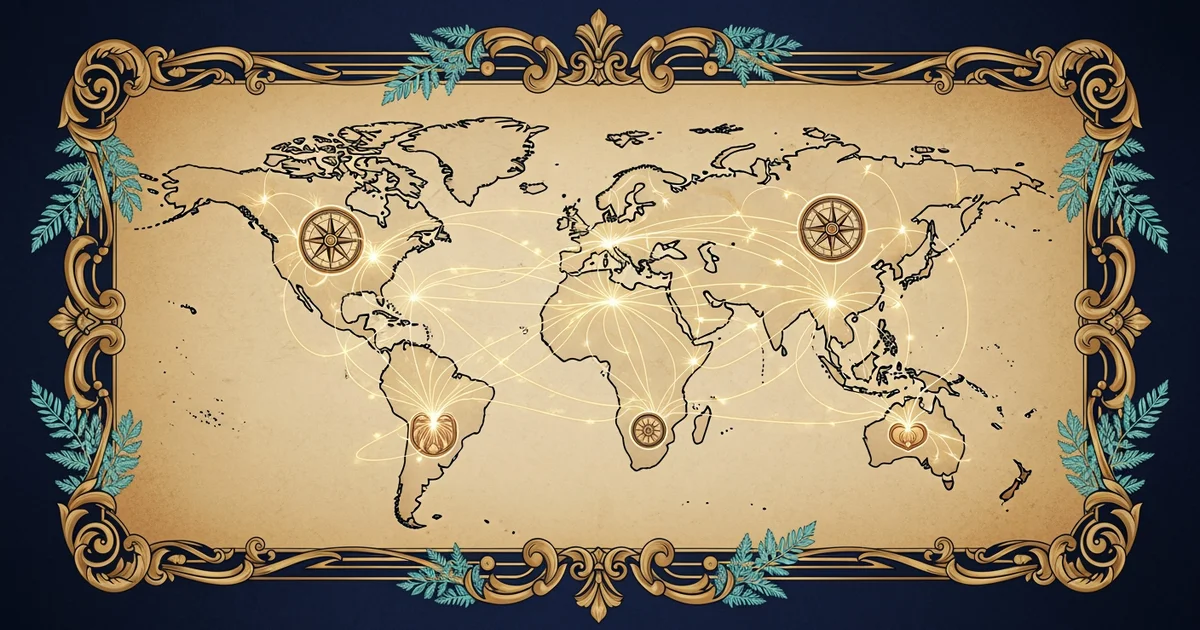
Imagine your family tree as a sprawling map of global travel routes, where every ancestor was a traveler seeking a better life. Just as a modern traveler chooses a destination based on available resources, ancient humans moved across vast continents to survive and thrive. This constant movement was not merely random wandering, but a calculated strategy for survival that defines our species today. By tracing the paths of our ancestors, we see that the human experience is built upon a foundation of shared adaptation and continuous exploration.
The Patterns of Ancient Expansion
When we look at the history of migration, we see a clear pattern of humans leaving their original homes to find new opportunities. Early groups moved because the climate changed or food became scarce in their current territories. Think of this process like an economic investment, where families move to a new city because the local job market has collapsed. They risk the uncertainty of an unknown path to secure a more stable future for the next generation. This cycle of departure and settlement created the diverse cultural landscape we observe across the globe in modern times.
Key term: Adaptive Migration — the process by which human populations shift their geographic range to better align with environmental resources and survival needs.
These patterns of movement were deeply influenced by the geography of the earth itself. Mountains, rivers, and changing sea levels acted as both barriers and bridges for early travelers. Some groups adapted to cold environments by developing new tools, while others mastered the art of sailing to reach distant islands. This ability to change our behavior to fit a new climate is a hallmark of our species. We did not just survive in new places; we actively transformed our lifestyles to ensure our communities could grow and prosper.
Synthesis of Global Human History
As we connect the dots between these historical movements, we see how they shaped the modern world we live in today. The movement of our ancestors led to the blending of genetic traits and the sharing of innovative technologies across massive distances. This exchange of ideas acted like a global marketplace, where different groups traded knowledge about farming, hunting, and building shelters. Because humans were constantly on the move, no single group remained isolated for long, which accelerated our collective progress as a species.
| Migration Factor | Primary Driver | Long-term Outcome |
|---|---|---|
| Climate Shift | Environmental | Cultural Evolution |
| Resource Scarcity | Economic | Technological Growth |
| Social Expansion | Population | Genetic Diversity |
The table above highlights the primary drivers that pushed our ancestors to travel across the planet. When we look at these factors, we realize that human history is a story of constant connection rather than permanent separation. Even today, the movement of people remains a vital part of how we solve problems and build new systems. We are a species defined by our capacity to leave behind what is old to discover something new.
Navigating Our Shared Future
Looking back at this history, we find that the human legacy is rooted in our shared ability to overcome distance. We have moved from small, isolated groups to a deeply interconnected global population that spans every continent. This progress was not guaranteed, but it was made possible by the persistent drive to find better conditions for our families. As we conclude this path, we must recognize that our past migrations continue to influence how we relate to one another today. The history of the human race is, at its core, a history of finding our way home together.
The legacy of human migration is a continuous narrative of adaptation that connects our survival instincts to the global society we inhabit today.
Human migration history shows that we are a resilient species that succeeds by constantly exploring and adapting to new environments.